
Mata Hari
1931 · United States · 90 min
- Director
- George Fitzmaurice
- Screenplay
- Leo Birinski, Benjamin Glazer, Gilbert Emery
- Producer
- Irving Thalberg, George Fitzmaurice
- Music
- William Axt
- Cinematography
- William Daniels
- Editing
- Frank Sullivan
- Production company
- Metro-Goldwyn-Mayer
What the critics say
67 % Rotten Tomatoes positive reviewsCast
What it is about
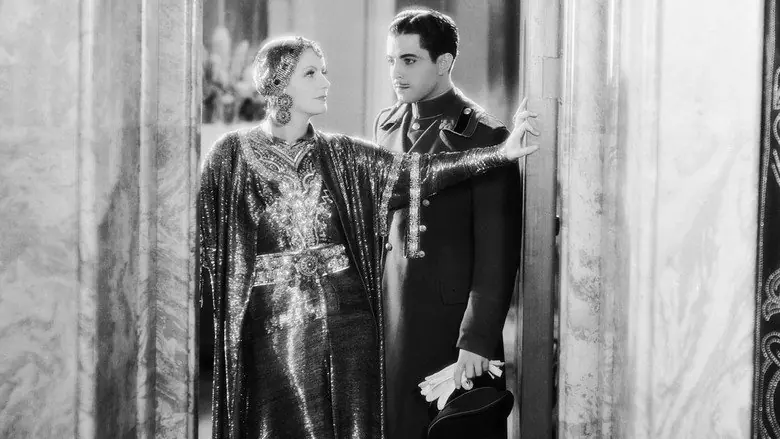
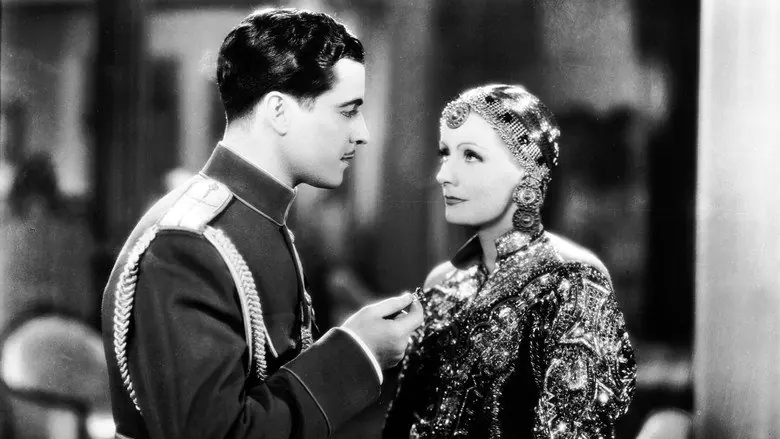
In 1917, during the First World War, French intelligence grows suspicious of a celebrated exotic dancer who moves through the social circles of Paris. Dubois, the head of the French spy bureau, tries to identify a captured agent who refuses to name the person he is shielding. Meanwhile, Russian lieutenant Alexis Rosanoff arrives in the French capital carrying vital dispatches and becomes captivated by Mata Hari, whose intentions remain unclear to those around her and to the viewer. The story weaves romance, jealousy and counterespionage manoeuvres into a steadily tightening atmosphere.
How it was made
Metro-Goldwyn-Mayer produced the film, with Irving Thalberg and George Fitzmaurice sharing producing duties and Fitzmaurice directing. The screenplay by Leo Birinski, Benjamin Glazer and Gilbert Emery loosely draws on the life of Margaretha Geertruida Zelle, the dancer executed for espionage in 1917. Greta Garbo headlines alongside Ramon Novarro, Lionel Barrymore and Lewis Stone. William H. Daniels handled the cinematography, William Axt composed the score and Frank Sullivan edited. It is a classically styled period drama, heavy on melodrama and intrigue, shot before the strict enforcement of the Hays Code.
Reception and legacy
Contemporary critics praised Fitzmaurice's restrained staging and the performances of Garbo, Novarro and Barrymore, though some found the story unoriginal and a little slow. It was Garbo's most commercially successful film at the time. After the Hays Code was strictly enforced from mid-1934, the film was reissued with substantial cuts, especially to the dance before the statue of Shiva, so only a censored version is widely available today. It now matters chiefly as a document of pre-Code Hollywood and of MGM's star system.
Stills

Trailer
Clicking loads the video from YouTube (privacy-enhanced mode). Open on YouTube
Trivia
Uncensored version
After the 1934 reissue, dance sequences and scenes between the leads were removed. Unconfirmed online reports suggest an original uncut print survives in Brussels.
More films by George Fitzmaurice
 The Son of the Sheik
 As You Desire Me
 The Barker
 The Last of Mrs. Cheyney
 The Eternal City
 Raffles
Original Cinematopedia text based on Wikipedia (es) and Wikipedia (en) and Wikidata.