
Irving Thalberg
1899–1936 · American film producer
Biography
Irving Grant Thalberg (May 30, 1899 – September 14, 1936) was an American film producer who worked through the early sound era. Known as "The Boy Wonder" for his youth and his talent for choosing scripts, casting actors, assembling crews and making films pay, he is remembered for helping establish the producer as the person ultimately responsible for a picture, at a time when that role usually belonged to the director.
Born in Brooklyn to German Jewish immigrants, Thalberg was diagnosed in infancy with a congenital heart condition, and doctors doubted he would reach thirty. As a teenager he suffered chest pains and fatigue that interrupted his schooling. He worked as a shop clerk and studied typing at night. After a spell in the New York office of Universal Pictures, he became personal secretary to the studio's founder, Carl Laemmle, who sent him to Los Angeles in 1919 to run the studio's west coast operation. Still in his early twenties, he oversaw several productions at once.
In 1922 he built his reputation for control when he clashed with Erich von Stroheim over the length and cost of Foolish Wives, eventually taking the picture out of the director's hands and cutting its running time from five and a half hours to three. He later dismissed von Stroheim during the making of Merry-Go-Round. At twenty-five he was named head of production at Metro-Goldwyn-Mayer, formed by a merger of several companies. There he backed films such as Ben-Hur and The Big Parade, directed by King Vidor, and worked in a deliberate way: story conferences with writers, sneak previews to gauge audiences, and reshoots to refine scenes. He shaped casting and editing across much of the studio's output in the 1920s and 1930s, usually without taking a credit.
In 1927 he married the actress Norma Shearer, and the couple had two children. In 1932 a heart attack forced him away from production. While he recovered, other producers took over his duties, and when he returned he no longer held such a dominant position, though he remained involved in films such as Grand Hotel, A Night at the Opera and Romeo and Juliet. He died in 1936 at the age of 37. His legacy is twofold: since 1937 the Academy has awarded the Irving G. Thalberg Memorial Award to producers whose work consistently reaches a high standard, and his career is still cited as a model of the producer who guides a film at every stage.
Key films
- Ben-Hur (1925): one of the large-scale productions that built MGM's prestige under his supervision.
- The Big Parade (1925): directed by King Vidor, it was among the studio's biggest successes during his tenure.
- The Broadway Melody (1929): one of MGM's early sound musicals and one of the films most associated with his period.
- Grand Hotel (1932): an ensemble picture that shows his fondness for assembling star casts.
- A Night at the Opera (1935): a Marx Brothers comedy from one of his most successful years in production.
- Romeo and Juliet (1936): a Shakespeare adaptation, one of his last projects before his death.
Trivia
An unprecedented dismissal
According to the biographer Roland Flamini, removing von Stroheim during the making of Merry-Go-Round was seen as a shock within the film world. Thalberg justified the decision in a long written letter.
A boss mistaken for a clerk
His youth often led people to take him for a junior employee. When the columnist Louella Parsons first met him she asked where the new general manager was, but soon afterward she was writing about Universal's "Boy Wonder".
On Cinematopedia
 Mutiny on the Bounty1935
 The Broadway Melody1929
 Grand Hotel1932
 The Good Earth1937
 A Night at the Opera1935
 A Free Soul1931
 The Divorcee1930
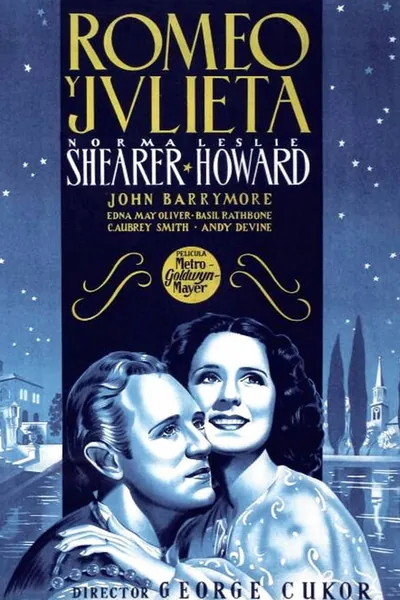 Romeo and Juliet1936
 The Big House1930
 Anna Christie1930
 Freaks1932
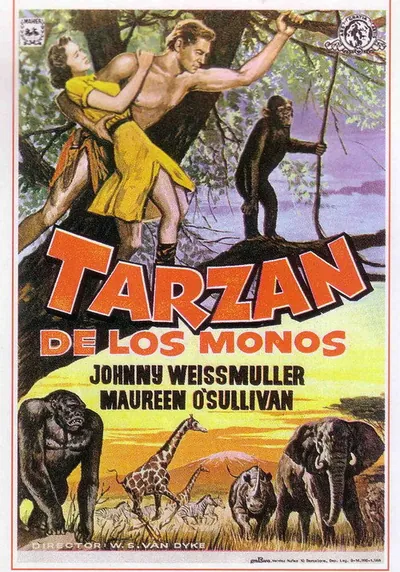 Tarzan the Ape Man1932
- Foolish Wives 1922 · producer
- The Hunchback of Notre Dame 1923 · producer
- Greed 1924 · producer
- He Who Gets Slapped 1924 · producer
- His Hour 1924 · producer
- The Big Parade 1925 · producer
- Ben-Hur: A Tale of the Christ 1925 · producer
- The Unholy Three 1925 · producer
- The Merry Widow 1925 · producer
- The Tower of Lies 1925 · producer
- Never the Twain Shall Meet 1925 · producer
- The Mystic 1925 · producer
- Flesh and the Devil 1926 · producer
- Torrent 1926 · producer
- The Temptress 1926 · producer
- The Road to Mandalay 1926 · producer
- La Bohème 1926 · producer
- Brown of Harvard 1926 · producer
- London After Midnight 1927 · producer
- The Unknown 1927 · editing, producer
- The Student Prince in Old Heidelberg 1927 · producer
- Twelve Miles Out 1927 · producer
- Quality Street 1927 · producer
- Man, Woman and Sin 1927 · producer
- The Crowd 1928 · producer
- White Shadows in the South Seas 1928 · producer
- The Wind 1928 · producer
- A Woman of Affairs 1928 · producer
- Show People 1928 · producer
- Laugh, Clown, Laugh 1928 · producer
- West of Zanzibar 1928 · producer
- The Actress 1928 · producer
- The Cossacks 1928 · producer
- The Broadway Melody 1929 · producer
- The Hollywood Revue of 1929 1929 · producer
- Hallelujah! 1929 · producer
- Their Own Desire 1929 · producer
- The Kiss 1929 · producer
- The Last of Mrs. Cheyney 1929 · producer
- Wild Orchids 1929 · producer
- Where East Is East 1929 · producer
- The Pagan 1929 · producer
- The Divorcee 1930 · producer
- The Big House 1930 · producer
- Anna Christie 1930 · producer
- The Rogue Song 1930 · producer
- Billy the Kid 1930 · producer
- The Unholy Three 1930 · producer
- Redemption 1930 · producer
- A Lady's Morals 1930 · producer
- Let Us Be Gay 1930 · producer
- A Free Soul 1931 · producer
- The Champ 1931 · producer
- The Sin of Madelon Claudet 1931 · producer
- Mata Hari 1931 · producer
- The Guardsman 1931 · producer
- Trader Horn 1931 · producer
- Possessed 1931 · producer
- The Secret Six 1931 · producer
- Inspiration 1931 · producer
- Never the Twain Shall Meet 1931 · producer
- Grand Hotel 1932 · producer
- Freaks 1932 · producer
- Tarzan the Ape Man 1932 · producer
- Red Dust 1932 · producer
- Smilin' Through 1932 · producer
- As You Desire Me 1932 · producer
- Rasputin and the Empress 1932 · producer
- Eskimo 1933 · producer
- Reunion in Vienna 1933 · producer
- Bombshell 1933 · producer
- Tugboat Annie 1933 · producer
- The Barretts of Wimpole Street 1934 · producer
- The Merry Widow 1934 · producer
- Hollywood Party 1934 · producer
- Riptide 1934 · producer
- Mutiny on the Bounty 1935 · producer
- A Night at the Opera 1935 · producer
- China Seas 1935 · producer
- No More Ladies 1935 · producer
- Romeo and Juliet 1936 · producer
- Camille 1936 · producer
- Riffraff 1936 · producer
- The Good Earth 1937 · producer
- A Day at the Races 1937 · producer
- Marie Antoinette 1938 · producer
Original Cinematopedia text based on Wikipedia (es) and Wikipedia (en) and Wikidata.