
John Williams
b. 1932 · American composer and conductor
Biography
John Towner Williams (born February 8, 1932, in Floral Park, New York) is an American composer and conductor, and also a pianist and trombonist. Over a career that has spanned seven decades, he has written some of the most famous film scores in history, and his name is closely tied to Star Wars, to Steven Spielberg's films and to the first Harry Potter movies. His importance lies as much in the number of films he has scored as in the way many of his themes have become part of popular culture.
He grew up in a musical household. His father was a jazz percussionist who played with the Raymond Scott Quintet. In 1948 the Williams family moved to Los Angeles, and John graduated from North Hollywood High School in 1950. He then studied at the University of California, where he took private composition lessons with the Italian composer Mario Castelnuovo-Tedesco. His training covered piano, trombone, trumpet and clarinet, and in those years he also played jazz piano in New York clubs.
Between 1952 and 1955 he served in the United States Air Force, where he arranged and conducted music for the Air Force band. After his discharge he moved to New York and enrolled at the Juilliard School, where he studied piano with Rosina Lhévinne. He had first hoped to become a concert pianist, but after hearing performances by John Browning and Van Cliburn he turned his attention to composition. In the meantime he worked as a jazz pianist and as an arranger for singers such as Frankie Laine and Vic Damone.
Back in Los Angeles he began working as an orchestrator at the film studios. In this period he worked with veterans of Hollywood scoring, including Franz Waxman, Bernard Herrmann and Alfred Newman, and he played piano on scores by Henry Mancini, Elmer Bernstein and Jerry Goldsmith. He also worked on the recordings of Mancini's Peter Gunn and Days of Wine and Roses. In the late 1950s he started writing for television, with series such as Lost in Space and Land of the Giants, and his first film scores were comedies such as How to Steal a Million, starring Audrey Hepburn and Peter O'Toole.
His move into major film work came with Fiddler on the Roof, for which he won his first Academy Award in 1971. Afterwards, the success of The Poseidon Adventure in 1972 associated him with disaster movies, a label the industry then imposed on him. His scores for Images and The Long Goodbye showed a range that moved from jazz to symphonic writing, and his work on The Towering Inferno and Earthquake strengthened his reputation in the genre.
The turning point came in 1974, when Steven Spielberg, making his directing debut with The Sugarland Express, asked for him after hearing his scores for The Reivers and The Cowboys. The two worked together again a year later on Jaws. Williams proposed a theme built on two alternating notes, which Spielberg initially took as something of a joke; after hearing variations on it, the director accepted the idea, and the film became a landmark. The score earned Williams his second Oscar and his first BAFTA, Golden Globe and Grammy awards.
In the same period Spielberg recommended him to George Lucas for Star Wars. Williams wrote a large symphonic score, recorded with the London Symphony Orchestra, influenced by the Golden Age composers Max Steiner and Erich Wolfgang Korngold. His use of the leitmotif, with themes tied to characters, places and objects, is a central feature of his style and of the original trilogy. The score was a commercial success and won him his third Oscar. He then scored The Empire Strikes Back, which introduced the Imperial March associated with Darth Vader, and Return of the Jedi.
His collaboration with Spielberg continued with Raiders of the Lost Ark, E.T. the Extra-Terrestrial, which earned him his fourth Oscar, Empire of the Sun, Jurassic Park, Saving Private Ryan and Munich. With Schindler's List he won his fifth and, so far, last Oscar. The work was emotionally demanding for him: he reportedly told Spielberg that he should find a better composer, and the director replied that all the better ones were dead. Williams asked the violinist Itzhak Perlman to perform the film's main theme.
In the new millennium he scored the first three Harry Potter films, and his "Hedwig's Theme" was used in every film of the series. He also wrote music for other directors, including Alfred Hitchcock on Family Plot and Richard Donner on Superman. His later credits include Catch Me If You Can, Lincoln and The Adventures of Tintin, his first animated score. In 2015 he composed Star Wars: The Force Awakens, and in 2019 The Rise of Skywalker closed his work on the franchise.
Beyond film, Williams has had a major career as a conductor. From 1980 to 1993 he was principal conductor of the Boston Pops, succeeding Arthur Fiedler, and he is now its laureate conductor. He has also written more than fifty concert works, including concertos for cello, trumpet, clarinet and tuba, and he has composed music for four Olympic Games. His friendships with musicians such as Itzhak Perlman and Yo-Yo Ma are reflected in several pieces dedicated to them.
His legacy is that of a composer who brought symphonic Romanticism into modern cinema. He has won five Academy Awards, four Golden Globes and numerous Grammys, and in 2020 he received the Princess of Asturias Award for the Arts, shared with Ennio Morricone. In 2022 Queen Elizabeth II made him an honorary knight. He is still active. Although he announced in 2022 that he planned to retire, he later reconsidered and continues to compose, with projects including the score for Disclosure Day, his thirtieth collaboration with Spielberg.
Key films
- Jaws (1975), with a two-note theme that became a shorthand for danger.
- Star Wars (1977), with a large symphonic score and the Imperial March of the saga.
- E.T. the Extra-Terrestrial (1982), his fourth Oscar and the second of the three he won with Spielberg.
- Schindler's List (1993), his fifth and so far last Oscar, with a theme performed by Itzhak Perlman.
- Harry Potter and the Philosopher's Stone (2001), the start of his work on the series and the origin of "Hedwig's Theme".
Trivia
A theme built on two notes
According to the sources, Spielberg initially thought the main theme of Jaws was a joke. After hearing variations, he accepted it, and the simplicity of the motif became one of the film's defining features.
Hitchcock's one piece of advice
For Family Plot, Alfred Hitchcock gave him a single instruction: remember that "murder can be fun". Williams drew on the work of Bernard Herrmann, Hitchcock's regular composer, and the director was pleased with the result.
On Cinematopedia
 Schindler's List1993
 Saving Private Ryan1998
 Star Wars1977
 Jurassic Park1993
 Raiders of the Lost Ark1981
 Harry Potter and the Philosopher's Stone2001
 E.T. the Extra-Terrestrial1982
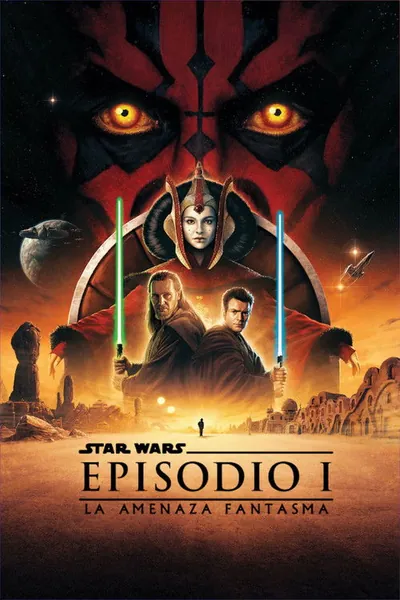 Star Wars: Episode I – The Phantom Menace1999
 The Empire Strikes Back1980
 Harry Potter and the Chamber of Secrets2002
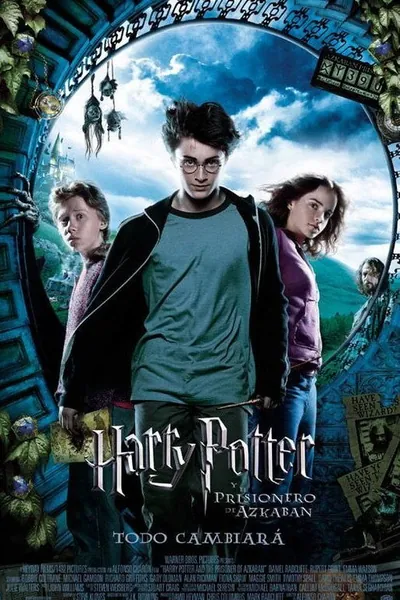 Harry Potter and the Prisoner of Azkaban2004
 Star Wars: Episode VI – Return of the Jedi1983
- Diamond Head 1963 · music
- The Killers 1964 · music
- None But the Brave 1965 · music
- How to Steal a Million 1966 · music
- The Rare Breed 1966 · music
- Not with My Wife, You Don't! 1966 · music
- Penelope 1966 · music
- A Guide for the Married Man 1967 · music
- Fitzwilly 1967 · music
- The Reivers 1969 · music
- Fiddler on the Roof 1971 · music
- The Poseidon Adventure 1972 · music
- The Cowboys 1972 · music
- Pete 'n' Tillie 1972 · music
- Images 1972 · music
- The Paper Chase 1973 · music
- The Long Goodbye 1973 · music
- Cinderella Liberty 1973 · music
- The Man Who Loved Cat Dancing 1973 · music
- The Towering Inferno 1974 · music
- Earthquake 1974 · music
- The Sugarland Express 1974 · music
- Conrack 1974 · music
- Jaws 1975 · music
- The Eiger Sanction 1975 · music
- Family Plot 1976 · music
- The Missouri Breaks 1976 · music
- Midway 1976 · music
- Star Wars 1977 · music
- Close Encounters of the Third Kind 1977 · music
- Black Sunday 1977 · music
- Superman: The Movie 1978 · music
- Jaws 2 1978 · music
- The Fury 1978 · music
- 1941 1979 · music
- Dracula 1979 · music
- The Empire Strikes Back 1980 · music
- Raiders of the Lost Ark 1981 · music
- Heartbeeps 1981 · music
- E.T. the Extra-Terrestrial 1982 · music
- Star Wars: Episode VI – Return of the Jedi 1983 · music
- Indiana Jones and the Temple of Doom 1984 · music
- The River 1984 · music
- SpaceCamp 1986 · music
- Empire of the Sun 1987 · music
- The Witches of Eastwick 1987 · music
- The Accidental Tourist 1988 · music
- Born on the Fourth of July 1989 · music
- Indiana Jones and the Last Crusade 1989 · music
- Always 1989 · music
- Home Alone 1990 · music
- Presumed Innocent 1990 · music
- Stanley & Iris 1990 · music
- JFK 1991 · music
- Hook 1991 · music
- Home Alone 2: Lost in New York 1992 · music
- Far and Away 1992 · music
- Schindler's List 1993 · music
- Jurassic Park 1993 · music
- Nixon 1995 · music
- Sabrina 1995 · music
- Sleepers 1996 · music
- The Lost World: Jurassic Park 1997 · music
- Amistad 1997 · music
- Seven Years in Tibet 1997 · music
- Saving Private Ryan 1998 · music
- Stepmom 1998 · music
- Star Wars: Episode I – The Phantom Menace 1999 · music
- Angela's Ashes 1999 · music
- The Patriot 2000 · music
- Harry Potter and the Philosopher's Stone 2001 · music
- A.I. Artificial Intelligence 2001 · music
- Harry Potter and the Chamber of Secrets 2002 · music
- Star Wars: Episode II – Attack of the Clones 2002 · music
- Catch Me If You Can 2002 · music
- Minority Report 2002 · music
- Harry Potter and the Prisoner of Azkaban 2004 · music
- The Terminal 2004 · music
- Star Wars: Episode III – Revenge of the Sith 2005 · music
- Memoirs of a Geisha 2005 · music
- Munich 2005 · music
- War of the Worlds 2005 · music
- Indiana Jones and the Kingdom of the Crystal Skull 2008 · music
- The Damned United 2009 · music
- War Horse 2011 · music
- Lincoln 2012 · music
- The Book Thief 2013 · music
- Paranormal Activity: The Marked Ones 2014 · music
- Star Wars: The Force Awakens 2015 · music
- The BFG 2016 · music
- Star Wars: The Last Jedi 2017 · music
- The Post 2017 · music
- All the Money in the World 2017 · music
- Solo: A Star Wars Story 2018 · music
- Star Wars: The Rise of Skywalker 2019 · music
- The Fabelmans 2022 · music
- Indiana Jones and the Dial of Destiny 2023 · music
- Disclosure Day 2026 · music
Original Cinematopedia text based on Wikipedia (es) and Wikipedia (en) and Wikidata.