
Earthquake
Terremoto
1974 · United States · 122 min
- Director
- Mark Robson
- Screenplay
- Mario Puzo
- Producer
- Mark Robson
- Music
- John Williams
- Cinematography
- Philip H. Lathrop
- Editing
- Dorothy Spencer
- Production company
- Universal Pictures
Awards: Academy Award for Best Sound · 4 nominations
Cast
What it is about
Los Angeles is hit by a chain of personal crises when Stewart Graff, a construction engineer, finds himself caught between a troubled marriage and a growing relationship with Denise Marshall, a widowed actress he has been helping. Meanwhile, at the California Seismological Institute, a junior seismologist warns of a major quake, but his superiors are slow to take him seriously, and the mayor alerts only the National Guard and the police. A motorcycle daredevil, a grocery manager and a hot-tempered police officer complete an ensemble whose paths keep crossing. When disaster strikes, their lives scatter and then converge again among the ruins, rescues and hard choices.
How it was made
The project grew out of the success of Airport (1970) at Universal, which wanted to take the disaster film beyond the airliner and into an entire city. The 1971 San Fernando earthquake provided the inspiration. Executive producer Jennings Lang hired Mario Puzo, fresh from The Godfather, to write the first draft. His detailed, sprawling script would have driven up the budget, and Puzo left the project when he was contractually bound to the sequel. After the box-office success of The Poseidon Adventure, the script was revived with George Fox, who went through eleven drafts before shooting began in February 1974 under Mark Robson. With a budget of around seven million dollars, the film competed with The Towering Inferno. The production relied on miniatures, matte paintings and modular full-size sets to stage the destruction, and used the Sensurround system so that the tremors could be felt in the cinema.
Reception and legacy
Released in November 1974, it received mixed reviews from critics but was a major commercial hit, with box-office receipts often cited at about 167 million dollars. At the 1975 Academy Awards it won the award for best sound and a special achievement award for its visual effects, and it was also nominated for cinematography, production design and editing. Its legacy is tied to the 1970s disaster-film boom, alongside The Towering Inferno and The Poseidon Adventure, and to the Sensurround experience, which aimed to make audiences feel the quake physically.
Stills


Trailer
Clicking loads the video from YouTube (privacy-enhanced mode). Open on YouTube
Trivia
Sensurround
The film is remembered for its use of Sensurround, a sound effect designed to let audiences feel the earthquake in theaters.
Mario Puzo and the script
The original script was written by Mario Puzo, who left when he became contractually bound to The Godfather Part II; George Fox then completed the work.
More films by Mark Robson
 Peyton Place
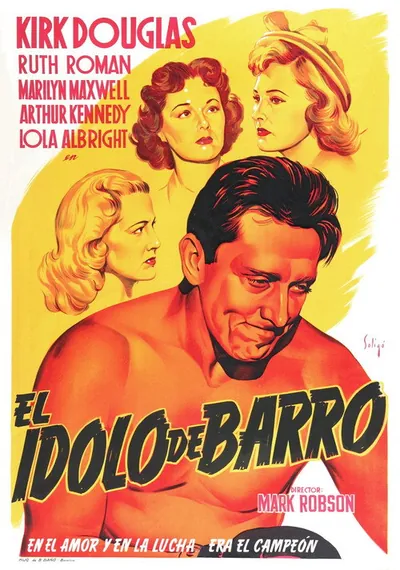 Champion
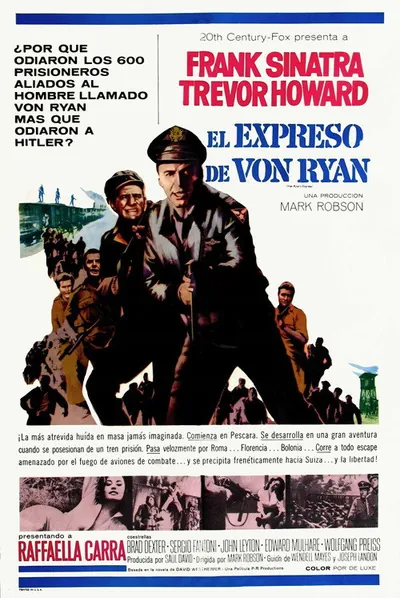 Von Ryan's Express
 The Harder They Fall
 The Bridges at Toko-Ri
 The Inn of the Sixth Happiness
Original Cinematopedia text based on Wikipedia (es) and Wikipedia (en) and Wikidata.