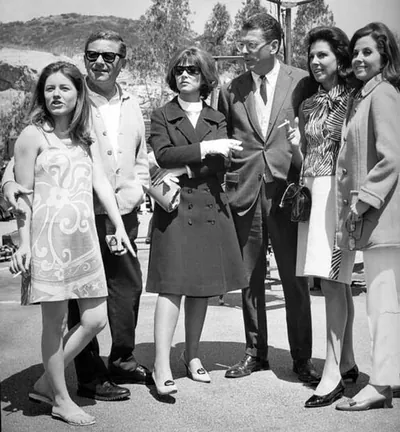
Mark Robson
1913–1978 · Canadian-American film director, editor and producer
Biography
Mark Robson (4 December 1913 – 20 June 1978) was a Canadian-born director, editor and producer who spent most of his 45-year career in Hollywood. He started as a film editor and later moved into directing, working across genres from low-budget horror to social drama, war films and disaster spectacle. His career tracks the studio system's shift from modest B pictures to large-scale productions.
Born in Montreal, he moved to the United States as a young man to study at the University of California and the Pacific Coast University. He first found work in the prop department at 20th Century Fox, then joined RKO, where he trained as an editor. In the early 1940s he assisted Robert Wise on the cutting of Orson Welles's Citizen Kane (1941), and later edited Journey into Fear (1943), made by Welles's company without his direct involvement.
He worked closely with producer Val Lewton on RKO's low-budget horror series. Lewton gave him his first directing assignment, The Seventh Victim (1943), and he went on to make Isle of the Dead (1945) and Bedlam (1946). From there he moved to larger projects. In 1949 he directed the boxing drama Champion and Home of the Brave, an early Hollywood film to address racism, and Bright Victory (1951) followed as a more intimate war drama.
His most celebrated period came in the second half of the 1950s. The Bridges at Toko-Ri (1954) was one of his biggest hits, and The Harder They Fall (1956), another boxing film, was Humphrey Bogart's last picture. Peyton Place (1957) and The Inn of the Sixth Happiness (1958) earned him Academy Award nominations for Best Director in two consecutive years. The 1960s brought fewer successes, though The Prize (1963), a Hitchcock-influenced thriller with Paul Newman, was well received.
In the following years he worked across almost every genre with uneven results. Von Ryan's Express (1965) and Valley of the Dolls (1967) were box-office hits despite harsh reviews. Earthquake (1974), which introduced the Sensurround sound system, was his last major success. He died in London while shooting Avalanche Express, released after his death. He is remembered today for his work with Lewton and his dramas of the 1950s.
Key films
- The Seventh Victim (1943)
- The Bridges at Toko-Ri (1954)
- Peyton Place (1957)
- The Inn of the Sixth Happiness (1958)
- The Prize (1963)
- Earthquake (1974)
Trivia
Editing Welles
Before directing, Robson worked as assistant editor under Robert Wise on Citizen Kane, Orson Welles's debut film.
Earthquake (1974) was the film that introduced the Sensurround sound system.
On Cinematopedia
 Earthquake1974
 Peyton Place1957
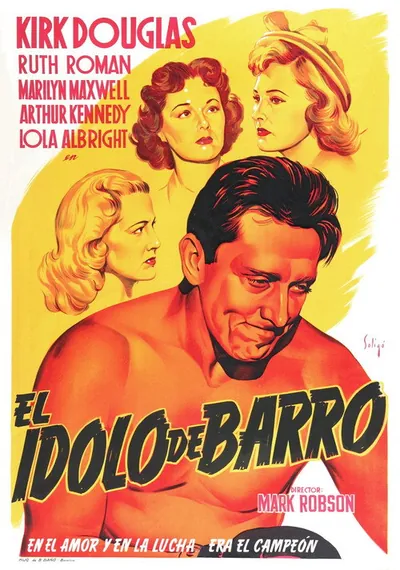 Champion1949
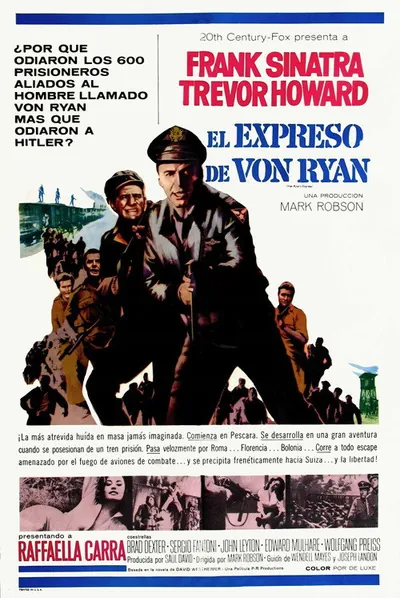 Von Ryan's Express1965
 The Harder They Fall1956
 Cat People1942
 The Bridges at Toko-Ri1954
 I Walked with a Zombie1943
 The Inn of the Sixth Happiness1958
 The Prize1963
 Valley of the Dolls1967
 Lost Command1966
- Cat People 1942 · editing
- I Walked with a Zombie 1943 · editing
- The Seventh Victim 1943 · director
- Journey into Fear 1943 · editing
- The Leopard Man 1943 · editing
- The Ghost Ship 1943 · director
- Isle of the Dead 1945 · director
- Bedlam 1946 · director, screenplay
- Champion 1949 · director
- Home of the Brave 1949 · director
- My Foolish Heart 1950 · director
- Edge of Doom 1950 · director
- Bright Victory 1951 · director
- The Bridges at Toko-Ri 1954 · director
- Phffft! 1954 · director
- Trial 1955 · director
- A Prize of Gold 1955 · director
- The Harder They Fall 1956 · director
- Peyton Place 1957 · director
- The Little Hut 1957 · director
- The Inn of the Sixth Happiness 1958 · director
- From the Terrace 1960 · director, producer
- The Prize 1963 · director
- Nine Hours to Rama 1963 · director, producer
- Von Ryan's Express 1965 · director, producer
- Lost Command 1966 · director, producer
- Valley of the Dolls 1967 · director
- Earthquake 1974 · director, producer
- Avalanche Express 1979 · director, producer
Original Cinematopedia text based on Wikipedia (es) and Wikipedia (en) and Wikidata.