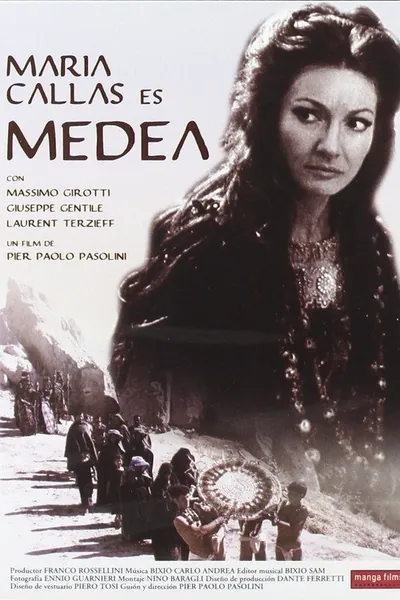
Medea
1969 · Italy, France, Germany · 110 min
- Director
- Pier Paolo Pasolini
- Screenplay
- Pier Paolo Pasolini, Euripides
- Producer
- Marina Cicogna, Franco Rossellini
- Music
- Elsa Morante
- Cinematography
- Ennio Guarnieri
- Editing
- Nino Baragli
- Production company
- Euro International Film
- Based on
- Medea
What the critics say
73 % Rotten Tomatoes positive reviewsCast
What it is about
Medea is a free adaptation of Euripides' tragedy directed by Pier Paolo Pasolini. The film does not stop at the Greek core: before the tragic action, it stages the origins of Jason, his upbringing under the guidance of a centaur, and the voyage to Colchis, where he meets the sorceress Medea. Pasolini sets two incompatible worlds against each other: Medea's magical, irrational universe and the rational, bourgeois order Jason represents. The story moves toward their rupture through a series of betrayals and an atmosphere of archaic rituals that contrasts with everyday life in Corinth.
How it was made
The project drew on the presence of Maria Callas, who had withdrawn from opera and made her only film appearance here. Pasolini chose her for her well-known Medea in Cherubini's opera. The film does not use Euripides' dialogue, though it follows the structure of the play closely. Shooting took place in Turkey and Syria, with locations in Cappadocia and Aleppo, and in Viterbo, Pisa and Cinecittà. The score combines music from various Eastern traditions, including Tibetan chant, Persian santur and Balkan choral singing, rather than attempting to recreate ancient music, which Pasolini regarded as unrecoverable. Piero Tosi's costumes give each setting its own palette: earth tones and blues in Colchis, white and yellow in Iolcus, and red in Corinth.
Reception and legacy
Critics received the film positively, although it was not a commercial success. Tony Rayns sees it as a combative work by a director who loved to challenge society, and calls it a love song to Maria Callas. Its dark ending has been read as a kind of resignation from cultural production, reflecting Pasolini's defiant personality. Over time it has been valued as one of the most singular cinematic versions of the myth and as evidence of the director's interest in archaic rituals.
Stills


Trailer
Clicking loads the video from YouTube (privacy-enhanced mode). Open on YouTube
Trivia
A centaur in the plot
The film includes a vision of two Chirons, one in centaur form who remains silent and another fully human who speaks to Jason.
Music from Eastern traditions
Pasolini chose music from various Eastern cultures for the score, because prehistoric music could not be recreated.
More films by Pier Paolo Pasolini
 The Canterbury Tales
 Salò, or the 120 Days of Sodom
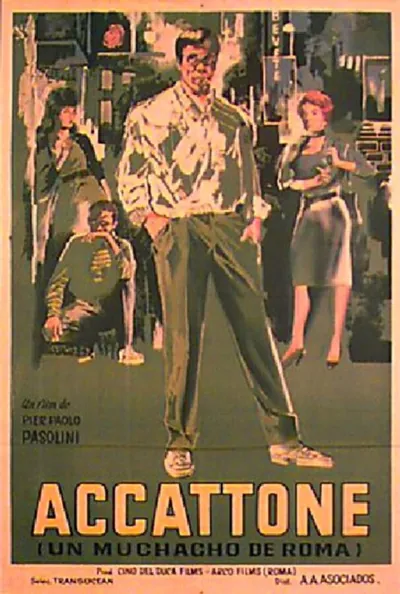 Accattone
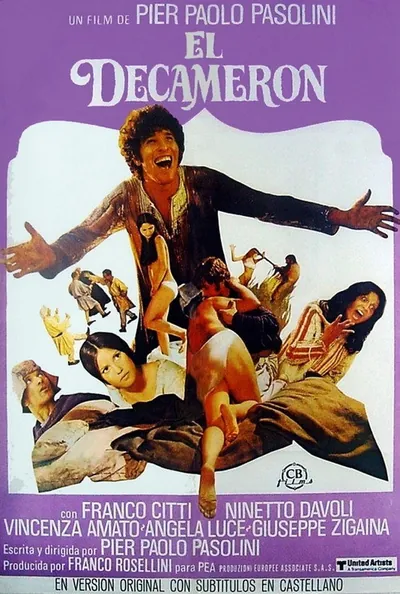 The Decameron
 The Gospel According to St. Matthew
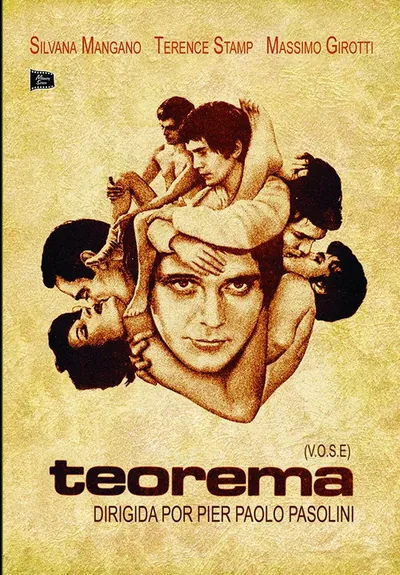 Theorem
Original Cinematopedia text based on Wikipedia (es) and Wikipedia (en) and Wikidata.