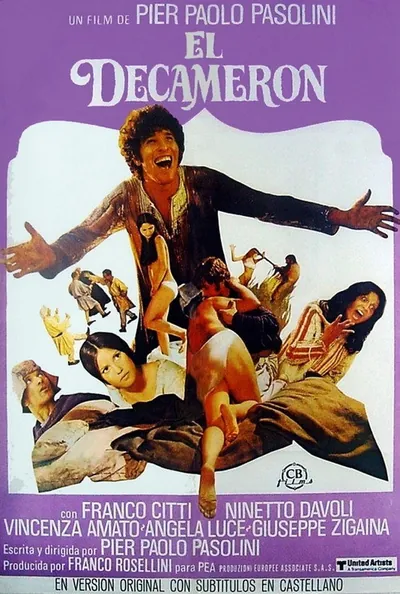
The Decameron
El Decamerón
1971 · Italy, France, Germany · 112 min
- Director
- Pier Paolo Pasolini
- Screenplay
- Pier Paolo Pasolini
- Producer
- Alberto Grimaldi
- Music
- Ennio Morricone
- Cinematography
- Tonino Delli Colli
- Editing
- Nino Baragli
- Production company
- Produzioni Europee Associati
- Based on
- The Decameron
Awards: Silver Bear Grand Jury Prize
What the critics say
79 % Rotten Tomatoes positive reviewsCast
What it is about
The Decameron is an episodic film based on several tales from Giovanni Boccaccio's collection. A pupil of Giotto, played by Pasolini himself, arrives in Naples to paint a mural and links together a series of bawdy, mischievous stories. Along the way we meet swindles, thefts, romantic affairs inside a convent, a wife hiding her lover from a dim-witted husband, and a young couple who fall in love while playing hide and seek. Each episode keeps a light, earthy and humorous tone.
How it was made
Pasolini wrote and directed the film from Boccaccio's tales, but he never aimed to recreate the world of the characters faithfully. He moved many stories to southern Italy and filmed them in the Neapolitan dialect, using them as a metaphor for the exploitation of the poorer South by the richer North and for the contemporary world more broadly. It is the first part of his so-called Trilogy of Life, followed by The Canterbury Tales and Arabian Nights. Alberto Grimaldi produced, Tonino Delli Colli shot the film and Ennio Morricone composed the score. Pasolini appears as Giotto's pupil, and Ninetto Davoli plays Andreuccio.
Reception and legacy
The film was entered into the 21st Berlin International Film Festival, where it won the Silver Bear Extraordinary Jury Prize. Critics responded very positively. Pasolini, however, was troubled by the many low-quality imitations and remakes that followed its release, which he saw as an insult to the film's anticapitalist message. In his final days before his death, he came to disown the film.
Stills


Trailer
Clicking loads the video from YouTube (privacy-enhanced mode). Open on YouTube
Trivia
A director on screen
Pasolini did not only direct: he plays the pupil of Giotto himself, linking the episodes together.
Neapolitan as a tool
The use of the Neapolitan dialect is deliberate, a way of pointing to the inequality between southern and northern Italy.
More films by Pier Paolo Pasolini
 The Canterbury Tales
 Salò, or the 120 Days of Sodom
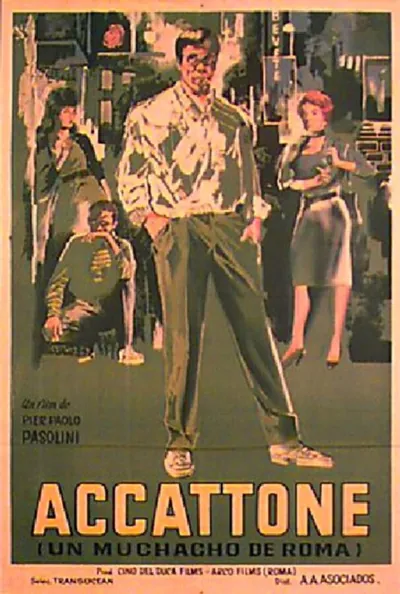 Accattone
 The Gospel According to St. Matthew
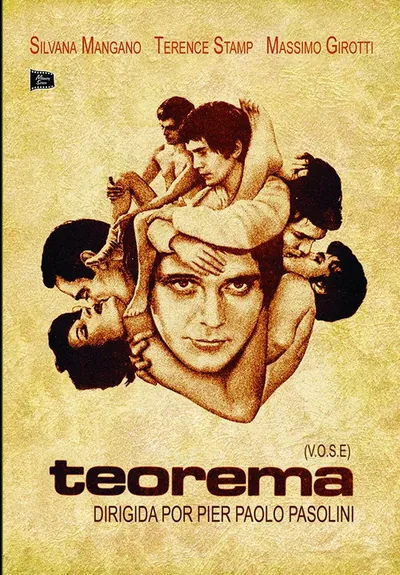 Theorem
 Arabian Nights
Original Cinematopedia text based on Wikipedia (es) and Wikipedia (en) and Wikidata.