
Aparajito
1956 · India · 105 min
- Director
- Satyajit Ray
- Screenplay
- Satyajit Ray
- Music
- Ravi Shankar
- Cinematography
- Subrata Mitra
- Editing
- Dulal Dutta
Awards: Golden Lion
What the critics say
96 % Rotten Tomatoes positive reviewsCast
What it is about
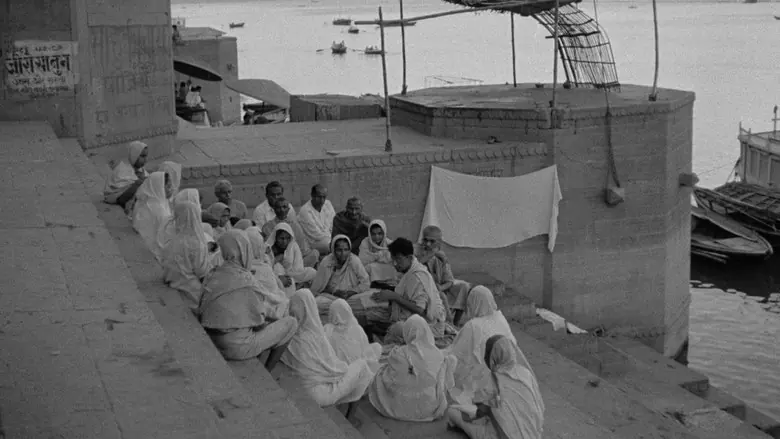
In 1920, Apu's family settles in an apartment in Varanasi, on the ghats of the Ganges, where his father Harihar works as a priest. After a sudden illness, his mother Sarbajaya must find work and support the family. As a teenager, Apu excels at school and wins a scholarship to study in Kolkata. The film portrays the tension between the young man's ambitions and his emotional bond with his mother, who faces the distance with growing loneliness.
How it was made
The novel by Bibhutibhushan Banerjee on which the film is based is a classic Bengali coming-of-age story, and of the three films in the trilogy it stays closest to its literary source. Ray was drawn to the mother-son relationship in the book, though he treated it differently on screen. He dropped the character of Leela, Apu's girlfriend in Calcutta, after failing to find a suitable actress. Subrata Mitra, the cinematographer, introduced bounce lighting on large diffusers to blend studio sets with location shooting. The score was composed by Ravi Shankar.
Reception and legacy
In India, audiences in the suburbs were shocked by the film's portrayal of the mother-son bond, which departed from conventional ideas of mutual sweetness. Abroad, critics responded very warmly, and the film won eleven international awards, including the Golden Lion and the Critics Award at Venice, becoming the first film to win both. Filmmakers such as Mrinal Sen regarded it as one of the finest Indian films, and Time magazine included it among the best hundred films. Its success encouraged Ray to complete the trilogy with Apur Sansar (1959), and the three films are now counted among the most acclaimed trilogies in film history.
Stills


Trailer
Clicking loads the video from YouTube (privacy-enhanced mode). Open on YouTube
Trivia
An ending without Leela
Ray removed the character of Leela from the script after failing to find a suitable actress, as the one he chose was not allowed to act by her fiancé.
Built indoors
Fear of monsoon rain led the art director, Bansi Chandragupta, to abandon plans for an open-air courtyard and build the set inside a studio.
More films by Satyajit Ray
 Pather Panchali
 Distant Thunder
 The World of Apu
 The Lonely Wife
 Jalsaghar
 The Chess Players
Original Cinematopedia text based on Wikipedia (es) and Wikipedia (en) and Wikidata.