
Ravi Shankar
1920–2012 · Indian sitar virtuoso and composer
Biography
Ravi Shankar (Varanasi, 1920 - San Diego, 2012) was an Indian musician, sitar virtuoso and composer, and one of the leading figures of Hindustani classical music in the second half of the twentieth century. Alongside his concert career, he wrote music for film and ballet, and his work did much to bring Indian music to Western audiences.
He was born into a Bengali Hindu family and was the youngest of seven brothers. As a young man he performed with the dance company of his elder brother, Uday Shankar, touring Europe and the United States. At eighteen he gave up dancing to focus on music and in 1938 he moved to Maihar to study with Allauddin Khan for seven years, living within the traditional gurukul system. His first public performance on the sitar took place in 1939, in a duet with the sarod player Ali Akbar Khan.
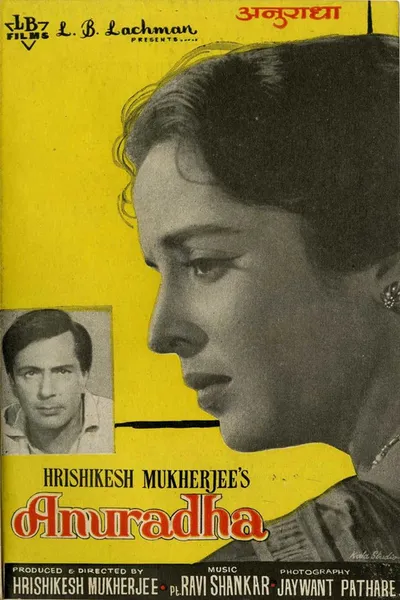
After completing his training in 1944 he worked in Bombay, writing music for ballets, and from 1949 to 1956 he was music director of All India Radio in New Delhi, where he founded a national orchestra that mixed Western and Indian instruments. In the mid-1950s he composed the score for Satyajit Ray's Apu Trilogy, a body of work that gained international acclaim. He also scored several Hindi films, including Godaan and Anuradha.
In 1956 he left the radio and began touring the United Kingdom, Germany and the United States, where he recorded his first long-playing albums. His friendship with the violinist Yehudi Menuhin produced West Meets East, which earned him a Grammy. His profile grew in the 1960s through his link with George Harrison of The Beatles, who started playing the sitar in 1965, and that connection helped bring Indian instruments into popular music. Shankar performed at the Monterey Pop Festival in 1967, at Woodstock in 1969 and at the Concert for Bangladesh in 1971. He wrote concertos for sitar and orchestra and worked with the composer Philip Glass on Passages. For film he scored Charly (1968) and later Gandhi (1982), which brought him an Academy Award nomination for Best Original Score.
From 1986 to 1992 he served as a nominated member of the Rajya Sabha, the upper house of the Indian Parliament. He received the Polar Music Prize in 1998 and the Bharat Ratna in 1999, India's highest civilian honour. His career, which lasted more than six decades, earned him a Guinness record for the longest international career. He was the father of the singer Norah Jones and the sitarist Anoushka Shankar, with whom he gave his final concert on 4 November 2012 in Long Beach, California. He died in San Diego on 11 December 2012, aged 92, after being admitted to hospital with breathing problems. His legacy lives on in Indian classical music and in his influence on pop and fusion.
Key films
- Pather Panchali (1955): the first part of the Apu Trilogy, with a score by Shankar that accompanies the childhood story in Bengal.
- Aparajito (1956): the second film of the trilogy, where the music underlines the move from childhood to adolescence.
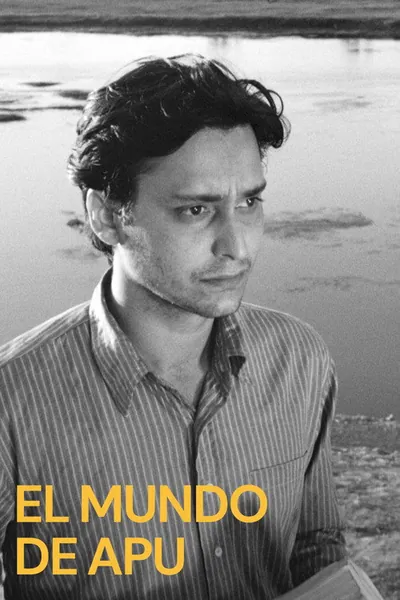
- The World of Apu (1959): the closing film of Satyajit Ray's trilogy, with a score by Shankar that carries much of its emotional weight.
- Charly (1968): a film for which Shankar wrote the soundtrack, during the period of his growing reach among Western audiences.
- Gandhi (1982): directed by Richard Attenborough, with a Shankar score that earned an Academy Award nomination.
Trivia
His reaction to Hendrix
At Monterey, Shankar said he was horrified to see Jimi Hendrix set fire to his guitar on stage. He explained that in his culture musical instruments are treated with near-sacred respect.
A live album on the Billboard charts
His live album from Monterey reached number 43 on the Billboard pop albums chart in the United States, the highest placing he ever achieved on that chart.
On Cinematopedia
 Gandhi1982
 Pather Panchali1955
 Aparajito1956
 Charly1968
 Neecha Nagar1946
 The World of Apu1959
 The Philosopher's Stone1958
 Anuradha1960Kabuliwala1957Kabuliwala1957
 Monterey Pop1968
 Meera1979
 Attack2015
- Neecha Nagar 1946 · music
- Dharti Ke Lal 1946 · music
- Pather Panchali 1955 · music
- Aparajito 1956 · music
- Kabuliwala 1957 · music
- The Flute and the Arrow 1957 · music
- The Philosopher's Stone 1958 · music
- The World of Apu 1959 · music
- Anuradha 1960 · music
- Charly 1968 · music
- Monterey Pop 1968 · cast
- Meera 1979 · music
- Gandhi 1982 · music
- Genesis 1986 · music
- Attack 2015 · music
- Killing Veerappan 2016 · music
Original Cinematopedia text based on Wikipedia (es) and Wikipedia (en) and Wikidata.