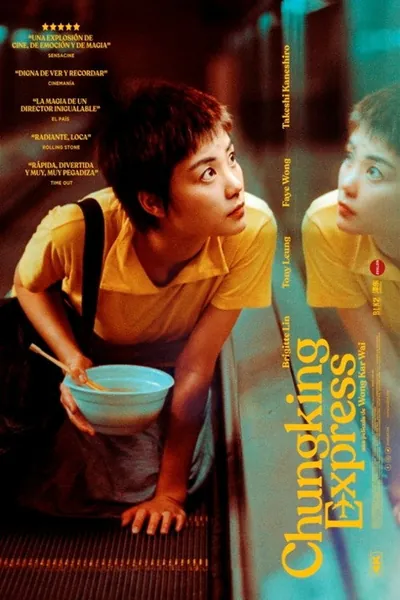
Chungking Express
1994 · Hong Kong · 101 min
- Director
- Wong Kar-wai
- Screenplay
- Wong Kar-wai
- Producer
- Jeffrey Lau
- Music
- Michael Galasso, Frankie Chan, Roel A. Garcia
- Cinematography
- Christopher Doyle, Andrew Lau
- Editing
- William Chang, Kwong Chi-Leung
- Production company
- Jet Tone Films
Awards: Hong Kong Film Award for Best Film
Cast
What it is about
Hong Kong, 1994. The film interweaves two romantic stories without melodrama, linked by shared locations, minor characters and recurring motifs. In the first, a lonely policeman, Cop 223, tries to get over his breakup with his girlfriend May by clinging to small daily rituals, while his path crosses that of a mysterious blonde woman caught up in the drug trade. In the second, Cop 663 tries to recover from a separation when Faye, a young worker at a fast-food counter who quietly admires him, enters his routine. Both stories share urban settings, a brisk rhythm and an attentive eye on loneliness in big cities.
How it was made
Wong Kar-wai wrote and directed the film during a break from Ashes of Time, his martial arts epic, which had consumed months of work. He used that gap to make a lighter, contemporary project on a modest budget that could be finished quickly. He wanted his characters to face problems similar to those in his earlier work, but from a less grave and more independent perspective. He first imagined the two stories as mirrors: one in daylight on Hong Kong Island, the other at night in Kowloon. The title refers to Chungking Mansions, a Tsim Sha Tsui building with a reputation for crime, and to the Midnight Express food stand in Lan Kwai Fong. Christopher Doyle shot the film, and the soundtrack mixes electronic music, blues and rock. The two-part structure, with its abrupt shift between stories, departs from the linear narratives built around a single protagonist.
Reception and legacy
The film premiered in Hong Kong on 14 July 1994 and won critical praise, particularly for its direction, cinematography and performances. Its screening at the Locarno festival brought it international attention, and it is now seen as one of its director's most important works and a landmark of 1990s Hong Kong cinema. In 2022 it placed 88th in the decennial Sight & Sound critics' poll of the greatest films of all time. It won the Hong Kong Film Award for Best Film. Its influence can be seen in later art-house cinema, in its blend of fragmented storytelling with humour and melancholy, and in its view of the city as a place of brief, fleeting encounters.
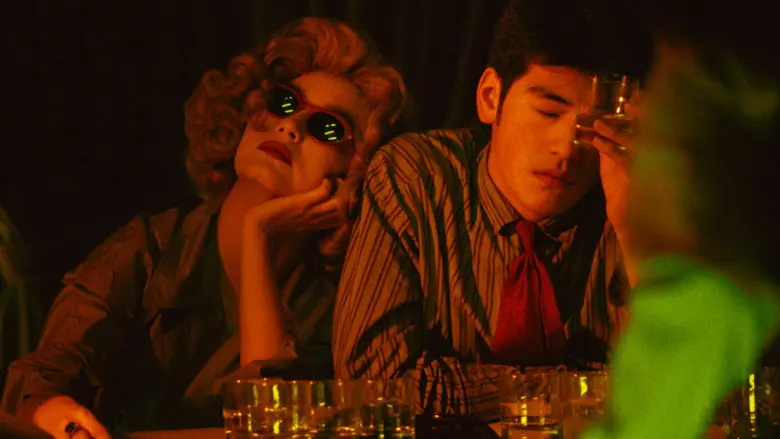
Stills


Trailer
Clicking loads the video from YouTube (privacy-enhanced mode). Open on YouTube
Trivia
A lightning shoot
Wong Kar-wai shot the film in about two weeks, using a break in the production of Ashes of Time.
A singer in the cast
Faye Wong was then known mainly as a singer rather than an actress, and her role proved central to the film.
More films by Wong Kar-wai
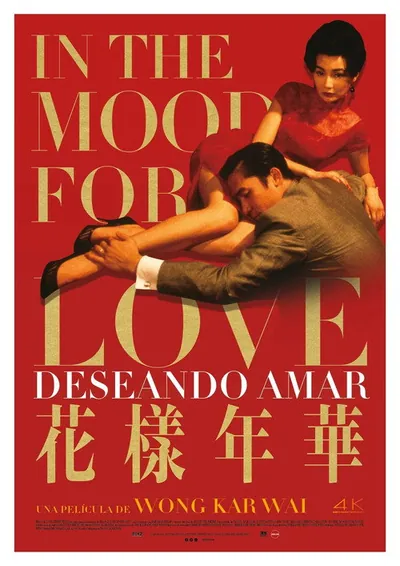 In the Mood for Love
 2046
 My Blueberry Nights
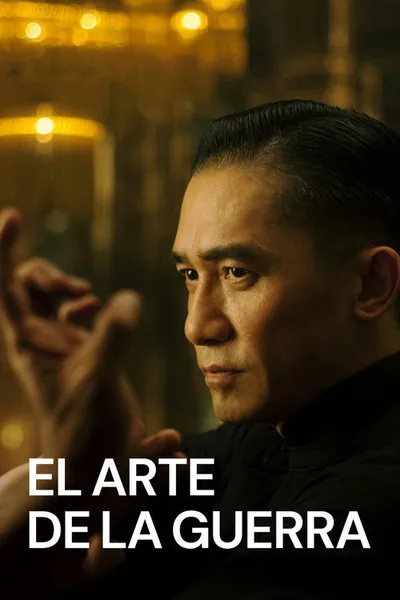 The Grandmaster
 Happy Together
 To Each His Own Cinema
Original Cinematopedia text based on Wikipedia (es) and Wikipedia (en) and Wikidata.