
Ernst Lubitsch
1892–1947 · German-American film director, producer, writer and actor
Biography
Ernst Lubitsch (Berlin, 29 January 1892-Los Angeles, 30 November 1947) was a German-born director, producer, screenwriter and actor who spent most of his career in Hollywood. Born in the German Empire, he became a naturalized American citizen in the mid-1930s, though he had been working in the United States since 1922. He is one of the central figures of classic American comedy. His polished comedies of manners, which handled sex, power and politics with a light touch, earned him a reputation as Hollywood's most elegant director. His output also covers drama, farce and musical spectacle, and his name is tied to the idea of the «Lubitsch touch».
Lubitsch grew up in Berlin in a middle-class Ashkenazi Jewish family. His father, Simon, was a tailor who hoped his son would take over the family business, but Ernst was drawn to the stage from an early age. He attended the Sophien school in Berlin and, as a teenager, began performing in theatre productions. By 1911 he belonged to the company of Max Reinhardt at the Deutsches Theater, one of the leading playhouses in German-speaking Europe, and toured with it across the continent.
In 1912 he made his first screen appearances as an actor, and in 1913 he created a comic Jewish character for a series of short films that he also wrote and directed. Gradually he stopped acting to focus on directing. Between 1914 and 1922 he made dozens of films of varying length, building a solid craft and a name within German cinema. His early prestige came from historical dramas and spectacles, while lighter comedies also formed part of his output, a genre that would later become the core of his career.
By the early 1920s he had won international attention with large productions, including the historical spectacles that were widely distributed abroad. That success brought him to the United States in 1921, but his first visit was brief. The reception was cool, partly because of the wartime memory and the competition from German releases, and he went home within weeks. He had nonetheless seen how far the resources of the American industry exceeded those of German studios.
He settled in Hollywood in 1922, invited by Mary Pickford, for whom he directed Rosita. The film did well with critics and audiences, but tension between director and star during the shoot meant they never worked together again. He then signed with Warner Brothers, a contract that gave him control over casting, crew and the final cut. With The Marriage Circle (1924) and Lady Windermere's Fan (1925) he established a reputation for sophisticated comedy, although his films were only marginally profitable for the studio. After leaving Warner, he worked for MGM and Paramount. The Patriot (1928), made for Paramount, earned him his first Academy Award nomination for Best Director.
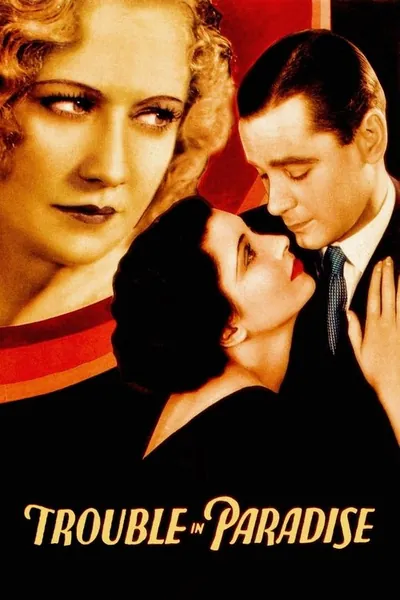
The arrival of sound transformed his career. With The Love Parade (1929), starring Maurice Chevalier and Jeanette MacDonald, he became one of the masters of the musical comedy. Films such as Monte Carlo (1930) and One Hour with You (1932) followed, and critics praised them. In 1932 he made Trouble in Paradise, a tale of two thieves and a woman that many regard as one of his finest works. The film was pulled from circulation after the stricter enforcement of the Production Code and was not widely seen again for decades.
In 1935 Paramount named him its production chief, a post in which he struggled to delegate and which he left after about a year. He then returned to full-time filmmaking, directing The Merry Widow (1934) for MGM and, in 1939, Ninotchka, starring Greta Garbo, a satire of Soviet bureaucracy that became a major success for the studio. The following year he made The Shop Around the Corner (1940), a comedy of cross purposes about two shop clerks who write to each other without knowing they are secret sweethearts, with James Stewart and Margaret Sullavan. Working again with his regular writer Samson Raphaelson, he showed his gift for combining irony with feeling.
His best-known film for many viewers is To Be or Not to Be (1942), a comedy about a theatre troupe in Nazi-occupied Poland that mixes anti-Nazi satire with a romantic intrigue. He then made Heaven Can Wait (1943), his first colour film, about a man who recounts his life at the gates of Hell. His health declined during these years, which reduced his workload and led him to take on more supervisory roles at Twentieth Century Fox. His last film, That Lady in Ermine, was left unfinished, and Otto Preminger completed it after his death.
Lubitsch's legacy rests largely on the so-called «Lubitsch touch», a way of suggesting more than the camera shows. The method allowed him to get past the censors and let audiences complete what was left out of the frame, with ambiguity and an irony that was never merely decorative. His influence reached Billy Wilder, his friend, who in 1958 established the Ernst Lubitsch comedy prize in Germany. Lubitsch received an honorary Academy Award in 1946 for his contribution to the art of film and was nominated three times for Best Director. He died in Hollywood in 1947 at the age of 55, and he remains a reference for those who see comedy as a form of intelligence.
Key films
- Ninotchka (1939)
- To Be or Not to Be (1942)
- The Love Parade (1929)
- The Shop Around the Corner (1940)
- Trouble in Paradise (1932)
- The Patriot (1928)
- Heaven Can Wait (1943)
- The Merry Widow (1934)
Trivia
«Garbo Laughs!»
The studio promoted Greta Garbo's laughing scene in Ninotchka with the tagline «Garbo Laughs!», highlighting how unusual it was to see the actress, known for her seriousness on screen, laugh.
A funeral remark
Leaving Lubitsch's funeral, Billy Wilder said «No more Lubitsch», and William Wyler replied that it was worse than that, since there would be no more Lubitsch pictures.
A film out of sight
Trouble in Paradise was withdrawn from circulation after the Production Code was enforced more strictly and was not seen again until 1968; it was not available on videocassette and reached DVD only in 2003.
On Cinematopedia
 Ninotchka1939
 To Be or Not to Be1942
 The Love Parade1929
 The Patriot1928
 The Shop Around the Corner1940
 Trouble in Paradise1932The Eternal Jew1940The Eternal Jew1940
 Heaven Can Wait1943
 The Merry Widow1934
 One Hour with You1932
 The Smiling Lieutenant1931
 Desire1936
- Robert and Bertram 1915 · cast
- Shoe Palace Pinkus 1916 · director, cast
- The Merry Jail 1917 · director, screenplay, cast
- Carmen 1918 · director
- I Don't Want to Be a Man 1918 · director, screenplay
- The Eyes of the Mummy 1918 · director
- The Toboggan Cavalier 1918 · director, screenplay, cast
- Madame Dubarry 1919 · director
- The Doll 1919 · director, screenplay, cast
- The Oyster Princess 1919 · director, screenplay
- Intoxication 1919 · director
- Meyer from Berlin 1919 · director, cast
- My Wife, the Movie Star 1919 · director, screenplay
- The Swabian Maiden 1919 · director
- Anna Boleyn 1920 · director
- One Arabian Night 1920 · director, screenplay, cast
- Kohlhiesel's Daughters 1920 · director, screenplay
- Romeo and Juliet in the Snow 1920 · director, screenplay
- The Wildcat 1921 · director, screenplay
- The Loves of Pharaoh 1922 · director
- Rosita 1923 · director
- The Flame 1923 · director
- Forbidden Paradise 1924 · director
- The Marriage Circle 1924 · director, producer
- Three Women 1924 · director
- Lady Windermere's Fan 1925 · director, editing, producer
- Kiss Me Again 1925 · director
- So This Is Paris 1926 · director
- The Student Prince in Old Heidelberg 1927 · director
- The Patriot 1928 · director, editing, producer
- The Love Parade 1929 · director, producer
- Eternal Love 1929 · director
- Monte Carlo 1930 · director, producer
- Paramount on Parade 1930 · director
- The Smiling Lieutenant 1931 · director, screenplay, producer
- Trouble in Paradise 1932 · director, screenplay
- One Hour with You 1932 · director, producer
- Broken Lullaby 1932 · director, producer
- If I Had a Million 1932 · director, screenplay
- Design for Living 1933 · director, producer
- The Merry Widow 1934 · director, screenplay, producer
- Desire 1936 · producer
- Angel 1937 · director, producer
- Bluebeard's Eighth Wife 1938 · director, producer
- Ninotchka 1939 · director, producer, cast
- The Shop Around the Corner 1940 · director, producer, cast
- The Eternal Jew 1940 · cast
- That Uncertain Feeling 1941 · director, producer
- To Be or Not to Be 1942 · director, producer
- Heaven Can Wait 1943 · director, screenplay, producer
- A Royal Scandal 1945 · director, producer
- Dragonwyck 1946 · producer
- Cluny Brown 1946 · director, producer
- That Lady in Ermine 1948 · director, producer
- Hitler: A Career 1977 · cast
Original Cinematopedia text based on Wikipedia (es) and Wikipedia (en) and Wikidata.