
Arthur Honegger
1892–1955 · Swiss composer born in France, member of Les Six and film composer
Biography
Arthur Honegger (El Havre, 1892 - Paris, 1955) was a Swiss composer who was born in France and spent most of his life in Paris. A member of Les Six, though with a more serious style than most of his colleagues, he is best remembered for his oratorios, symphonies and symphonic movements. He was also one of the concert composers who wrote music for film in the 1920s.
Born to Swiss parents, he never used his first name, Oscar. He studied harmony and violin in his native town, then trained in Zurich before entering the Paris Conservatoire in 1911. There he studied with Widor, d'Indy and André Gédalge, who encouraged him to compose. His works of the 1910s, such as the ballet Le dit des jeux du monde, mark the start of his career. In 1921 he wrote Le Roi David, a dramatic psalm that brought him fame and remains in the choral repertoire. Pacific 231 (1923) evokes a steam locomotive through precise orchestral writing, a fascination the composer openly shared.
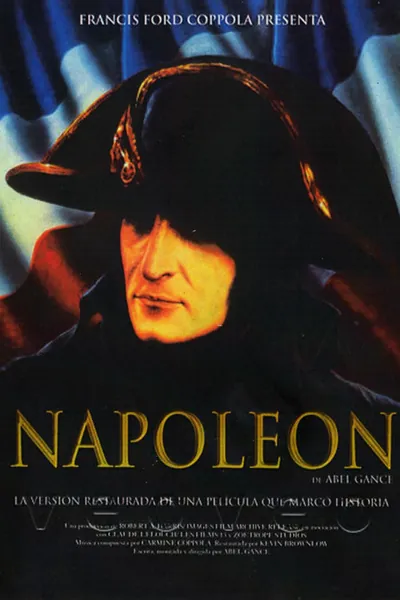
Between the wars he was very prolific, producing ballets, oratorios such as Jeanne d'Arc au bûcher, operas and operettas. He collaborated with Jacques Ibert on L'Aiglon. His film work began with Abel Gance's La Roue, followed by Gance's silent epic Napoleon (1927). He later scored films such as Les Misérables and Pygmalion while continuing with concert music. His style combines Bach-like counterpoint, strong rhythms, broad melodies and colourful harmony, with a concern for formal architecture and a debt to German Romanticism that set him apart from his peers.
In 1926 he married the pianist Andrée Vaurabourg, a fellow student, on condition that they live in separate apartments, since he needed solitude to compose. With the singer Claire Croiza he had a son, Jean-Claude. During the Second World War, the German occupation prevented him from returning to Switzerland, and he kept working in Paris with relative freedom. In those years he wrote his last four symphonies, including the Symphony No. 3, Symphonie liturgique, and the Symphony No. 4, Deliciae basiliensis, a tribute to his time in Basel. His final work was A Christmas Cantata (1953). He died at his Paris home in November 1955 after a long illness.
His legacy lives on in several tributes: his portrait appeared on the Swiss twenty-franc note issued in 1996 and withdrawn in 2017, and a conservatoire bearing his name opened in Le Havre in 2002. His music is still performed, above all Pacific 231 and Le Roi David.
Key films
- La Roue (1922-1923), by Abel Gance: one of his first film scores, of which mainly the overture survives.
- Napoleon (1927), by Abel Gance: a second collaboration with Gance on this silent epic.
- Les Misérables (1933): a film score listed among his notable works.
- Pygmalion (1938): another example of his film music from the interwar years.
Trivia
A marriage at a distance
He married the pianist Andrée Vaurabourg in 1926 on condition that they live in separate homes. They lived together only for a year, from 1935 to 1936, after she was injured in a car accident.
A banknote with his portrait
His portrait appeared on the Swiss twenty-franc note issued in October 1996, which was withdrawn in 2017.
On Cinematopedia
 Pygmalion1938
 Napoléon1927
 Van Gogh1991
 The Wheel1922
 Les Misérables1933Joan of Arc at the Stake1954Joan of Arc at the Stake1954
 Mayerling1936
 End of the World1931Crime and Punishment1935Crime and Punishment1935The Crew1935The Crew1935The Newspaper Falls at Five O'Clock1942The Newspaper Falls at Five O'Clock1942Harvest1937Harvest1937
- The Wheel 1922 · music
- Napoléon 1927 · music
- End of the World 1931 · music
- Les Misérables 1933 · music
- Crime and Punishment 1935 · music
- The Crew 1935 · music
- Mayerling 1936 · music
- Nitchevo 1936 · music
- Harvest 1937 · music
- Street of Shadows 1937 · music
- Pygmalion 1938 · music
- Musicians of the Sky 1940 · music
- The Newspaper Falls at Five O'Clock 1942 · music
- Mermoz 1943 · music
- Joan of Arc at the Stake 1954 · music
- Van Gogh 1991 · music
Original Cinematopedia text based on Wikipedia (es) and Wikipedia (en) and Wikidata.