
Ikiru
1952 · Japan · 143 min
- Director
- Akira Kurosawa
- Screenplay
- Akira Kurosawa, Shinobu Hashimoto, Hideo Oguni
- Producer
- Sōjirō Motoki
- Music
- Fumio Hayasaka
- Cinematography
- Asakazu Nakai
- Editing
- Akira Kurosawa
- Production company
- Toho
- Based on
- The Death of Ivan Ilyich
Cast
What it is about
Kanji Watanabe has spent thirty years in the same monotonous post in the Tokyo public works department and is close to retirement. His wife is dead, and his son lives with him mainly to secure the inheritance, leaving him isolated at home and at the office. A medical check-up brings news that changes everything: he is seriously ill and has little time left. Keeping the diagnosis to himself, Watanabe sets out to try the pleasures he has always avoided, searching for some meaning in the months ahead. The film follows his inner journey, moving between fleeting amusement and the pursuit of something lasting, while it shows the administrative machinery he has long served.
How it was made
The screenplay was written by Akira Kurosawa, Shinobu Hashimoto and Hideo Oguni, marking Kurosawa's first collaboration with Oguni. According to Oguni, the starting point was a film about a man who knows he is going to die and wants a reason to live his last days. Kurosawa linked the project to his meditations on death and to his wish to portray contemporary Japan. Tolstoy's novella The Death of Ivan Ilyich served as a partial inspiration. Hashimoto's first draft placed the protagonist's death at the end, but Oguni restructured the story so that it falls roughly halfway through. The working title was The Life of Kanji Watanabe, later replaced by Ikiru. Filming began on 14 March 1952, paused during Tōhō's summer break, and resumed in June, concluding in mid-September. Kurosawa chose the song Gondola no Uta, and the writers consulted a receptionist to complete its lyrics. Fumio Hayasaka's score and Asakazu Nakai's cinematography support a restrained tone, anchored by Takashi Shimura's performance.
Reception and legacy
The film competed for the Golden Bear at the 4th Berlin International Film Festival in 1954. It won Best Film at the Kinema Junpo and Mainichi Film Awards, and over time it has come to be regarded as one of the great works of Japanese cinema and of film history in general. Some critics place it alongside Seven Samurai among Kurosawa's finest achievements. Its criticism of bureaucracy and its reflection on the meaning of life, especially in the closing scene at the park, have made it a frequent subject of academic analysis. Critic Donald Richie noted that the title, meaning simply "to live," might suggest that existence is enough, though the protagonist discovers that living is also painful and resolves that his life should not have been futile.
Stills


Trailer
Clicking loads the video from YouTube (privacy-enhanced mode). Open on YouTube
More films by Akira Kurosawa
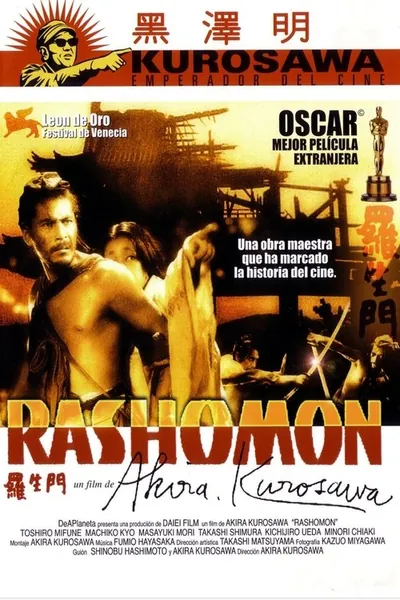 Rashomon
 Dersu Uzala
 Seven Samurai
 Ran
 Kagemusha
 Yojimbo
Original Cinematopedia text based on Wikipedia (es) and Wikipedia (en) and Wikidata.