
Asakazu Nakai
1901–1988 · Japanese cinematographer
Biography
Asakazu Nakai (born in Hyōgo Prefecture in 1901, died in 1988) was a Japanese cinematographer best remembered for his long association with Akira Kurosawa. His career spanned the postwar period and some of the best-known Japanese films of the mid-twentieth century.
He became a regular member of Kurosawa's team and shot many of the director's most admired pictures. Among them were Stray Dog, which earned him the Mainichi Film Award for Best Cinematography in 1950, along with Ikiru, Seven Samurai and Throne of Blood, where his camerawork supported the director's distinctive style. He later photographed Dersu Uzala (1975).
His international recognition came with Ran (1985), which earned him an Academy Award nomination for Best Cinematography. At that point he became the oldest nominee ever in that category. He died in 1988, and his legacy remains closely tied to Kurosawa's and to the image of postwar Japanese cinema.
Key films
- Stray Dog (1949): a detective hunts a young thief through a sweltering postwar Tokyo, with photography that captures the heat and tension of the city.
- Ikiru (1952): a sick civil servant tries to find meaning in his last months.
- Seven Samurai (1954): Kurosawa's epic, in which the camera shapes both the action and the characters.
- Throne of Blood (1957): a version of Macbeth in feudal Japan, shot in stark black and white.
- Dersu Uzala (1975): the journey through the Siberian taiga of a native hunter and a Russian explorer.
- Ran (1985): Kurosawa's last great epic, which brought Nakai his Oscar nomination.
Trivia
Mainichi award in 1950
He won the Mainichi Film Award for Best Cinematography in 1950 for Stray Dog.
The oldest nominee
His Oscar nomination for Ran made him the oldest nominee ever in the Best Cinematography category.
On Cinematopedia
 Dersu Uzala1975
 Seven Samurai1954
 Ran1985
 Ikiru1952
 Throne of Blood1957
 Stray Dog1949
 High and Low1963
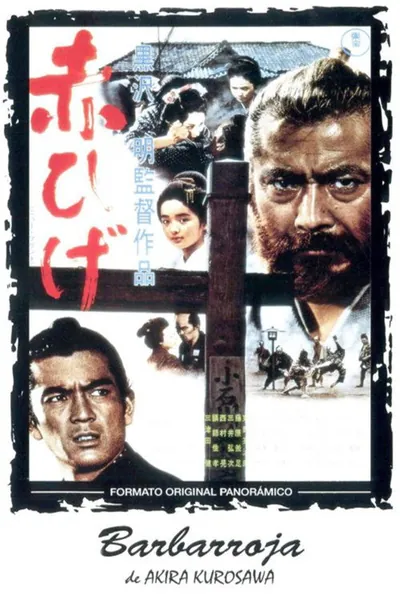 Red Beard1965
 No Regrets for Our Youth1946
 I Live in Fear1955
 One Wonderful Sunday1947
 The End of Summer1961
- No Regrets for Our Youth 1946 · cinematography
- One Wonderful Sunday 1947 · cinematography
- Stray Dog 1949 · cinematography
- Aoi Sanmyaku 1949 · cinematography
- Ikiru 1952 · cinematography
- Seven Samurai 1954 · cinematography
- I Live in Fear 1955 · cinematography
- Throne of Blood 1957 · cinematography
- The End of Summer 1961 · cinematography
- Girls of the Night 1961 · cinematography
- High and Low 1963 · cinematography
- The World's Most Beautiful Swindlers 1964 · cinematography
- Red Beard 1965 · cinematography
- Dersu Uzala 1975 · cinematography
- Ran 1985 · cinematography
Original Cinematopedia text based on Wikipedia (en) and Wikidata.