The Song of the Rivers
1954 · Germany, East Germany · 97 min
- Director
- Joris Ivens, Robert Ménégoz, Joop Huisken
- Music
- Dmitri Shostakovich
- Cinematography
- Erich Nitzschmann
- Editing
- Ella Ensink
- Production company
- World Federation of Trade Unions, DEFA
Cast
What it is about
The Song of the Rivers is a documentary that travels along six major rivers of the world, the Volga, the Mississippi, the Ganges, the Nile, the Amazon and the Yangtze, to portray the lives of those who work beside their waters. Without a conventional plot, the film alternates landscapes and scenes of laborers with images of industrial machinery, in a journey that celebrates collective effort.
How it was made
The film was produced by DEFA, the East German studio, and directed mainly by Dutch filmmaker Joris Ivens, with Robert Ménégoz and Joop Huisken also credited. Different crews shot it in many countries, and Ivens later handled the editing. Dmitri Shostakovich wrote the score, with lyrics by Bertolt Brecht. Ernst Busch performs the songs, while Paul Robeson, who also sings, narrates. The editing gives the whole a cumulative force.
Reception and legacy
It was presented as a tribute to international trade unionism and solidarity between peoples. Its circulation was especially wide in communist countries, where it is said that 250 million people saw it, a figure best taken with caution. Compared with the intimacy of Power and the Land, another Ivens film, its keynote is abstract grandiloquence, and today it is remembered mainly as an example of postwar militant cinema.
Stills

Trivia
Brecht lyrics
The song lyrics were written by Bertolt Brecht, with music by Dmitri Shostakovich.
Robeson as narrator
Paul Robeson, besides narrating the documentary, performs some of its songs.
More films by Joris Ivens
 The Spanish Earth
 Far from Vietnam
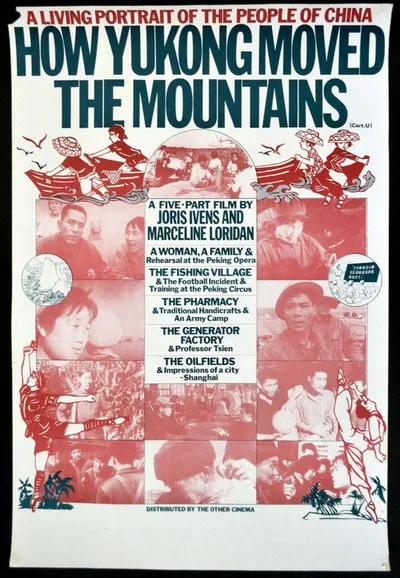 How Yukong Moved the Mountains
 Borinage (Misère au Borinage)
 Nanguila Tomorrow
Original Cinematopedia text based on Wikipedia (en) and Wikidata.