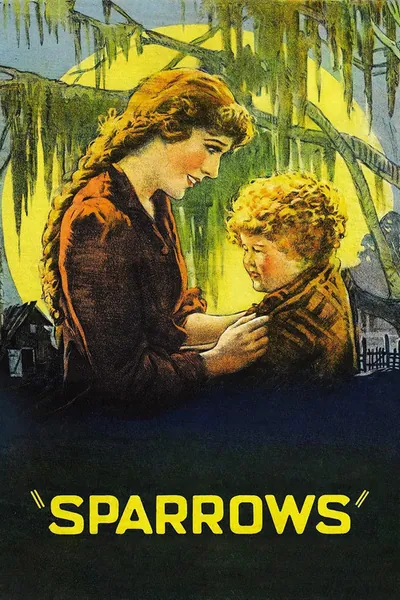
Sparrows
1926 · United States · 84 min
- Director
- Carl Harbaugh, Earle Brown, William Beaudine, Tom McNamara
- Screenplay
- C. Gardner Sullivan
- Producer
- Mary Pickford
- Cinematography
- Hal Mohr, Charles Rosher, Karl Struss
Cast
What it is about
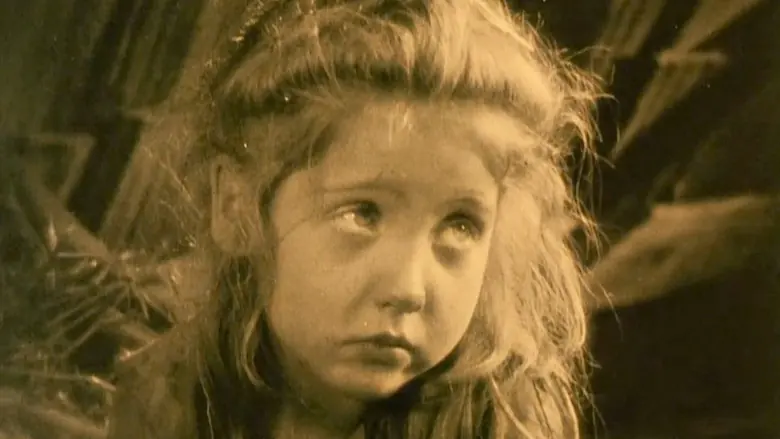
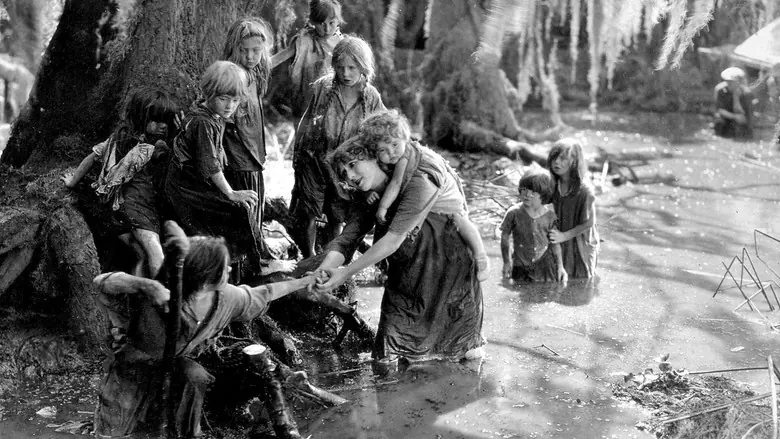
Molly, an adolescent inmate of a grim baby farm run by a cruel couple beside an alligator-infested swamp, tries to give love and care to the hungry children who share her confinement. The arrival of a kidnapped baby and the people who want it back disrupts the routine of the place and tests the young woman's resolve to protect the little ones.
How it was made
Sparrows was produced and starred Mary Pickford, then one of the most powerful figures in Hollywood. To build its swamp, art director Harry Oliver turned a studio back lot into a stylized Gothic landscape: the ground was scraped bare, 600 trees were transplanted, and pits were filled with burned cork, sawdust and muddy water. Cinematographer Hal Mohr later debunked Pickford's often-told story about a real baby carried across water teeming with alligators.
Reception and legacy
Critics were divided at the time. The New York Times felt the melodrama and sentimentality weighed the film down, while Picture Play praised the performance of its star. Over the years, film historian Jeffrey Vance has regarded it as Pickford's masterpiece, and in 2025 it was selected for the United States National Film Registry.
Stills

Trailer
Clicking loads the video from YouTube (privacy-enhanced mode). Open on YouTube
Trivia
An alligator that never was
For years Pickford recounted that director William Beaudine had made her cross alligator-filled water carrying a real baby. Cinematographer Hal Mohr debunked the tale, saying there wasn't an alligator within ten miles of her.
Next-to-last silent role
Sparrows was Pickford's next-to-last silent role, followed by My Best Girl in 1927. She then made a few talkies before retiring to Pickfair, her estate with Douglas Fairbanks.
Original Cinematopedia text based on Wikipedia (en) and Wikidata.