
Touch of Evil
1958 · United States · 93 min
- Director
- Orson Welles
- Screenplay
- Orson Welles, Paul Monash, Whit Masterson
- Producer
- Albert Zugsmith, Rick Schmidlin
- Music
- Henry Mancini
- Cinematography
- Russell Metty
- Production company
- Universal Pictures
- Based on
- Badge of Evil
Cast
What it is about
Along the U.S.–Mexico border, a car bomb kills two people. The investigation falls to Hank Quinlan, a veteran police captain, and his loyal assistant Pete Menzies. Miguel Vargas, a Mexican special prosecutor on his honeymoon with his American wife Susie, becomes interested in the case and soon senses that something is wrong with Quinlan's methods. What begins as a murder inquiry turns into a personal struggle between Vargas's integrity and the power of a lawman used to deciding the truth himself, in a border town where smuggling, corruption and prejudice are part of daily life. Welles directs, writes and stars, building the story around a tense chase and a marriage caught in the middle.
How it was made
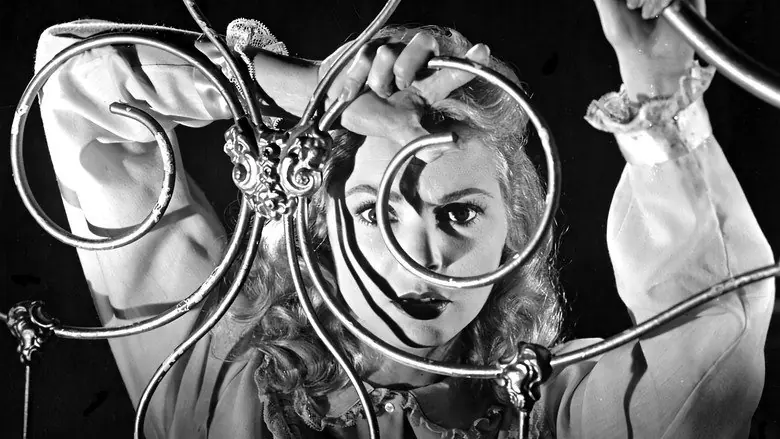
The film grew out of Badge of Evil, a 1956 novel by Whit Masterson that Universal bought for adaptation. Producer Albert Zugsmith hired Paul Monash to write a first script, but the project stalled until Charlton Heston, who had read the material, suggested that Welles direct. Welles agreed to star, direct and rewrite the screenplay, moving the story from San Diego to the Tijuana border and making the protagonist Mexican, a choice he linked to his concern with American racism and corruption in the region. Shot in black and white by Russell Metty, the film relies on hard light and strong contrasts. Its opening crane shot of about three minutes took fifteen days to film and has become one of cinema's famous long takes. After shooting, Universal recut the picture and ordered additional scenes without Welles, who was in Spain. He wrote a 58-page memo asking for his version to be restored, and that document later guided the 1998 re-edit.
Reception and legacy
The 1958 release was a commercial and critical failure in the United States, where reviewers were initially dismissive. It found a warmer audience in Europe and won top prizes at the 1958 Brussels World Film Festival. Its reputation was rehabilitated during the 1970s, and it is now widely regarded as one of Welles's finest films and one of the last great examples of classic film noir. In 1993 the Library of Congress selected it for the National Film Registry as culturally, historically and aesthetically significant.
Stills


Trailer
Clicking loads the video from YouTube (privacy-enhanced mode). Open on YouTube
Trivia
A 58-page memo
Welles wrote a lengthy 58-page document outlining how the film should be re-edited. Charlton Heston kept a copy, which helped the later restoration.
Fifteen days for one shot
The opening long take, lasting about three minutes, took fifteen days to film and has become a famous shot in cinema.
More films by Orson Welles
 Citizen Kane
 Othello
 The Magnificent Ambersons
 The Lady from Shanghai
 The Stranger
 The Trial
Original Cinematopedia text based on Wikipedia (es) and Wikipedia (en) and Wikidata.