
Ludwig
1973 · Italy, France, Germany · 184 min
- Director
- Luchino Visconti
- Screenplay
- Luchino Visconti, Suso Cecchi d'Amico, Enrico Medioli
- Music
- Jacques Offenbach
- Cinematography
- Armando Nannuzzi
- Editing
- Ruggero Mastroianni
Awards: David di Donatello for Best Film · 1 nominations
What the critics say
33 % Rotten Tomatoes positive reviewsCast
What it is about
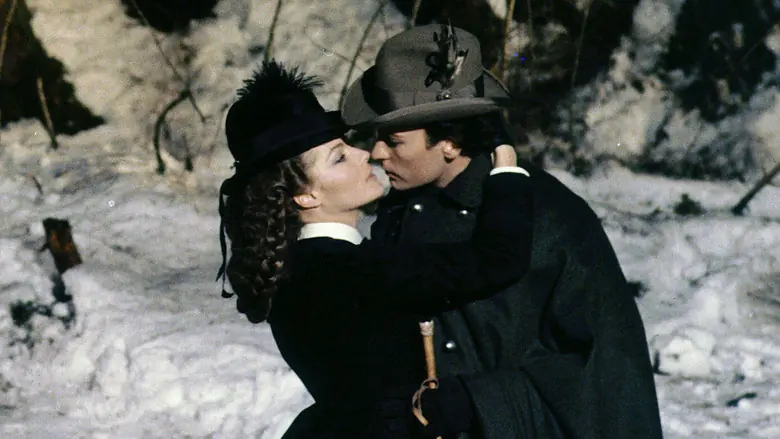
Ludwig traces the life of Ludwig II of Bavaria, from his coronation in 1864 at the age of eighteen to his death. The film follows the king's generous support for the composer Richard Wagner and his close but troubled bond with his cousin, Empress Elisabeth of Austria, while his cabinet grows increasingly alarmed by his spending. Visconti portrays a sensitive ruler, detached from politics and increasingly retreating into dream worlds, whose private and public life gradually falls apart.
How it was made
Visconti co-wrote the screenplay with Suso Cecchi D'Amico and Enrico Medioli, conceiving it as the final part of a German trilogy that began with The Damned and Death in Venice. Shooting began in late January 1972 and lasted six months, mixing locations in Bavaria, Austria and around Lake Starnberg with studio work at Cinecittà. The cast spoke English on set and later re-recorded their lines, and Helmut Berger was replaced in the German release because of his Austrian accent. Visconti suffered a stroke during the final stages of production, an illness that screenwriter Enrico Medioli later linked to the abrupt move from Austrian cold to the Cinecittà heat. The score uses existing orchestral pieces by Wagner, Offenbach and Schumann rather than an original composition.
Reception and legacy
The film won two David di Donatello Awards, for Best Film and Best Director, and Berger received a special David for his performance. It earned an Academy Award nomination for Best Costume Design. In the United States, a heavily cut version met mixed to negative reviews, with critics such as Roger Ebert and Vincent Canby finding it dull and short on ideas. Over time, its lavish visual style and portrait of aristocratic decline have secured its place as one of Visconti's major late works.
Stills


Trailer
Clicking loads the video from YouTube (privacy-enhanced mode). Open on YouTube
Trivia
Shot in English
Visconti filmed in English to accommodate a cast of German, English and Italian speakers. The dialogue was re-recorded in post-production.
A replaced voice
Helmut Berger was dubbed in the German release because of his Austrian accent, and in the Italian version by Giancarlo Giannini.
More films by Luchino Visconti
 The Leopard
 Death in Venice
 Conversation Piece
 Of These Thousand Pleasures
 Rocco and His Brothers
 The Damned
Original Cinematopedia text based on Wikipedia (es) and Wikipedia (en) and Wikidata.