
The Green Mile
1999 · United States · 189 min
- Director
- Frank Darabont
- Screenplay
- Frank Darabont
- Producer
- Frank Darabont, David Valdes
- Music
- Thomas Newman
- Cinematography
- David Tattersall
- Editing
- Richard Francis-Bruce
- Production company
- Warner Bros. Entertainment, Universal Pictures, Castle Rock Entertainment
- Based on
- The Green Mile
Awards: · 4 nominations
Cast
What it is about
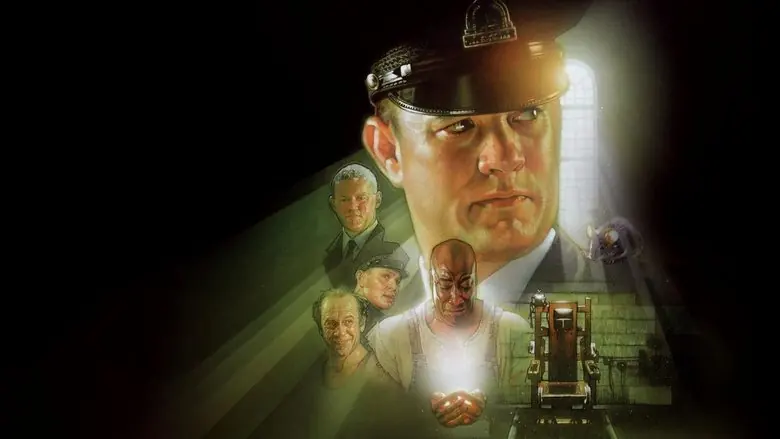
In 1935, at the death row wing of Cold Mountain Penitentiary in Louisiana, head guard Paul Edgecomb and his colleagues oversee a group of inmates in a place nicknamed for the green linoleum of its corridor. Tension grows, partly because of one officer's cruelty. The arrival of John Coffey, a huge, gentle man convicted of murdering two little girls, unsettles the routine. His meekness sits oddly with the crime he is accused of, and Paul soon notices that the prisoner seems to have abilities no one can explain. The story is framed by an elderly Paul recalling those months to a friend at his care home.
How it was made
Frank Darabont adapted Stephen King's novel into a screenplay in under eight weeks and also directed the film. Shooting took place at Warner Hollywood Studios in West Hollywood, California, and on location in Shelbyville, Tennessee, Blowing Rock, North Carolina, and at an old Tennessee state prison. Production designer Terence Marsh built the interior sets, using elongated, cathedral-like windows to suggest the film's mystical side. The electric chair was also custom designed, inspired by real prison devices. The title refers to the green floor of the corridor condemned men walk before execution. Tom Hanks and Darabont met at an Academy Award luncheon in 1994, and King said he had pictured Hanks in the role. Hanks was first considered for the elderly Paul too, but the makeup tests were unconvincing, so Dabbs Greer played the old Edgecomb in his final film role. Michael Clarke Duncan got the part through Bruce Willis, his co-star in Armageddon a year earlier.
Reception and legacy
The film opened in the United States on December 10, 1999, to largely positive reviews that praised Darabont's direction and writing, its emotional force and the performances, especially Hanks and Duncan. Its length drew some criticism at 189 minutes. It was a commercial success, grossing about $286.8 million against a $60 million budget. It earned four Academy Award nominations: Best Picture, Best Supporting Actor for Duncan, Best Sound and Best Adapted Screenplay. At the 2000 Saturn Awards it won Best Film, with Duncan and Patricia Clarkson also honoured in supporting categories. It remains a notable example of King's work on screen and of the fantasy prison drama of the late nineties.
Stills


Trailer
Clicking loads the video from YouTube (privacy-enhanced mode). Open on YouTube
Trivia
Origin of the title
The name comes from the green linoleum floor of the corridor that condemned men walk down on their way to the electric chair.
An older actor for the old role
Tom Hanks was also meant to play the elderly Paul, but the makeup tests were not convincing, so Dabbs Greer took the part in his final film.
More films by Frank Darabont
 The Shawshank Redemption
 The Mist
 The Majestic
Original Cinematopedia text based on Wikipedia (es) and Wikipedia (en) and Wikidata.