
White Wilderness
1958 · United States · 73 min
- Director
- James Algar
- Screenplay
- James Algar
- Producer
- Walt Disney, Ben Sharpsteen
- Music
- Oliver Wallace
- Cinematography
- Tom McHugh, James R. Simon, Lloyd Beebe, Herb Crisler, Lois Crisler, Hugh A. Wilmar
- Editing
- Norman Palmer
- Production company
- The Walt Disney Company
Awards: Academy Award for Best Documentary Feature Film · 3 nominations
What it is about
A nature documentary about wildlife in the North American Arctic, following a range of species from small rodents to large predators as they struggle to survive in a harsh environment. The narration accompanies the images and describes the animals' habits, blending a naturalist's observation with a sense of adventure.
How it was made
Produced by Walt Disney Productions as part of its True-Life Adventure series, the film was directed and written by James Algar, with Ben Sharpsteen as producer and a score by Oliver Wallace. Shooting took place on location in Canada over three years, and the Technicolor photography was handled by a large team of camera operators. Its most famous sequence, involving lemmings, was filmed in Alberta with animals brought to the site and staged terrain.
Reception and legacy
The film won the Academy Award for Best Documentary Feature and the Golden Bear for Best Documentary at the Berlin Film Festival, and was also nominated for Best Original Score. Its best-known scene, a supposed mass migration of lemmings ending in the sea, was exposed in 1982 by a CBC report showing the animals had been driven off a cliff. The episode has nonetheless helped keep a myth about these rodents alive.
Stills


Trailer
Clicking loads the video from YouTube (privacy-enhanced mode). Open on YouTube
Trivia
A makeshift setting
The lemming sequence was filmed in Alberta, a region that is not their natural habitat and does not even have a coastline.
A polar bear in the studio
Footage of a polar bear cub falling down an Arctic ice slope was actually filmed in a Calgary film studio.
An outside contributor
James R. Simon, a wildlife photographer who worked freelance for Disney, is credited with staging the scene, and the Walt Disney Family Museum maintains that he acted without the studio's knowledge.
More films by James Algar
 Victory Through Air Power
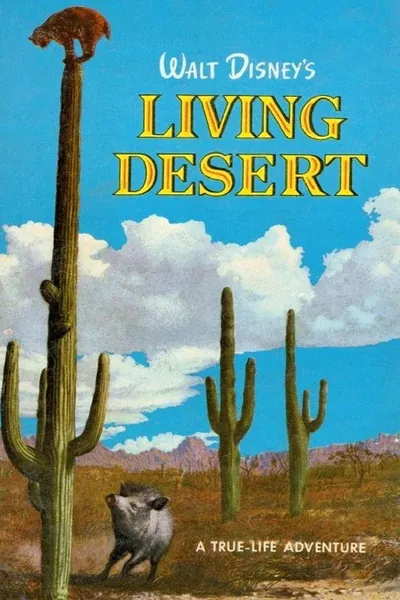 The Living Desert
 The Vanishing Prairie
 The African Lion
Original Cinematopedia text based on Wikipedia (es) and Wikipedia (en) and Wikidata.