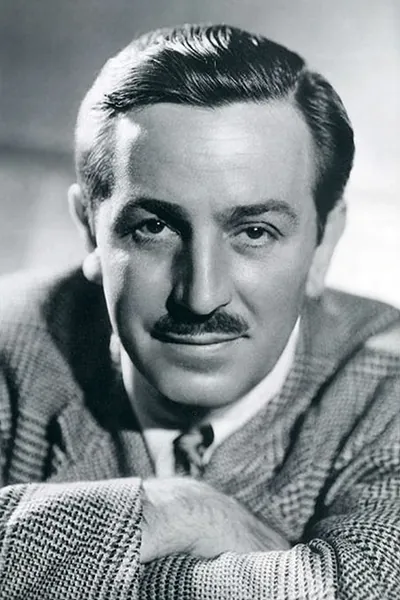
Walt Disney
1901–1966 · American animator, film producer and entrepreneur
Biography
Walter Elias "Walt" Disney (Chicago, 1901 – Burbank, California, 1966) was an American animator, film producer, screenwriter and entrepreneur, one of the most influential figures in animation and popular entertainment in the twentieth century. A pioneer of the American animation industry, he introduced many technical and creative innovations to cartoon production, and his name remains closely tied to family-oriented cinema.
Born in Chicago and raised largely in Missouri, he showed an early interest in drawing. He took art classes as a boy and, at eighteen, began working as a commercial illustrator. After moving to California in the early 1920s, he founded the Disney Brothers Studio with his brother Roy. Working with Ub Iwerks, he created Mickey Mouse in 1928, his first major success, and in the early years he also supplied the character's voice.
As the studio grew, Disney pushed for new advances: synchronized sound, three-strip Technicolor, animated feature films and improvements in camera technology. Snow White and the Seven Dwarfs (1937), Fantasia (1940), Dumbo (1941) and Bambi (1942) showed these developments and helped establish animation as a serious vehicle for feature-length storytelling. After World War II the studio alternated animated films such as Cinderella (1950) with live-action productions such as Treasure Island (1950) and Twenty Thousand Leagues Under the Sea (1954).
In the 1950s Disney moved into the theme park business. Disneyland opened in Anaheim, California, in July 1955, and to help finance it he expanded into television with programs such as Walt Disney's Disneyland and The Mickey Mouse Club. He also took part in projects including the 1959 Moscow Fair, the 1960 Winter Olympics and the 1964 New York World's Fair. In 1965 he began developing a second park, Disney World, built around an experimental planned city, the Experimental Prototype Community of Tomorrow (EPCOT).
Mary Poppins (1964), which won five Academy Awards, was one of his most successful late projects. Disney had been a heavy smoker all his life, and he died of lung cancer in December 1966, before the Florida park or the EPCOT project had been completed.
In private he was shy, self-critical and insecure, though he cultivated a warm and outgoing public image. He had high standards and expected much from those who worked with him. He was at times accused of racism or antisemitism, accusations that many who knew him contradicted. His reputation has shifted over the decades, from a purveyor of homely patriotic values to, in some historical readings, a symbol of American cultural imperialism.
His legacy endures in several ways. His films are still watched and adapted, the studio that bears his name keeps producing popular entertainment, and the theme parks that carry his name draw millions of visitors each year across four countries. In the United States he is acknowledged as a national cultural icon.
Key films
- Snow White and the Seven Dwarfs (1937): a showcase of the studio's technical and narrative advances in feature animation.
- Fantasia (1940): an ambitious experiment pairing classical music with animation.
- Bambi (1942): the story of a young deer that reinforced the artistic reputation of the studio's animation.
- Cinderella (1950): a return to animated feature filmmaking after World War II.
- Mary Poppins (1964): a blend of live action and animation and one of the biggest hits of his career.
Trivia
His own voice for Mickey
In the early years, Mickey Mouse, created in 1928, was voiced by Disney himself.
A short-lived studio
Laugh-O-Gram Studio, founded in 1921, did not earn enough to stay solvent and went bankrupt in 1923, shortly before Disney moved to Hollywood.
Five Oscars for Mary Poppins
Mary Poppins, one of his late successes, received five Academy Awards, part of the record for Oscars he holds as a producer.
On Cinematopedia
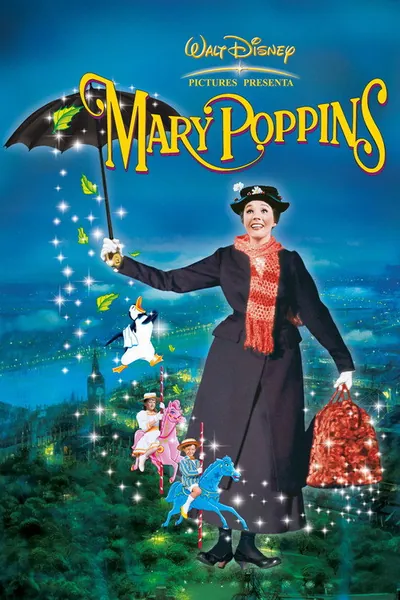 Mary Poppins1964
 Saludos Amigos1942
 Peter Pan1953
 The Three Caballeros1944
 Fun and Fancy Free1947
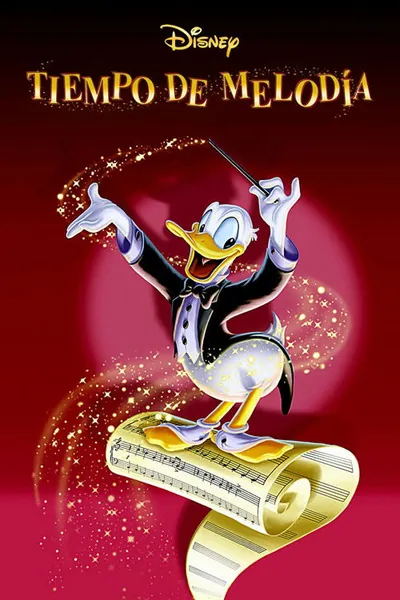 Melody Time1948
 The Reluctant Dragon1941
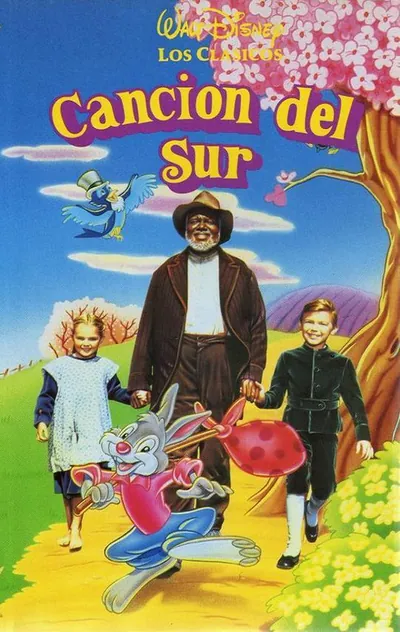 Song of the South1946
 20,000 Leagues Under the Sea1954
 Victory Through Air Power1943
 So Dear to My Heart1948
 The Parent Trap1961
- Hollywood Party 1934 · cast
- The Reluctant Dragon 1941 · producer, cast
- Saludos Amigos 1942 · producer, cast
- Victory Through Air Power 1943 · producer
- The Three Caballeros 1944 · producer
- Song of the South 1946 · producer
- Fun and Fancy Free 1947 · producer
- Melody Time 1948 · producer
- So Dear to My Heart 1948 · producer
- Treasure Island 1950 · producer
- The Story of Robin Hood and His Merrie Men 1952 · producer
- Peter Pan 1953 · producer
- The Living Desert 1953 · producer
- The Sword and the Rose 1953 · producer
- 20,000 Leagues Under the Sea 1954 · producer
- The Vanishing Prairie 1954 · producer
- The African Lion 1955 · producer
- Davy Crockett, King of the Wild Frontier 1955 · producer
- The Great Locomotive Chase 1956 · producer, cast
- Old Yeller 1957 · producer
- Perri 1957 · producer
- Johnny Tremain 1957 · producer
- White Wilderness 1958 · producer
- Darby O'Gill and the Little People 1959 · producer
- The Shaggy Dog 1959 · producer
- Swiss Family Robinson 1960 · producer
- Pollyanna 1960 · producer
- Kidnapped 1960 · producer
- The Parent Trap 1961 · producer
- The Absent-Minded Professor 1961 · producer
- Babes in Toyland 1961 · producer
- In Search of the Castaways 1962 · producer
- Bon Voyage! 1962 · producer
- The Incredible Journey 1963 · producer
- Savage Sam 1963 · producer
- Mary Poppins 1964 · producer
- That Darn Cat! 1965 · producer
- Lt. Robin Crusoe, U.S.N. 1966 · producer
- The Happiest Millionaire 1967 · producer
- Paperman 2012 · producer
Original Cinematopedia text based on Wikipedia (es) and Wikipedia (en) and Wikidata.