
3-Iron
Hierro 3
2004 · Japan, South Korea · 90 min
- Director
- Kim Ki-duk
- Screenplay
- Kim Ki-duk
- Producer
- Kim Ki-duk
- Cinematography
- Jang Seong-back
- Editing
- Kim Ki-duk
Awards: · 1 nominations
Cast
What it is about
Tae-suk is a homeless young man who rides a motorbike around town and slips into apartments whose owners are away. He tapes takeout menus over door locks to check whether anyone is home and, when the place is empty, stays over, does the laundry and fixes small household problems in exchange for a place to sleep. His life unfolds almost unseen. During one of these visits he meets Sun-hwa, a former model trapped in a luxurious house with a husband who abuses her. A silent relationship forms between them, built on understanding rather than words, and it begins to change both their lives. The film offers an unconventional love story in which the characters move at the margins of society and of language itself.
How it was made
The film is a South Korea and Japan co-production written, produced, directed and edited by Kim Ki-duk. Jae Hee plays Tae-suk and Lee Seung-yeon plays Sun-hwa. The title refers to a golf club that plays a prominent role in the story, and the sport works as a metaphor for the pursuit of social status. Kim keeps dialogue to a minimum, partly drawing on his time in Paris, where he learned to read people through their expressions without understanding the language. Cinematography is by Jang Seong-back. The structure relies on empty homes and on silence as a dramatic device, with a tone close to magical realism.
Reception and legacy
The film premiered in competition at the 2004 Venice Film Festival, where Kim won the Silver Lion for Best Direction. It collected numerous nominations and awards, including the FIPRESCI Grand Prix at the San Sebastián Film Festival. Critics praised its delicacy and strange tone, though some noted its slow pace. It scores well on sites such as IMDb and FilmAffinity and appears on lists of the best Korean and romantic films. Its box office was modest, on a budget of around one million dollars. It is now regarded as one of Kim Ki-duk's most acclaimed works and an example of the fascination Asian cinema held for Western audiences in the 2000s.
Stills


Trailer
Clicking loads the video from YouTube (privacy-enhanced mode). Open on YouTube
Trivia
A title with a double meaning
The title comes from a rarely used golf club. The protagonist uses it at one point in the film to defend the woman he is drawn to.
The ghost practice
Kim Ki-duk coined the term «ghost practice» to describe the protagonist's stealth training during his time in prison.
More films by Kim Ki-duk
 Pietà
 Spring, Summer, Fall, Winter... and Spring
 Samaritan Girl
 Time
 The Isle
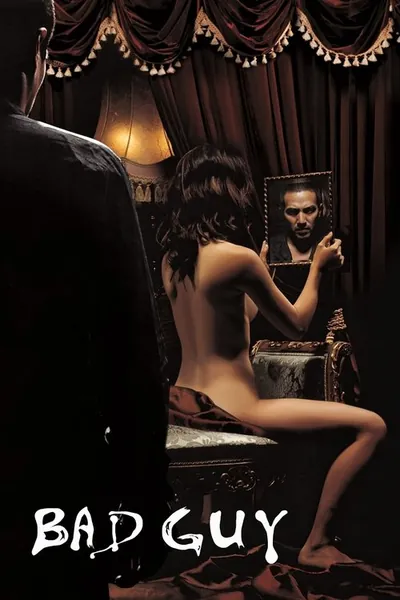 Bad Guy
Original Cinematopedia text based on Wikipedia (es) and Wikipedia (en) and Wikidata.