
The Eternal Return
Eterna historia
1943 · France · 107 min
- Director
- Jean Delannoy
- Screenplay
- Jean Cocteau
- Producer
- André Paulvé
- Music
- Georges Auric
- Cinematography
- Roger Hubert
Cast
What it is about
Patrice, a young man shaped by a doomed love, becomes entangled in a romantic triangle that reworks the myth of Tristan and Isolde in the France of its day. The story turns around two women named Nathalie, one blonde and one brunette, and the bonds of loyalty and passion that tie the characters together.
How it was made
Jean Cocteau wrote the screenplay as a retelling of Tristan and Isolde transposed to a contemporary setting. The film was shot at the Victorine Studios in Nice, with sets by Georges Wakhévitch and costumes by Georges Annenkov, while location scenes were filmed at the Chateau de Pesteils in Polminhac. Directed by Jean Delannoy, with music by Georges Auric and cinematography by Roger Hubert, it stars Jean Marais and Madeleine Sologne.
Reception and legacy
It premiered in Vichy and became one of the biggest commercial hits of the Occupation period. In the United Kingdom, Eagle-Lion released it in 1946 under the alternative title Love Eternal. It is often cited as one of Cocteau and Marais's works from those years, and as an example of how French cinema under the Occupation turned to classical myths.
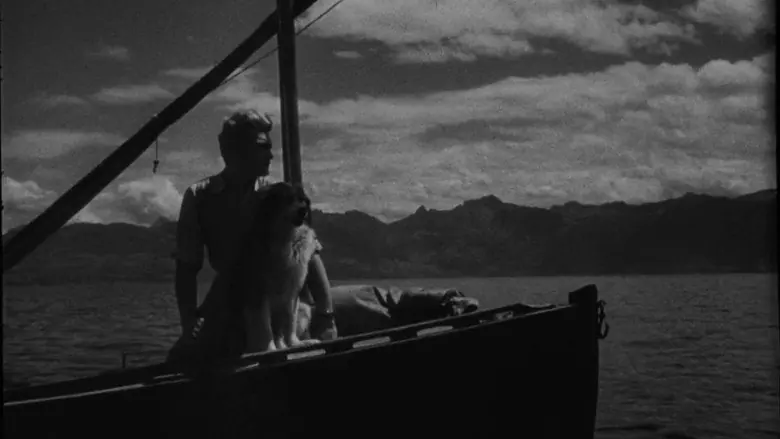
Stills

Trivia
Shot in a castle
Location scenes were filmed at the Chateau de Pesteils in Polminhac, while the rest of the production was built at the Victorine Studios in Nice.
A different title in Britain
In 1946 Eagle-Lion distributed it in the United Kingdom under the title Love Eternal.
A hit during the Occupation
Its premiere in Vichy made it one of the biggest commercial hits of the Occupation period.
More films by Jean Delannoy
 The Hunchback of Notre Dame
 Maigret Sets a Trap
 Action Man
 Maigret and the Saint-Fiacre Case
 Les amitiés particulières
Original Cinematopedia text based on Wikipedia (en) and Wikidata.