
Equus
1977 · Canada, United States, United Kingdom · 137 min
- Director
- Sidney Lumet
- Screenplay
- Peter Shaffer
- Producer
- Elliott Kastner, Lester Persky
- Music
- Richard Rodney Bennett
- Cinematography
- Oswald Morris
- Editing
- John Victor Smith
- Production company
- United Artists
- Based on
- Equus
Awards: National Board of Review: Top Ten Films · 3 nominations
What the critics say
70 % Rotten Tomatoes positive reviewsCast
What it is about
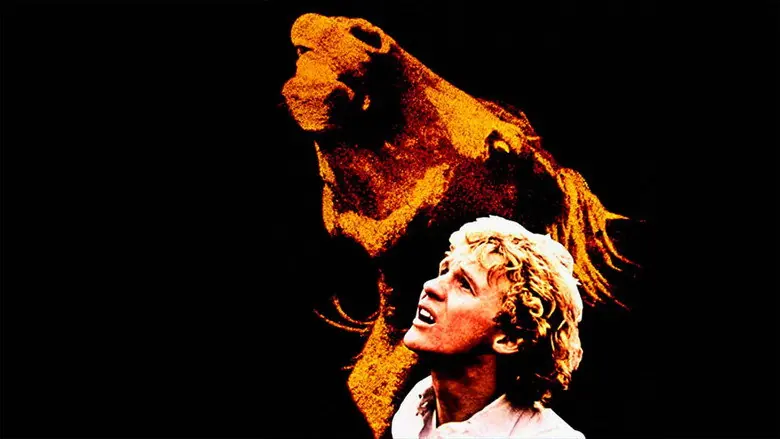
Martin Dysart, a disillusioned psychiatrist who works with troubled teenagers at a hospital in Hampshire, is asked to treat Alan Strang, a seventeen-year-old stable boy who has blinded six horses. As Dysart tries to gain the boy's trust and understand his devotion to the animals, he is drawn into the life of a family shaped by strict religious beliefs and by an upbringing that left deep marks on the young man. The film presents the therapist as someone who watches other people's suffering and wonders whether healing might also mean taking away what makes a person feel alive.
How it was made
The film is a British-American-Canadian co-production directed by Sidney Lumet from Peter Shaffer's stage play, which the director had seen in London and in productions starring Anthony Perkins and Richard Burton. Lumet felt the stage versions failed to convey Dysart's inner conflict, and he and Shaffer spent more than a year on the screenplay, keeping much of the original dialogue. Marlon Brando and Jack Nicholson were considered for the lead. Instead of the theatrical convention of masked actors playing the horses, Lumet used real animals and showed the blinding graphically. Although set in Hampshire, the shoot took place almost entirely in and around Ontario, Canada, at the Kleinburg studio and on locations in Georgetown and Halton Hills, during the height of the Canadian tax shelter era. Peter Firth's nude ride was filmed in a single unbroken four-and-a-half-minute take. Cinematographer Oswald Morris worked with Lumet on a complex colour scheme that sets Apollonian and Dionysian worldviews against each other.
Reception and legacy
Lumet acknowledged the film was very vulnerable to criticism, since audiences would ask why a screen version was needed for a play many considered perfect. Initial reviews were respectful, though the graphic handling of the blinding sparked debate. The film earned three Academy Award nominations, including Best Actor for Burton and Best Supporting Actor for Firth. Both Burton and Firth won Golden Globes, and Jenny Agutter won the BAFTA for Best Supporting Actress. The National Board of Review also named it among its ten most outstanding films. Over time it is remembered mainly for its performances and for adapting a psychologically charged stage text to the screen.
Stills


Trailer
Clicking loads the video from YouTube (privacy-enhanced mode). Open on YouTube
Trivia
Real horses
Lumet departed from the stage tradition of playing horses with masked actors and used real animals, giving the film a realistic tone.
A local stand-in
Young Canadian actor Ian D. Clark, who had a small role, also doubled for Burton and spent six weeks at the Kleinburg studios with the crew.
More films by Sidney Lumet
 12 Angry Men
 Network
 Dog Day Afternoon
 Murder on the Orient Express
 The Verdict
 Serpico
Original Cinematopedia text based on Wikipedia (es) and Wikipedia (en) and Wikidata.