
Diary of a Country Priest
El diario de un cura de campaña
1951 · France · 115 min
- Director
- Robert Bresson
- Screenplay
- Robert Bresson, Georges Bernanos
- Producer
- Léon Carré
- Music
- Jean-Jacques Grunenwald
- Cinematography
- Léonce-Henri Burel, Robert Juillard
- Based on
- The Diary of a Country Priest
Awards: Louis Delluc Prize
What the critics say
95 % Rotten Tomatoes positive reviewsCast
What it is about
A young priest, fresh out of seminary, arrives in Ambricourt, a small village in northern France, to take charge of his first parish. He soon finds the villagers wary of him. In a diary he keeps his doubts, his inexperience and his failing health, while he tries to win over the community with his own initiatives and gets drawn into the troubles of the local count's family. The film follows his path with a restrained look at faith, loneliness and the gap between the Church and rural life.
How it was made
The film adapts Georges Bernanos' novel of the same name. Jean Aurenche and Pierre Bost wrote an early screenplay draft that Bernanos rejected, and François Truffaut judged it unfaithful to both the letter and the spirit of the book. Bresson wrote his own screenplay after Bernanos' death, aiming to stay true to the novel's spirit. For the supporting roles he worked with non-professional performers, whom he called « models » and whose movements he deliberately constrained, a method he expanded in later films. Claude Laydu made his feature debut and plays the lead with a restraint that became the film's signature. The black-and-white photography and spare editing reinforce that tone.
Reception and legacy
The film won several awards, including the Prix Louis Delluc and the Grand Prix at the Venice International Film Festival. Laydu's performance is often counted among the greatest in cinema history. Roger Ebert, alongside Dreyer's The Passion of Joan of Arc, named it one of the great Catholic films. Over the years it has been studied as an example of the austerity and economy of means that define Bresson's work.
Stills


Trailer
Clicking loads the video from YouTube (privacy-enhanced mode). Open on YouTube
Trivia
A draft without the ending
The first Aurenche and Bost screenplay did not end with the words « All is grace ». It also left out Dr. Delbende, whom Aurenche considered a character who should not die halfway through a good script.
A screenplay written without the author
Bresson wrote his script only after Bernanos had died. According to Truffaut, he meant to stay faithful to the novel, though he said he would have departed further from it had the writer still been alive.
More films by Robert Bresson
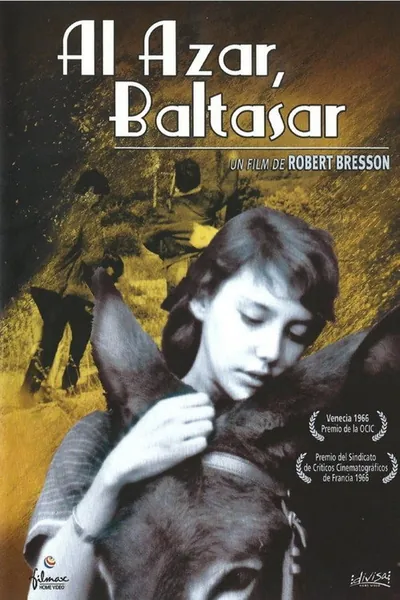 Au Hasard Balthazar
 A Man Escaped
 Pickpocket
 Mouchette
 L'Argent
 The Trial of Joan of Arc
Original Cinematopedia text based on Wikipedia (es) and Wikipedia (en) and Wikidata.