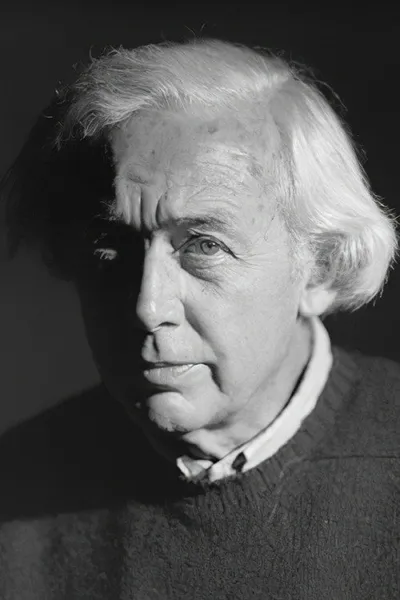
Robert Bresson
1901–1999 · French film director and screenwriter
Biography
Robert Bresson (1901-1999) was one of the most admired French directors of the twentieth century. His films, marked by an austere, stripped-down style, seek to capture what ordinary vision tends to miss. He made only a handful of feature films over a career of half a century, and today he is regarded as a touchstone of art cinema and minimalism.
He was educated at the Lycée Lakanal in Sceaux, near Paris, and turned to painting after graduating. Three influences from his early years are often cited: Catholicism, art, and his time as a prisoner of war. After leaving painting and photography behind, he made his debut in 1934 with the short comedy Les Affaires publiques. When France entered the Second World War he enlisted, and after being captured by the Germans in 1940 he spent more than a year in a German prison camp. That experience later shaped A Man Escaped.
His first feature was Les Anges du péché (1943). In 1945 he directed Les Dames du Bois de Boulogne, with dialogue by Jean Cocteau, a work that established him among the leading French filmmakers. From there he refined a personal method. He rejected professional actors in favour of non-professional performers, whom he called models, and asked them to repeat scenes until every trace of performance had disappeared. Diary of a Country Priest (1951) opened his mature period, followed by A Man Escaped, Pickpocket and Mouchette.
His films usually centre on characters who are trapped, physically or morally, and on themes such as guilt, grace and salvation. Many critics connect these to his Catholic background, even though the stories look secular on the surface. His use of ellipsis, restrained sound and sparing music influenced generations of minimalist filmmakers. After Lancelot du Lac (1974), a project he had long wanted to realise, he made Money in 1983, his last feature.
In 1975 he published Notes on the Cinematographer, in which he separated cinema, which he saw as filmed theatre, from cinematography, a new visual writing of moving images and sounds. In 1995 he received the René Clair Award for his body of work. His legacy remains a subject of study and a reference point for critics and filmmakers.
Key films
- A Man Escaped (1956)
- Pickpocket (1959)
- The Trial of Joan of Arc (1962)
- Au hasard Balthazar (1966)
- Mouchette (1967)
- L'Argent (1983)
Trivia
A tribute from Godard
Jean-Luc Godard wrote that Bresson was French cinema, just as Dostoevsky is the Russian novel and Mozart is German music.
A presence in the critics' polls
In the 2012 Sight & Sound poll of the greatest films of all time, seven of his films were among those chosen, more than any other director.
On Cinematopedia
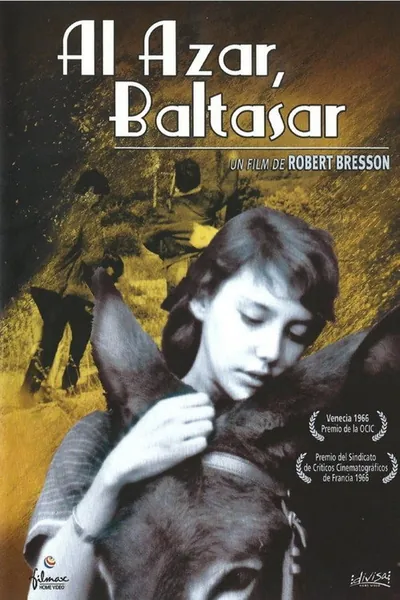 Au Hasard Balthazar1966
 A Man Escaped1956
 Pickpocket1959
 Diary of a Country Priest1951
 Mouchette1967
 L'Argent1983
 The Trial of Joan of Arc1962
 Les Dames du Bois de Boulogne1945
 Lancelot of the Lake1974
 A Gentle Woman1969
 Angels of Sin1943
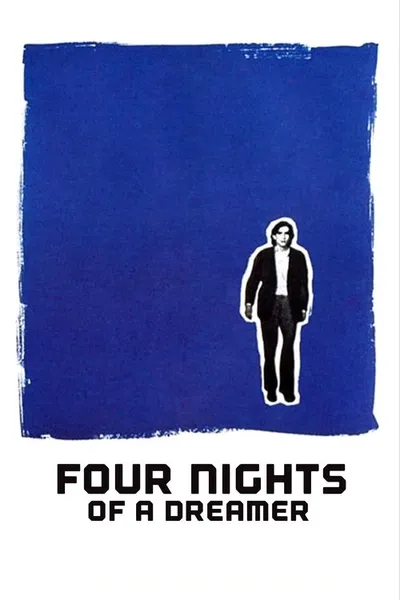 Four Nights of a Dreamer1971
- The Brighton Twins 1936 · screenplay
- Angels of Sin 1943 · director, screenplay
- Les Dames du Bois de Boulogne 1945 · director, screenplay
- Diary of a Country Priest 1951 · director, screenplay
- A Man Escaped 1956 · director, screenplay
- Pickpocket 1959 · director, screenplay
- The Trial of Joan of Arc 1962 · director, screenplay
- Au Hasard Balthazar 1966 · director, screenplay
- Mouchette 1967 · director, screenplay
- A Gentle Woman 1969 · director, screenplay
- Four Nights of a Dreamer 1971 · director, screenplay
- Lancelot of the Lake 1974 · director, screenplay
- The Devil, Probably 1977 · director, screenplay
- L'Argent 1983 · director, screenplay
Original Cinematopedia text based on Wikipedia (es) and Wikipedia (en) and Wikidata.