
Uma Thurman
b. 1970 · American actress and former model
Biography
Uma Thurman, born in Boston in 1970, is an American actress and former model best known for her work with Quentin Tarantino. She began modelling as a teenager and moved into film in the late 1980s. Her career spans drama, comedy, science fiction, action and independent cinema. An Oscar nominee and Golden Globe winner, she became one of the most recognisable screen actresses of the 1990s and 2000s.
The daughter of Buddhist studies professor Robert Thurman and the model Nena von Schlebrügge, she spent part of her childhood in India and grew up mainly in Amherst, Massachusetts, and Woodstock, New York. As a teenager she was shy and has spoken about being teased for her height and her unusual name. She left boarding school to pursue acting after talent scouts saw her in a school production of The Crucible. Before films, she had appeared on the covers of British Vogue.
She made her film debut in 1987 with Kiss Daddy Goodnight, and in 1988 drew attention with Terry Gilliam's The Adventures of Baron Munchausen, a commercial flop on release that later built a cult following. The same year she appeared in Dangerous Liaisons as a naive young woman seduced by a manipulative man. In 1990 she starred in Henry & June, a sexually frank drama that became the first film to receive the NC-17 rating in the United States and was barely distributed there. In 1993 she worked with Gus Van Sant on Even Cowgirls Get the Blues, a critical and commercial failure that earned her a Razzie nomination.
Her breakthrough came in 1994 with Pulp Fiction, where she played Mia Wallace, a gangster's wife. Tarantino chose her after a screen test and a dinner together, and the role earned her an Oscar nomination for Best Supporting Actress. Her subsequent projects varied widely. Batman & Robin (1997), in which she played the villain Poison Ivy, was a box-office disappointment, while Gattaca, opposite Ethan Hawke, received strong reviews and did well on home video. After the birth of her first daughter in 1998, she stepped back from leading roles for a while. She returned with Hysterical Blindness, an HBO film that won her a Golden Globe.
In 2003 and 2004 she reunited with Tarantino for Kill Bill, playing the Bride across two volumes. The role renewed her prestige and brought a BAFTA nomination. Since then she has moved between mainstream projects and more daring films such as Nymphomaniac and The House That Jack Built, and between film and television, where she earned an Emmy nomination for a guest role in Smash. She has also worked on stage, making her Broadway debut in The Parisian Woman. Her legacy rests on the strong and ambiguous women she created in Tarantino's films. More recently she has continued to work in series such as Dexter: Resurrection.
Key films
- Pulp Fiction (1994): Mia Wallace, the role that earned her an Oscar nomination for Best Supporting Actress.
- Dangerous Liaisons (1988): a naive young woman seduced by a manipulative man, an early breakthrough with critics.
- Kill Bill: Volume 1 (2003): the Bride, in the first part of her collaboration with Tarantino.
- Gattaca (1997): co-starring with Ethan Hawke in a story about genetic engineering and social class.
- Batman & Robin (1997): Poison Ivy, the villain in the fourth film of the series, remembered for its reception.
Trivia
A name with Buddhist roots
Her name comes from a Buddhist term, uma chenpo, and in Sanskrit it can be read as the mercy of the goddess Uma. As a child she sometimes used the name Uma Karen instead.
The dinner that settled a role
Tarantino was unsure about her after seeing a previous film, but according to accounts a dinner together changed his mind, and he chose her as Mia Wallace.
First NC-17 film in its country
Henry & June (1990) was the first film to receive the NC-17 rating in the United States, which greatly limited its release.
On Cinematopedia
 Pulp Fiction1994
 Dangerous Liaisons1988
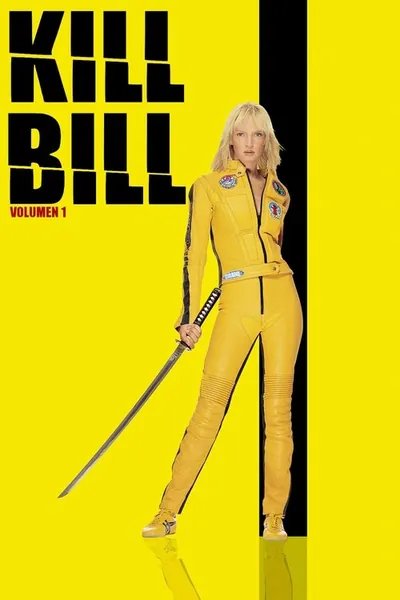 Kill Bill: Volume 12003
 Gattaca1997
 Kill Bill: Volume 22004
 Batman & Robin1997
 Percy Jackson & the Olympians: The Lightning Thief2010Nymphomaniac2013Nymphomaniac2013
 The Adventures of Baron Munchausen1988
 Movie 432013
 Burnt2015
 Sweet and Lowdown1999
- Dangerous Liaisons 1988 · cast
- The Adventures of Baron Munchausen 1988 · cast
- Johnny Be Good 1988 · cast
- Henry & June 1990 · cast
- Robin Hood 1991 · cast
- Final Analysis 1992 · cast
- Jennifer 8 1992 · cast
- Mad Dog and Glory 1993 · cast
- Even Cowgirls Get the Blues 1993 · cast
- Pulp Fiction 1994 · cast
- Beautiful Girls 1996 · cast
- The Truth About Cats & Dogs 1996 · cast
- Gattaca 1997 · cast
- Batman & Robin 1997 · cast
- The Avengers 1998 · cast
- Les Misérables 1998 · cast
- Sweet and Lowdown 1999 · cast
- Vatel 2000 · cast
- The Golden Bowl 2000 · cast
- Tape 2001 · cast
- Kill Bill: Volume 1 2003 · cast
- Paycheck 2003 · cast
- Kill Bill: Volume 2 2004 · cast
- Prime 2005 · cast
- Be Cool 2005 · cast
- The Producers 2005 · cast
- My Super Ex-Girlfriend 2006 · cast
- The Life Before Her Eyes 2007 · cast
- The Accidental Husband 2008 · producer, cast
- Percy Jackson & the Olympians: The Lightning Thief 2010 · cast
- Bel Ami 2012 · cast
- Playing for Keeps 2012 · cast
- Nymphomaniac 2013 · cast
- Movie 43 2013 · cast
- Burnt 2015 · cast
- The House That Jack Built 2018 · cast
- The War with Grandpa 2020 · cast
- Red, White & Royal Blue 2023 · cast
- Oh, Canada 2024 · cast
- The Old Guard 2 2025 · cast
Original Cinematopedia text based on Wikipedia (es) and Wikipedia (en) and Wikidata.