
Tim Burton
b. 1958 · American filmmaker, producer, screenwriter, illustrator and former animator
Biography
Timothy Walter “Tim” Burton (born in Burbank, California, in 1958) is an American filmmaker, producer, screenwriter, illustrator and former animator. Since the 1980s he has been closely associated with a gothic and playful visual style that has shaped both Hollywood fantasy and horror and the audiences who follow them. His importance lies in having carried the imagery of low-budget monster movies into big studio productions while keeping a personal sensibility, in which outsiders, misfits and misunderstood characters stand at the centre of the story.
He was born on August 25, 1958, in Burbank, the first of two sons of Bill and Jean Burton. His father worked for the city government and his mother ran a gift shop. Relations within the family were not easy, and as a child he spent periods living with his grandmother. He saw himself as introverted and spent his time drawing, painting and acting out playful scenes. His interest in film soon centred on monster movies, especially those linked to Godzilla, the British studio Hammer, Ray Harryhausen and Roger Corman. Corman worked several times with Vincent Price, an actor Burton came to regard as a personal hero. He was also drawn to the stop-motion effects of Harryhausen, a technique he would later use often in his own work.
At the age of thirteen he made his first animated short with some friends, The Island of Doctor Agor, followed by Houdini, in which he played the escape artist Harry Houdini. In 1976 he won a scholarship to the California Institute of the Arts, an alternative school founded by Walt Disney to train young people in animation, and graduated in 1979. That year he completed Stalk of the Celery Monster, a short of under two minutes, which led Disney to offer him an apprenticeship as an animator.
His first years at Disney were difficult. He worked on sketches for The Fox and the Hound, released in 1981, and then on concept art for The Black Cauldron, though his designs were dropped from the finished films. Meanwhile Tom Wilhite, the studio's creative development executive, admired his talent, and in 1982 he financed a short based on a poem Burton had written for children. The result was Vincent, a black-and-white stop-motion film of about five minutes, made with specialist animators and influenced by 1920s German cinema, Price's films and adaptations of Edgar Allan Poe. Price narrated it himself, and the project began a friendship that lasted until the actor's death in 1993. Vincent had a brief run in a Los Angeles cinema and won praise at several festivals, but Disney was reluctant to release it widely. Soon afterwards Burton directed a live-action version of the Grimm fairy tale Hansel and Gretel for the Disney Channel, with a kung-fu climax. It aired only once, on Halloween, and prints are now very hard to find.
In 1984 he released Frankenweenie, another black-and-white live-action short starring Barret Oliver, Daniel Stern and Shelley Duvall. Inspired by James Whale's Frankenstein, it follows a boy who tries to bring his dog back to life after it is hit by a car. The film earned a Saturn Award nomination, but Disney felt it was too frightening for young audiences and dismissed Burton shortly after it was completed. The actor Paul Reubens had seen the short and chose Burton to direct a film version of his character Pee-wee Herman. The result was Pee-wee’s Big Adventure, made on a budget of about 7 million dollars and taking more than 40 million at the box office. For the score Burton asked Danny Elfman, the singer and guitarist of the eccentric band Oingo Boingo, to write the music, and Elfman went on to become one of his most frequent collaborators.
After directing episodes of television series including Alfred Hitchcock Presents and Faerie Tale Theatre, he made Beetlejuice in 1988, a black comedy about a dead couple who turn to an unruly ghost to reclaim their house. Starring Michael Keaton, Winona Ryder, Alec Baldwin and Geena Davis, it grossed around 80 million dollars and won the Academy Award for Best Makeup. Its success on a modest budget led to larger projects.
In 1989 he directed Batman, his first big-budget film. Production was troubled, with repeated clashes with the producers Jon Peters and Peter Guber, and the most controversial decision was casting Michael Keaton in the lead, which upset some comic fans who knew him mainly from comedies. Burton wanted a Batman who was not a muscular figure but an ordinary wealthy man who dressed in an elaborate costume to frighten criminals, and he chose Jack Nicholson as the Joker. The film was a major hit, taking more than 400 million dollars worldwide, and the gothic look Burton gave Gotham City influenced later versions of the character. Batman Returns followed in 1992 with Keaton, Danny DeVito, Michelle Pfeiffer and Christopher Walken. It was darker and more personal, and drew complaints about its violence and sensuality. It was a success but earned less than its producers had hoped, and Warner Bros. did not invite Burton back for the next instalment.
In 1990 he had released Edward Scissorhands, written with Caroline Thompson and starring Johnny Depp as a young man created by an eccentric inventor, played by Vincent Price, who has scissors instead of hands. Shot in Florida but set in suburbs that recall Burton’s own Californian childhood, it is often considered his most personal work. Depp became one of his regular collaborators, appearing in Ed Wood, Sleepy Hollow, Charlie and the Chocolate Factory and Sweeney Todd. In 1993 Burton produced The Nightmare Before Christmas, directed by Henry Selick from Burton’s own story and characters. It was not warmly received at first, but it later became a cult favourite. Ed Wood, from 1994, is a black-and-white biography of the low-budget filmmaker Ed Wood, with Depp in the title role. It is an affectionate portrait, and Martin Landau won the Academy Award for Best Supporting Actor for his performance as Bela Lugosi.
In 1995 he produced Batman Forever without directing it, after disagreements with Warner Bros.; Joel Schumacher took the chair and Burton was largely sidelined. That year he also produced James and the Giant Peach with Selick. In 1996 he directed Mars Attacks!, a comedy inspired by 1950s science-fiction imagery with a large ensemble cast. It was poorly received in the United States, though it later built a following. Sleepy Hollow, from 1999, starred Depp as a detective with an interest in forensic science, and won the Academy Award for Best Art Direction. He then made Planet of the Apes in 2001, a sharp change of style, and Big Fish in 2003, about a father who tells his life story to his son. That same year he separated from Lisa Marie, to whom he had been engaged since 1992.
Charlie and the Chocolate Factory, from 2005, adapted Roald Dahl with Depp as Willy Wonka. That year he also released Corpse Bride, a stop-motion animated feature that was nominated for the Academy Award for Best Animated Feature, a distinction Frankenweenie would also receive in 2012. Sweeney Todd, from 2007, adapted Stephen Sondheim’s musical with Depp and Helena Bonham Carter, and brought Burton the National Board of Review award for Best Director and an Academy Award for Best Art Direction. Alice in Wonderland, from 2010, was his biggest commercial hit, taking more than a billion dollars worldwide. After Dark Shadows in 2012, he remade Frankenweenie as a stop-motion feature for Disney that same year. Big Eyes, from 2014, told the story of the painter Margaret Keane, with Amy Adams and Christoph Waltz, and Miss Peregrine’s Home for Peculiar Children, from 2016, adapted Ransom Riggs. In 2019 he directed a live-action version of Dumbo.
In his personal life he married the German artist Lena Gieseke in 1989 and divorced her shortly after filming Batman Returns. Since 2001 he has been in a relationship with Helena Bonham Carter, who has appeared in nearly all his films since then, and the couple have two children. He received an honorary Golden Lion for lifetime achievement at the Venice Film Festival in 2007 and France’s Order of Arts and Letters in 2010. Beyond cinema he directed music videos for the band The Killers and published books, including The Melancholy Death of Oyster Boy & Other Stories in 1997. On television he directed several episodes of the Netflix series Wednesday, earning a Primetime Emmy nomination for Outstanding Directing for a Comedy Series. His influence can be seen in the work of many later filmmakers and in the enduring popularity of his characters, and his career continues with Beetlejuice Beetlejuice in 2024 among his most recent films.
Key films
- Beetlejuice (1988)
- Batman (1989)
- Edward Scissorhands (1990)
- Ed Wood (1994)
- Charlie and the Chocolate Factory (2005)
Trivia
A childhood nickname
As a boy he staged a fake murder to frighten the neighbours, and one of them called the police. He earned the nickname “Axe Wound”.
Funding for Vincent
His short Vincent, narrated by Vincent Price, was financed with 60,000 dollars by Disney executive Tom Wilhite in 1982.
An Oscar for Beetlejuice
The film won the Academy Award for Best Makeup, a recognition for a low-budget production that had impressed studio executives.
On Cinematopedia
 Alice in Wonderland2010
 Sweeney Todd: The Demon Barber of Fleet Street2007
 Batman1989
 Charlie and the Chocolate Factory2005
 Ed Wood1994
 Sleepy Hollow1999
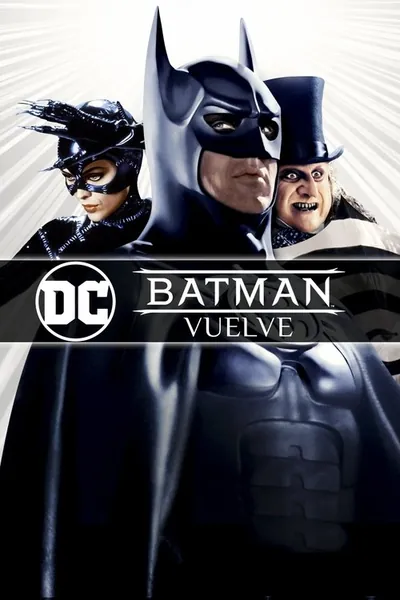 Batman Returns1992
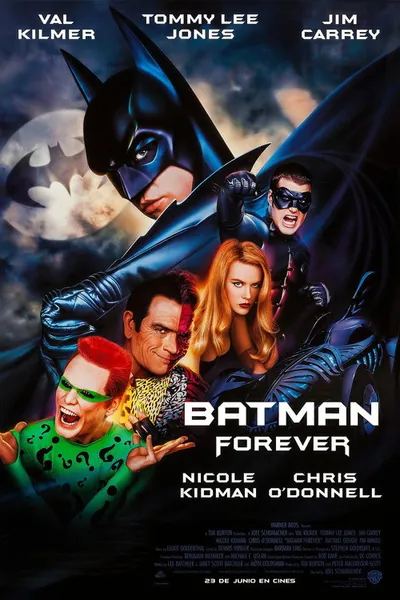 Batman Forever1995
 Beetlejuice1988
 Edward Scissorhands1990
 Big Fish2003
 Planet of the Apes2001
- The Muppet Movie 1979 · cast
- Vincent 1982 · director, screenplay
- Pee-wee's Big Adventure 1985 · director
- Beetlejuice 1988 · director
- Batman 1989 · director
- Edward Scissorhands 1990 · director, screenplay, producer
- Batman Returns 1992 · director, producer
- Hoffa 1992 · cast
- Singles 1992 · cast
- Ed Wood 1994 · director, producer
- Batman Forever 1995 · producer
- Mars Attacks! 1996 · director, producer
- James and the Giant Peach 1996 · producer
- Sleepy Hollow 1999 · director
- Planet of the Apes 2001 · director
- Big Fish 2003 · director
- Charlie and the Chocolate Factory 2005 · director
- Sweeney Todd: The Demon Barber of Fleet Street 2007 · director
- Alice in Wonderland 2010 · director
- Men in Black 3 2012 · cast
- Dark Shadows 2012 · director
- Abraham Lincoln: Vampire Hunter 2012 · producer
- Big Eyes 2014 · director
- Alice Through the Looking Glass 2016 · producer
- Miss Peregrine's Home for Peculiar Children 2016 · director
- Dumbo 2019 · director
- Beetlejuice Beetlejuice 2024 · director, producer
Original Cinematopedia text based on Wikipedia (es) and Wikipedia (en) and Wikidata.