
Susan Hayward
1917–1975 · American actress
Biography
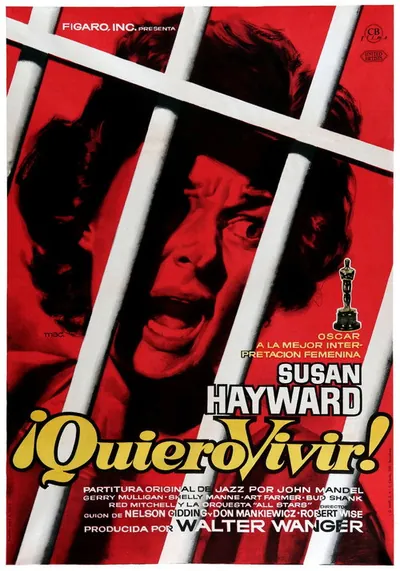
Susan Hayward, born Edythe Marrener in Brooklyn, was an American actress who moved from fashion modelling into films in the 1930s. Her career unfolded mostly in the Hollywood studio era of the 1940s and 1950s, and she is remembered for dramatic roles, often of women based on real people. She won the Academy Award for Best Actress for I Want to Live! (1958) and was nominated five times in that category over her career.
She was born in 1917 in the Flatbush neighborhood of Brooklyn, the youngest of three children. In 1924 she was hit by a car, which left her with a fractured hip and legs and a lasting hip swivel in her walk. After working as a model, she went to Hollywood in 1937 to test for Scarlett O'Hara, a part she did not win. Warner Bros. signed her, and her agent Max Arnow gave her the stage name she would use for the rest of her career. Her early studio years brought small and supporting parts, along with pin-up photo work she disliked but could not refuse under her contract.
In 1939 she moved to Paramount, where Beau Geste gave her her first real breakthrough alongside Gary Cooper and Ray Milland. A run of modest films followed. Her career took a turn in the late 1940s, when producer Walter Wanger signed her to a seven-year contract. Smash-Up, the Story of a Woman (1947), in which she played an alcoholic nightclub singer, earned her the first of her Oscar nominations and made her a box office star.
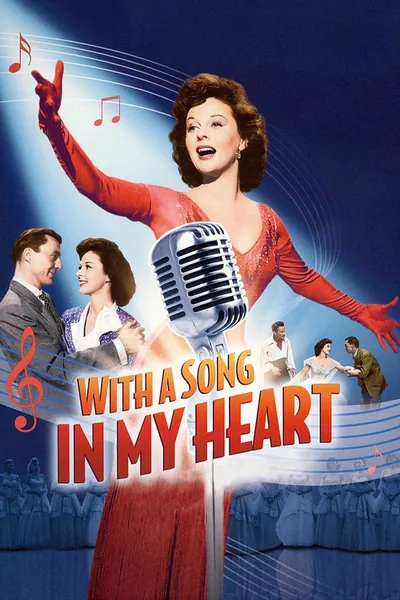
From 1949 she worked for 20th Century Fox, a relationship that lasted for years. There she made House of Strangers for Joseph L. Mankiewicz, and in 1951 she starred opposite Gregory Peck in David and Bathsheba, one of the year's most popular films. With a Song in My Heart, a biopic of singer Jane Froman, brought another nomination, and The Snows of Kilimanjaro, again with Peck, rounded out a run of big hits. In 1955 MGM cast her as the alcoholic singer Lillian Roth in I'll Cry Tomorrow, a role that won her the Best Actress prize at Cannes and a major commercial success.
In 1956 Howard Hughes cast her in The Conqueror opposite John Wayne. Critics were harsh, though the film did well at the box office. After her second marriage she moved to Georgia, and her film work became less frequent, although she kept acting in films and television until 1972. She died in 1975 of brain cancer. She is best remembered for her intense portrayals of troubled women, which made her one of the most admired dramatic actresses of her era.
Key films
- Beau Geste (1939), as Isobel, her first major success at Paramount.
- Smash-Up, the Story of a Woman (1947), her first Oscar nomination, as an alcoholic nightclub singer.
- David and Bathsheba (1951), a major hit opposite Gregory Peck.
- The Snows of Kilimanjaro (1952), one of her biggest box office successes, again with Peck.
- I'll Cry Tomorrow (1955), her portrayal of Lillian Roth, which won her the Cannes prize.
- I Want to Live! (1958), the film that earned her the Academy Award for Best Actress.
Trivia
A new surname
Her agent, Max Arnow, changed her name from Marrener to Hayward when her six-month contract with Warner Bros. began.
Her own voice in I'll Cry Tomorrow
Although the singing was once widely credited to professional ghost singer Marni Nixon, Hayward sang the songs herself without dubbing, and they appear on the soundtrack.
On Cinematopedia
 I Want to Live!1958
 The Snows of Kilimanjaro1952
 With a Song in My Heart1952
 The Conqueror1956
 Beau Geste1939
 Demetrius and the Gladiators1954
 I'll Cry Tomorrow1955
 Valley of the Dolls1967
 Reap the Wild Wind1942
 David and Bathsheba1951
 I Married a Witch1942
 Garden of Evil1954
- The Sisters 1938 · cast
- The Amazing Dr. Clitterhouse 1938 · cast
- Comet over Broadway 1938 · cast
- Beau Geste 1939 · cast
- Adam Had Four Sons 1941 · cast
- Reap the Wild Wind 1942 · cast
- I Married a Witch 1942 · cast
- Jack London 1943 · cast
- Hit Parade of 1943 1943 · cast
- And Now Tomorrow 1944 · cast
- The Fighting Seabees 1944 · cast
- Canyon Passage 1946 · cast
- Deadline at Dawn 1946 · cast
- Smash-Up, the Story of a Woman 1947 · cast
- They Won't Believe Me 1947 · cast
- Tap Roots 1948 · cast
- House of Strangers 1949 · cast
- My Foolish Heart 1950 · cast
- David and Bathsheba 1951 · cast
- Rawhide 1951 · cast
- The Snows of Kilimanjaro 1952 · cast
- With a Song in My Heart 1952 · cast
- The Lusty Men 1952 · cast
- The President's Lady 1953 · cast
- White Witch Doctor 1953 · cast
- Demetrius and the Gladiators 1954 · cast
- Garden of Evil 1954 · cast
- I'll Cry Tomorrow 1955 · cast
- Soldier of Fortune 1955 · cast
- The Conqueror 1956 · cast
- I Want to Live! 1958 · cast
- Ada 1961 · cast
- Where Love Has Gone 1964 · cast
- Valley of the Dolls 1967 · cast
- The Honey Pot 1967 · cast
Original Cinematopedia text based on Wikipedia (es) and Wikipedia (en) and Wikidata.