
Steven Geray
1904–1973 · Hungarian-born American character actor
Biography
Steven Geray, born István Gyergyai in Ungvár in Austria-Hungary in 1904 and dying in Los Angeles in 1973, was a Hungarian-born character actor who built his career in the United States. He worked across stage, film and television, and his face is familiar to fans of film noir and of Hollywood in the 1940s and 1950s.
He studied at the University of Budapest and first performed at the Hungarian National Theater under his own name. In 1934 he reached the London stage as Steven Geray, and from 1935 he began appearing in English-language films. That same year he shared the cast of Dance Band with his wife, Magda Kun. His act at the Folies Bergère, which impersonated Hitler and Mussolini, drew the anger of the German and Italian governments; after being beaten, he left for Hollywood in 1941.
In America he found a niche in crime and adventure pictures and, above all, in film noir, appearing in more than a dozen genre titles. He led the cast of So Dark the Night (1946), a low-budget noir by Joseph H. Lewis that received positive reviews. His most remembered parts are supporting roles: Dr. Graff in Spellbound, Uncle Pio in Gilda, and the hotel clerk in To Catch a Thief for Hitchcock.
He kept working in television and film into the 1960s, with appearances on Perry Mason and The George Burns and Gracie Allen Show. His legacy is that of a reliable working performer, present on screen in his era without becoming a star.
Key films
- Spellbound (1945): Dr. Graff, in Hitchcock's psychological thriller.
- Gilda (1946): Uncle Pio, in Charles Vidor's film noir.
- All About Eve (1950): the captain of waiters, in Mankiewicz's backstage drama.
- Gentlemen Prefer Blondes (1953): the hotel manager, in Hawks's musical comedy.
- To Catch a Thief (1955): the hotel desk clerk, in Hitchcock's thriller.
Trivia
A marriage on screen
He married the actress Magda Kun in 1934, and the two appeared together in the 1935 film Dance Band.
A cabaret act with consequences
At the Folies Bergère he impersonated Hitler and Mussolini. After ignoring warnings from the German and Italian governments, he was beaten and then moved to Hollywood.
On Cinematopedia
 All About Eve1950
 Spellbound1945
 Gentlemen Prefer Blondes1953
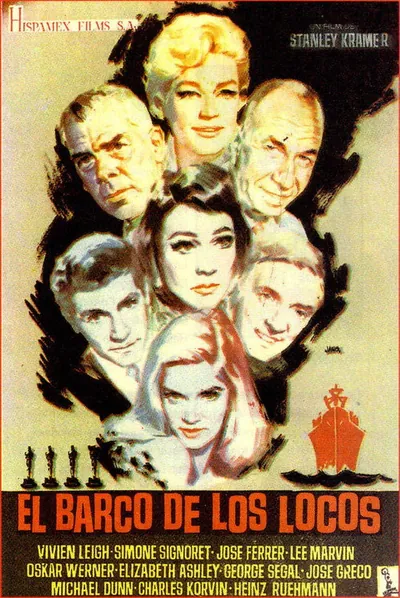 Ship of Fools1965
 To Catch a Thief1955
 Gilda1946
 In a Lonely Place1950
 Phantom of the Opera1943
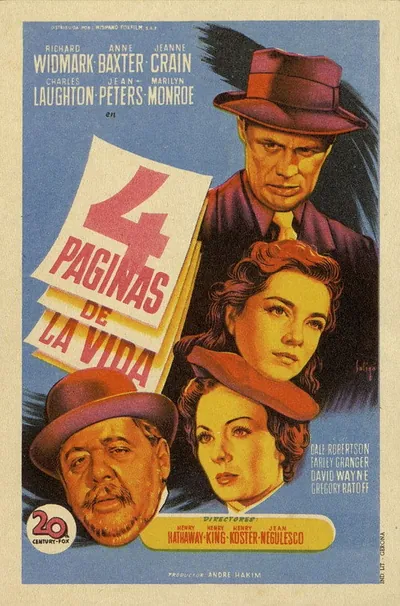 O. Henry's Full House1952
 Ladies of the Chorus1948
 Affair in Trinidad1952
 The Big Sky1952
- Spring Shower 1932 · cast
- Once Upon a Honeymoon 1942 · cast
- The Moon and Sixpence 1942 · cast
- Eyes in the Night 1942 · cast
- Phantom of the Opera 1943 · cast
- The Seventh Cross 1944 · cast
- The Mask of Dimitrios 1944 · cast
- The Conspirators 1944 · cast
- In Society 1944 · cast
- Spellbound 1945 · cast
- Tarzan and the Amazons 1945 · cast
- Cornered 1945 · cast
- Gilda 1946 · cast
- Deadline at Dawn 1946 · cast
- Ladies of the Chorus 1948 · cast
- Once More, My Darling 1949 · cast
- All About Eve 1950 · cast
- In a Lonely Place 1950 · cast
- Woman on the Run 1950 · cast
- A Lady Without Passport 1950 · cast
- The House on Telegraph Hill 1951 · cast
- O. Henry's Full House 1952 · cast
- Affair in Trinidad 1952 · cast
- The Big Sky 1952 · cast
- Gentlemen Prefer Blondes 1953 · cast
- The Golden Blade 1953 · cast
- The Story of Three Loves 1953 · cast
- Call Me Madam 1953 · cast
- Knock on Wood 1954 · cast
- To Catch a Thief 1955 · cast
- Artists and Models 1955 · cast
- A Bullet for Joey 1955 · cast
- Attack! 1956 · cast
- A Certain Smile 1958 · cast
- The Evil of Frankenstein 1964 · cast
- Ship of Fools 1965 · cast
- Our Man Flint 1966 · cast
Original Cinematopedia text based on Wikipedia (es) and Wikipedia (en) and Wikidata.