
Shirley Temple
1928–2014 · American actress, singer, dancer and later diplomat
Biography
Shirley Temple (Santa Monica, California, 1928 – Woodside, California, 2014) was an American actress, singer and dancer who became Hollywood's biggest box-office draw as a child star in the mid-1930s. She later built a second career as a diplomat, and her story shows how the studio system marketed childhood during the Great Depression and the golden age of the major studios.
Born into a middle-class family, she grew up in Brentwood, Los Angeles. Her mother encouraged her early interest in singing, dancing and acting, and in 1931 enrolled her at the Meglin dance school. There she was spotted by Charles Lamont, a casting director for Educational Pictures, who signed her in 1932 for the comic shorts of the Baby Burlesks series and later for Frolics of Youth. After a small part in Stand Up and Cheer! (1934), alongside James Dunn, Fox signed her in late 1933. Bright Eyes, written with her in mind, made her a star, and its song "On the Good Ship Lollipop" became a radio hit. That year she was given a juvenile Academy Award for her work in 1934. Films such as The Little Colonel, Curly Top and Heidi followed, mixing melodrama, humour and musical numbers. Her trademark was tap dancing, and she was paired with Bill "Bojangles" Robinson in several films. She worked with directors including David Butler, Walter Lang and John Ford, who directed her in Fort Apache (1948) during the later phase of her career.
Her popularity faded as she moved into adolescence, a pattern familiar among child stars. Her Fox contract ended in 1940 and her later films drew smaller audiences, although she kept working until her final film, A Kiss for Corliss, in 1949. In her autobiography, Child Star (1988), she wrote about the pressures of the industry, about her father's mismanagement of the family's money, which nearly left them broke, and about the harsh working conditions of the period.
After leaving the screen, Temple worked in television, hosting her own programmes and making guest appearances until the mid-1960s. In 1969 she was sent to represent the United States at a session of the United Nations General Assembly. She later served as ambassador to Ghana (1974-1976) and as the first female chief of protocol, and she was ambassador to Czechoslovakia (1989-1992). She received the Kennedy Center Honors and a Screen Actors Guild Life Achievement Award. The American Film Institute ranked her 18th among the greatest female screen legends of classic Hollywood. She died in 2014, aged 85, of natural causes. Her legacy rests on her status as one of the most recognisable faces of 1930s cinema and on a public career that went well beyond the screen.
Key films
- Bright Eyes (1934): the film that made her a star, written with her in mind.
- The Little Colonel (1935): alongside Bill Robinson, with tap routines that showcase her dancing.
- Curly Top (1935): one of her biggest hits, featuring the song "Animal Crackers in My Soup".
- Heidi (1937): an adaptation of Johanna Spyri's novel and one of her most remembered films.
- Fort Apache (1948): directed by John Ford, it shows her move toward roles as a young adult.
Trivia
An early juvenile Oscar
In February 1935 she received a juvenile Academy Award for her work in 1934, when she was six. She remains the youngest performer to have received the honour.
Birthday gifts
On what was reportedly her eighth birthday, although she was actually nine, she received around 135,000 toys from around the world, including a baby kangaroo from Australia.
A possible Dorothy
The role of Dorothy in The Wizard of Oz was first intended for Judy Garland. Because MGM had doubts about Garland's box-office appeal, Temple was considered for the part.
On Cinematopedia
 Since You Went Away1944
 Fort Apache1948
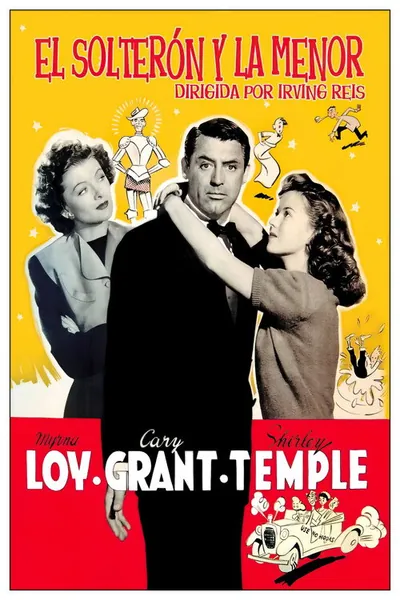 The Bachelor and the Bobby-Soxer1947
 Heidi1937
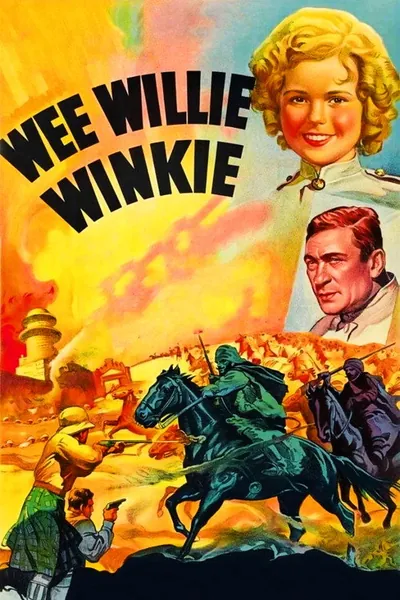 Wee Willie Winkie1937
 The Little Princess1939
 The Victors1963
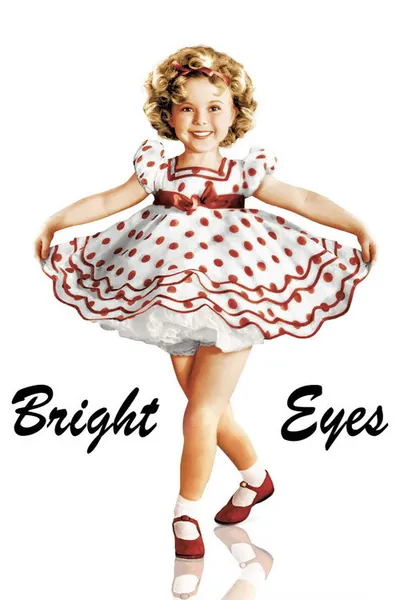 Bright Eyes1934
 I'll Be Seeing You1944
 The Little Colonel1935
 The Blue Bird1940
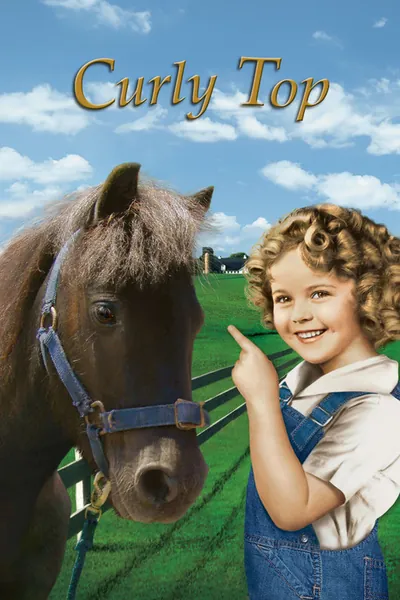 Curly Top1935
- Bright Eyes 1934 · cast
- Little Miss Marker 1934 · cast
- Now and Forever 1934 · cast
- Stand Up and Cheer! 1934 · cast
- The Little Colonel 1935 · cast
- Curly Top 1935 · cast
- The Littlest Rebel 1935 · cast
- Captain January 1936 · cast
- Poor Little Rich Girl 1936 · cast
- Dimples 1936 · cast
- Stowaway 1936 · cast
- Heidi 1937 · cast
- Wee Willie Winkie 1937 · cast
- Ali Baba Goes to Town 1937 · cast
- Rebecca of Sunnybrook Farm 1938 · cast
- Just Around the Corner 1938 · cast
- Little Miss Broadway 1938 · cast
- The Little Princess 1939 · cast
- Susannah of the Mounties 1939 · cast
- The Blue Bird 1940 · cast
- Since You Went Away 1944 · cast
- I'll Be Seeing You 1944 · cast
- The Bachelor and the Bobby-Soxer 1947 · cast
- That Hagen Girl 1947 · cast
- Fort Apache 1948 · cast
- The Victors 1963 · cast
Original Cinematopedia text based on Wikipedia (es) and Wikipedia (en) and Wikidata.