
Rudolph Maté
1898–1964 · Polish-American cinematographer and film director
Biography
Rudolph Maté (Kraków, 1898 – Los Angeles, 1964) was a cinematographer who became a film director. Born Rudolf Mayer, he worked in Hungary, Austria, Germany, France and the United States. He is remembered first for his silent-era camera work in Europe and then for a long Hollywood career behind the camera, before he began directing in his late forties.
After studying art at the University of Budapest, he started out as a laboratory assistant and assistant cameraman for Alexander Korda. In the mid-1920s he worked with Karl Freund on Michael (1924) and, above all, with Carl Theodor Dreyer on The Passion of Joan of Arc (1928) and Vampyr (1932). Critics have admired his high-contrast lighting and his close-ups of Joan. In France he also worked with Fritz Lang and René Clair. He settled in the United States in 1935, and his photography on Dodsworth (1936) led to steady work for Samuel Goldwyn. Over the next decade he shot films such as Foreign Correspondent (1940), To Be or Not to Be (1942) and Gilda (1946), and he received five Academy Award nominations for cinematography in consecutive years.
He moved into directing at Columbia Pictures, where Harry Cohn gave him his first solo assignment with The Dark Past (1948). His style was classical and unfussy: he told stories within the established genres rather than pursuing a distinct visual signature. His best-known film is the film noir D.O.A. (1950), starring Edmond O'Brien. In the 1950s he also made Union Station, the science fiction film When Worlds Collide (1951), which earned an Honorary Academy Award for its special effects, and several westerns and adventures. His later work, including films shot in Italy and Greece in the early 1960s, was less prominent.
Maté died of a heart attack in 1964, aged 66. He is remembered on two fronts: as a cinematographer, his work with Dreyer is counted among the finest of the silent era; as a director, he is a representative figure of studio-era filmmaking, a craftsman who moved from the camera to the director's chair.
Key films
- The Passion of Joan of Arc (1928), directed by Carl Theodor Dreyer and photographed by Maté, with high-contrast lighting and carefully framed close-ups.
- Vampyr (1932), by Dreyer, shot largely on location with a dreamlike look that Maté helped shape.
- Dodsworth (1936), by William Wyler, his first major Hollywood cinematography credit.
- D.O.A. (1950), his best-known film noir as a director.
- When Worlds Collide (1951), his most successful science fiction film as a director.
- To Be or Not to Be (1942), by Ernst Lubitsch, photographed by Maté.
On Cinematopedia
 Foreign Correspondent1940
 The Pride of the Yankees1942
 Dodsworth1936
 Gilda1946
 The Passion of Joan of Arc1928
 To Be or Not to Be1942
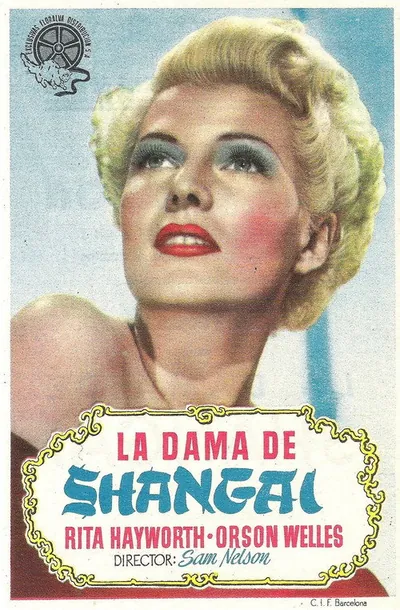 The Lady from Shanghai1947
 Come and Get It1936
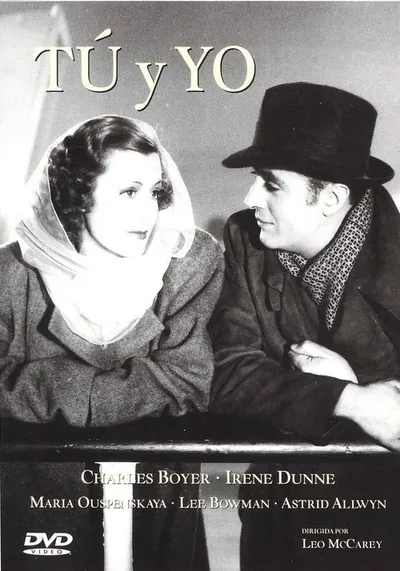 Love Affair1939
 That Hamilton Woman1941
 The 300 Spartans1962
 D.O.A.1950
- The Merchant of Venice 1923 · cinematography
- Michael 1924 · cinematography
- The Passion of Joan of Arc 1928 · cinematography
- Prix de Beauté 1930 · cinematography
- Vampyr 1932 · cinematography
- Monsieur Albert 1932 · cinematography
- The Last Billionaire 1934 · cinematography
- Liliom 1934 · cinematography
- Dante's Inferno 1935 · cinematography
- Charlie Chan in Shanghai 1935 · cinematography
- Metropolitan 1935 · cinematography
- Dodsworth 1936 · cinematography
- Come and Get It 1936 · cinematography
- Our Relations 1936 · cinematography
- Charlie Chan's Secret 1936 · cinematography
- Stella Dallas 1937 · cinematography
- The Adventures of Marco Polo 1938 · cinematography
- Blockade 1938 · cinematography
- Love Affair 1939 · cinematography
- The Real Glory 1939 · cinematography
- Foreign Correspondent 1940 · cinematography
- My Favorite Wife 1940 · cinematography
- Seven Sinners 1940 · cinematography
- That Hamilton Woman 1941 · cinematography
- The Flame of New Orleans 1941 · cinematography
- It Started with Eve 1941 · cinematography
- The Pride of the Yankees 1942 · cinematography
- To Be or Not to Be 1942 · cinematography
- Sahara 1943 · cinematography
- Cover Girl 1944 · cinematography
- Address Unknown 1944 · cinematography
- Tonight and Every Night 1945 · cinematography
- Gilda 1946 · cinematography
- The Lady from Shanghai 1947 · cinematography
- Down to Earth 1947 · cinematography
- The Dark Past 1948 · director
- D.O.A. 1950 · director
- No Sad Songs for Me 1950 · director
- When Worlds Collide 1951 · director
- The Mississippi Gambler 1953 · director
- The Black Shield of Falworth 1954 · director
- The Violent Men 1955 · director
- The Far Horizons 1955 · director
- Three Violent People 1956 · director
- The 300 Spartans 1962 · director, producer
- Seven Seas to Calais 1962 · director
Original Cinematopedia text based on Wikipedia (es) and Wikipedia (en) and Wikidata.