
Liam Neeson
b. 1952 · Northern Irish actor, later an American citizen
Biography
Liam Neeson (born 7 June 1952 in Ballymena, Northern Ireland) is an actor whose film career has spanned more than four decades. He is widely regarded as one of Ireland’s leading screen actors. His reputation rests on several major nominations, including an Academy Award nomination, a BAFTA nomination and Golden Globe nominations for playing Oskar Schindler in Schindler’s List (1993), and a Volpi Cup for Best Actor at the Venice Film Festival for Michael Collins (1996). He was naturalised as a United States citizen in 2009, though he has said he still primarily identifies as Irish. Over the course of his career he moved from period drama to large-scale fantasy, science fiction and superhero films, and from 2008 he became known for a run of action thrillers.
Neeson grew up in a Catholic family in Ballymena, a town with a predominantly Protestant population. His father worked as a caretaker at a primary school and his mother was a cook. He is the third of four children, with three sisters. At nine he began boxing at the All Saints Youth Club and went on to win regional titles. His first appearances on stage came at around eleven, when a school production gave him a leading role, and he kept acting in school plays afterwards. He has also said that the preacher Ian Paisley, whose church he attended, helped shape his interest in performance. In 1971 he enrolled in physics and computer science at Queen’s University Belfast but left without finishing. He took temporary jobs, including operating a forklift at the Guinness brewery and driving lorries. He also played football, was spotted by a Dublin club and sat on the bench in a match, but was not offered a contract. A teacher-training course he began in Newcastle upon Tyne was also left unfinished.
The theatre came first. He joined the Lyric Players’ Theatre in Belfast and spent two years there. In the late 1970s he moved to Dublin, where he worked at the Project Arts Centre and later joined the Abbey Theatre, Ireland’s national theatre. His first film appearance was in the low-budget religious film Pilgrim’s Progress, where he played Jesus and one of the evangelists. His breakthrough into larger films came in 1980, when the director John Boorman saw him on stage in a production of Of Mice and Men. Boorman cast him as Sir Gawain in Excalibur (1981). After the shoot he moved to London, where he balanced stage work with small films and television. He lived for a time with the actress Helen Mirren, whom he had met on the set of Excalibur.
Between 1982 and 1987 he appeared in a series of films. In The Bounty (1984) he shared the screen with Mel Gibson and Anthony Hopkins. In The Mission (1986) he played a Jesuit priest opposite Robert De Niro and Jeremy Irons. That same year he guest-starred in the third season of Miami Vice, and soon afterwards he relocated to Hollywood to pursue higher-profile parts. In Suspect (1987), alongside Cher and Dennis Quaid, he played a deaf vagrant accused of murder, a performance that won strong praise. In 1988 he appeared with Clint Eastwood in The Dead Pool, the fifth Dirty Harry film. In 1990 he starred in Sam Raimi’s Darkman, which was a modest hit, and the following year he played a private detective in Under Suspicion. His role as a Nazi officer in Shining Through (1992), with Michael Douglas and Melanie Griffith, caught the attention of Steven Spielberg.
Schindler’s List (1993) changed his standing. Spielberg offered him the role of the German industrialist after seeing him on Broadway in Anna Christie. Kevin Costner, Mel Gibson and Warren Beatty had all shown interest in the part before Neeson was cast. His performance earned him a Best Actor Academy Award nomination, and the film won Best Picture that year. He also made his Broadway debut in 1993 in the Eugene O’Neill revival, where he met the actress Natasha Richardson. Leading roles in period dramas followed. He played Rob Roy MacGregor in Rob Roy (1995), opposite Jessica Lange and Tim Roth, and the Irish revolutionary in Neil Jordan’s Michael Collins (1996), alongside Julia Roberts and Alan Rickman. The latter brought him the Volpi Cup in Venice. In 1998 he played Jean Valjean in Les Misérables, directed by Bille August, and that year he also returned to the stage as Oscar Wilde in David Hare’s The Judas Kiss.
In 1999 he joined the Star Wars saga as the Jedi master Qui-Gon Jinn in Star Wars: Episode I – The Phantom Menace, the first film of George Lucas’s new trilogy. In 2002 he worked with Harrison Ford in K-19: The Widowmaker and appeared in Martin Scorsese’s Gangs of New York as the father of Leonardo DiCaprio’s character. In 2003 he played a recently widowed father in Richard Curtis’s ensemble comedy Love Actually, which has since become a holiday favourite. In 2004 he played the sexologist Alfred Kinsey in Kinsey, a role that brought him a Golden Globe nomination. In 2005 he appeared in Christopher Nolan’s Batman Begins as Ra’s al Ghul and in Ridley Scott’s Kingdom of Heaven. That same year he began voicing Aslan the lion in The Chronicles of Narnia, a role he kept in several instalments. In 2008 he starred in Taken, directed by Pierre Morel, as a former intelligence officer searching for his kidnapped daughter. It was an international success, changed his place in Hollywood and led to a trilogy.
His action period included Clash of the Titans (2010), in which he played Zeus, and The A-Team (2010), where he played Hannibal Smith. He worked several times with the director Jaume Collet-Serra, on films such as Unknown (2011) and Non-Stop (2014). In 2012 he returned briefly to Batman in The Dark Knight Rises. Later he took a part in Martin Scorsese’s Silence (2016), reuniting with a director of his earlier work. In 2019 he starred in Men in Black: International. He has said in interviews that physical demands had made him reconsider how much action work he wanted to do. His style rests on a commanding physical presence and a deep, controlled voice, which suited both historical drama and the blockbuster. He has built long working relationships with Collet-Serra, Scorsese, Spielberg and Nolan. Away from the screen he has taken public positions on gun control in the United States, on integrated schooling in Northern Ireland and on Brexit. In 2009 his wife Natasha Richardson died after a skiing accident in Canada, and the couple had two sons. Neeson remains active in film and television, and he is remembered as one of the best-known Irish actors of his generation, with a career that moves between serious drama and popular cinema.
Key films
- Excalibur (1981): his first major screen role, as Gawain in John Boorman’s version of the Arthurian legend.
- The Mission (1986): a Jesuit priest alongside Robert De Niro and Jeremy Irons in a historical drama about the Jesuit missions.
- Schindler’s List (1993): Oskar Schindler in Steven Spielberg’s Holocaust drama, which brought him his Oscar nomination.
- Michael Collins (1996): the Irish revolutionary leader, which earned him the Volpi Cup in Venice.
- Star Wars: Episode I – The Phantom Menace (1999): Qui-Gon Jinn, the Jedi master who opened George Lucas’s new trilogy.
- Batman Begins (2005): Ra’s al Ghul, the mentor of the young Bruce Wayne in Christopher Nolan’s trilogy.
- Taken (2008): a former operative hunting for his kidnapped daughter, the film that launched his action run.
Trivia
A much-contested role
Before Spielberg chose Neeson for Oskar Schindler, Kevin Costner, Mel Gibson and Warren Beatty had all expressed interest in the part. Beatty even auditioned.
From the stage to Excalibur
John Boorman saw him playing Lennie Small in a stage adaptation of Of Mice and Men and offered him the role of Gawain in Excalibur. It was his first major step into film.
A Lincoln that went elsewhere
Neeson was due to work with Steven Spielberg again as Abraham Lincoln, but he eventually left the project and the role went to Daniel Day-Lewis.
On Cinematopedia
 Schindler's List1993
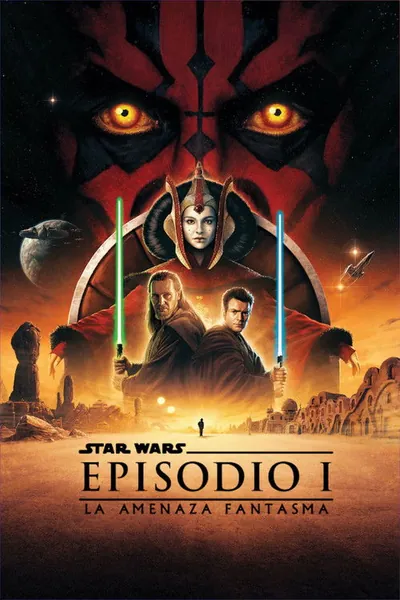 Star Wars: Episode I – The Phantom Menace1999
 The Mission1986
 Batman Begins2005
 Star Wars: Episode II – Attack of the Clones2002
 Gangs of New York2002
 The Dark Knight Rises2012
 The Chronicles of Narnia: The Lion, the Witch and the Wardrobe2005
 Love Actually2003
 Kingdom of Heaven2005
 Taken2008
 Michael Collins1996
- Excalibur 1981 · cast
- Krull 1983 · cast
- The Bounty 1984 · cast
- The Mission 1986 · cast
- The Delta Force 1986 · cast
- Duet for One 1986 · cast
- Suspect 1987 · cast
- A Prayer for the Dying 1987 · cast
- The Dead Pool 1988 · cast
- High Spirits 1988 · cast
- The Good Mother 1988 · cast
- Satisfaction 1988 · cast
- Next of Kin 1989 · cast
- Darkman 1990 · cast
- The Big Man 1990 · producer, cast
- Under Suspicion 1991 · cast
- Husbands and Wives 1992 · cast
- Shining Through 1992 · cast
- Leap of Faith 1992 · cast
- Ruby Cairo 1992 · cast
- Schindler's List 1993 · cast
- Nell 1994 · cast
- Rob Roy 1995 · cast
- Lumière and Company 1995 · cast
- Michael Collins 1996 · cast
- Before and After 1996 · cast
- Les Misérables 1998 · cast
- Star Wars: Episode I – The Phantom Menace 1999 · cast
- The Haunting 1999 · cast
- Gun Shy 2000 · cast
- Star Wars: Episode II – Attack of the Clones 2002 · cast
- Gangs of New York 2002 · cast
- K-19: The Widowmaker 2002 · cast
- Love Actually 2003 · cast
- Kinsey 2004 · cast
- Batman Begins 2005 · cast
- The Chronicles of Narnia: The Lion, the Witch and the Wardrobe 2005 · cast
- Kingdom of Heaven 2005 · cast
- Breakfast on Pluto 2005 · cast
- Seraphim Falls 2006 · cast
- Taken 2008 · cast
- The Chronicles of Narnia: Prince Caspian 2008 · cast
- The Other Man 2008 · cast
- Chloe 2009 · cast
- After.Life 2009 · cast
- Five Minutes of Heaven 2009 · cast
- Clash of the Titans 2010 · cast
- The Chronicles of Narnia: The Voyage of the Dawn Treader 2010 · cast
- The A-Team 2010 · cast
- The Next Three Days 2010 · cast
- Unknown 2011 · cast
- The Grey 2011 · cast
- The Dark Knight Rises 2012 · cast
- Wrath of the Titans 2012 · cast
- Battleship 2012 · cast
- Taken 2 2012 · cast
- Anchorman 2: The Legend Continues 2013 · cast
- Third Person 2013 · cast
- A Million Ways to Die in the West 2014 · cast
- Non-Stop 2014 · cast
- A Walk Among the Tombstones 2014 · cast
- The Prophet 2014 · cast
- Ted 2 2015 · cast
- Taken 3 2015 · cast
- Run All Night 2015 · cast
- Entourage 2015 · cast
- Silence 2016 · cast
- The Huntsman: Winter's War 2016 · cast
- A Monster Calls 2016 · cast
- Operation Chromite 2016 · cast
- Mark Felt: The Man Who Brought Down the White House 2017 · cast
- The Ballad of Buster Scruggs 2018 · cast
- Widows 2018 · cast
- The Commuter 2018 · cast
- Men in Black: International 2019 · cast
- Cold Pursuit 2019 · cast
- Ordinary Love 2019 · cast
- Honest Thief 2020 · cast
- Made in Italy 2020 · cast
- The Marksman 2021 · cast
- The Ice Road 2021 · cast
- Memory 2022 · cast
- Blacklight 2022 · cast
- Marlowe 2022 · cast
- Retribution 2023 · cast
- In the Land of Saints and Sinners 2023 · cast
- The Naked Gun 2025 · cast
Original Cinematopedia text based on Wikipedia (es) and Wikipedia (en) and Wikidata.