
Gene Hackman
1930–2025 · American actor
Biography
Eugene Allen Hackman, known as Gene Hackman (San Bernardino, California, January 30, 1930 - Santa Fe, New Mexico, February 18, 2025), was an American actor whose career spanned more than four decades, from the 1960s into the early twenty-first century. A leading figure of the generation that reshaped Hollywood cinema in the late 1960s and 1970s, he is widely regarded as one of the finest actors of his era. He won two Academy Awards, two British Academy Film Awards and four Golden Globe Awards. His work also extended to the stage and to narrating television documentaries, and in his later years he co-wrote novels with the underwater archaeologist Daniel Lenihan.
He was born in San Bernardino and grew up in a family that moved often, eventually settling in the Illinois town of Danville, in the house of his maternal grandmother. His parents divorced when he was about thirteen. At sixteen he left home and, after lying about his age, enlisted in the Marine Corps. He served for four and a half years as a field radio operator, first in China as part of the American occupation of parts of the country, and later in Hawaii and Japan. After his discharge he moved to New York City, where he took a series of minor jobs, and later studied journalism and television production on veterans' education benefits, leaving college before graduating.
His path to acting came late. In the mid-1950s he enrolled at the Pasadena Playhouse in California, where he became close friends with Dustin Hoffman, another aspiring actor with whom he would share lean years in New York. Before working in films he appeared on television series such as The F.B.I. and The Invaders, and took small parts in modest stage productions. His film debut came in Mad Dog Coll (1961), directed by Burt Balaban, in a role so brief that he was not even listed in the credits. His mother died in a fire in 1962, and he returned to New York, where he studied with George Morrison and worked in off-Broadway theatre.
In 1964 he landed his first Broadway role, in the play Any Wednesday, a success that opened the door to film work. That same year he appeared in Lilith, directed by Robert Rossen, alongside Warren Beatty and Jean Seberg, his first credited role. His breakthrough came in 1967 with Bonnie and Clyde, directed by Arthur Penn. Beatty, the film's star and producer, recommended him for the part of Buck Barrow, Clyde's brother. His performance, especially the scene of Buck's death, impressed critics and earned him his first Academy Award nomination, for Best Supporting Actor.
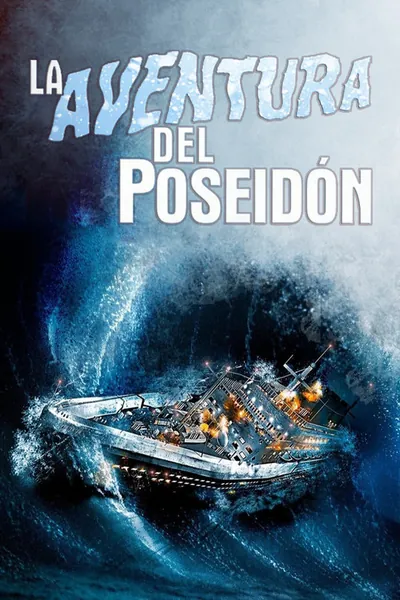
In the years that followed he moved between prestigious projects and more modest ones. In 1969 he worked with Robert Redford in Downhill Racer, and in 1970 he was nominated again for Best Supporting Actor for I Never Sang for My Father, directed by Gilbert Cates, opposite Melvyn Douglas. In 1971 he starred in William Friedkin's The French Connection as the New York detective Jimmy «Popeye» Doyle. The film won him the Academy Award for Best Actor and confirmed him as a star. The same period brought The Poseidon Adventure (1972), in which he played a clergyman who sacrifices himself for the passengers of an overturned ship, and Scarecrow (1973), directed by Jerry Schatzberg, opposite Al Pacino, which he later described as among his favourite roles.
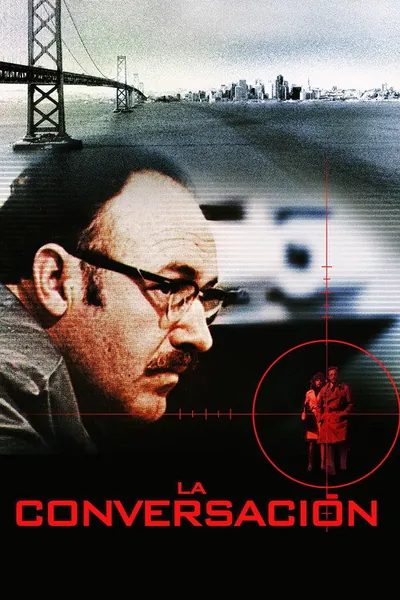
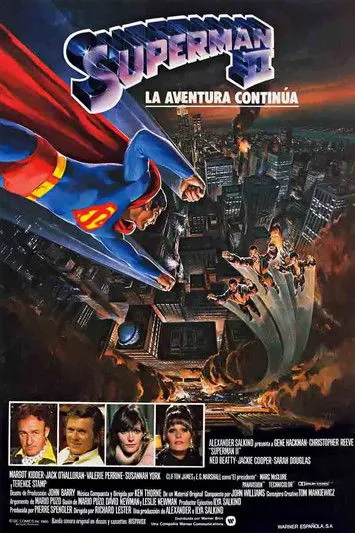
In 1974 he starred in Francis Ford Coppola's The Conversation, a thriller about a surveillance expert whose performance is among his most restrained. That year he also appeared, in a brief comic role, as a blind hermit in Mel Brooks's Young Frankenstein. In 1975 he worked again with Arthur Penn on Night Moves, and he returned to the Doyle character in the sequel French Connection II (1975). In 1977 he was part of the ensemble cast of A Bridge Too Far, and in 1978 he played Lex Luthor in Richard Donner's Superman, opposite Christopher Reeve. He reprised the role in Superman II (1980) and Superman IV (1987), which made him familiar to audiences far beyond the art-house circuit.
His style rested on contained emotion and an unconventional screen presence. He did not fit the mold of the matinee idol, and that lack of a fixed physical type allowed him to move across thrillers, westerns, comedies and dramas without being confined to one archetype. Critics often praised the precision of his gestures and his use of silence, which gave his characters a credibility that felt unforced. He turned down leading roles in Jaws, Black Sunday, Raiders of the Lost Ark and The Silence of the Lambs, and was considered for the part of the lawyer Tom Hagen in The Godfather, a role that ultimately went to Robert Duvall.
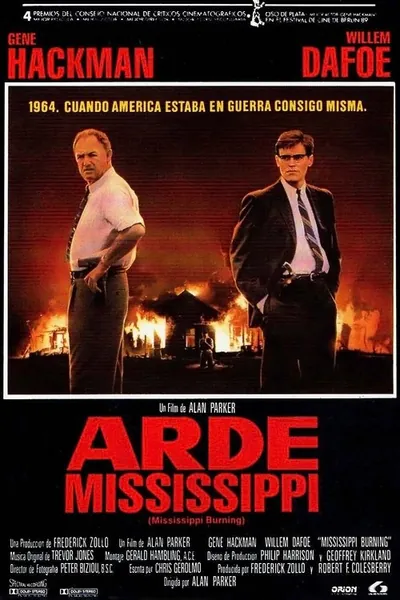
During the 1980s he continued to alternate leads and supporting parts. He appeared in Warren Beatty's Reds (1981) in a small role, and starred in David Anspaugh's Hoosiers (1986) as a high school basketball coach. He worked with Woody Allen in Another Woman (1988) and with Peter Markle in Bat*21 (1988). His portrayal of an FBI agent in Alan Parker's Mississippi Burning (1988) earned him a second nomination for Best Actor. In 1990 he underwent heart surgery and was away from work for almost two years. After his recovery he returned strongly: in 1992 he won his second Academy Award, this time for Best Supporting Actor, for Clint Eastwood's Unforgiven, playing a cruel sheriff. The award reinforced his reputation with a new generation of moviegoers.
The 1990s brought several commercial hits. He appeared in Sydney Pollack's The Firm (1993) with Tom Cruise, in The Quick and the Dead (1995) with Sharon Stone, and in Crimson Tide (1995) with Denzel Washington, playing a submarine captain. He co-starred with Robin Williams and Nathan Lane in The Birdcage (1996), and reunited with Eastwood for Absolute Power (1997). In 1998 he appeared in Enemy of the State with Will Smith, a role that partly recalled his character in The Conversation, and that same year he worked with Paul Newman in Twilight. In 2001 he starred in Wes Anderson's The Royal Tenenbaums, a performance that earned him a fourth Golden Globe.
In the late 1990s he began writing novels with Daniel Lenihan, publishing Wake of the Perdido Star in 1999. They went on to write Justice for None (2004) and Escape from Andersonville (2008), and he later published Payback at Morning Peak (2011) and Pursuit (2013) on his own. His last film role was in Welcome to Mooseport (2004), opposite Ray Romano. In July 2004, in an interview with Larry King, he said his acting career was over, and in 2008 he confirmed that he had left the industry entirely. He then narrated documentaries, including several titles connected with the United States Marine Corps, until 2017. Away from the screen he was a keen racing driver, winning the Long Beach Toyota Pro/Celebrity Race in 1980 and competing in the 24 Hours of Daytona in 1983.
In his personal life he married Faye Maltese in 1956; they had three children and divorced in 1986. In 1991 he married the classical pianist Betsy Arakawa, and the couple shared a home in Santa Fe. Hackman supported the Democratic Party and said he was proud to be on Richard Nixon's enemies list. In 2012 he was struck by a pickup truck while cycling in the Florida Keys, an accident his publicist described as involving nothing more serious than bumps and bruises. After his death, autopsy reports revealed that he had advanced Alzheimer's disease, alongside severe heart disease and kidney disease. Arakawa died shortly before him, in February 2025, and the couple's bodies were found in their home on February 26.
His legacy rests on a wide and varied filmography. Clint Eastwood called him the finest actor he had ever worked with, and Francis Ford Coppola praised the complexity he brought to his roles. Morgan Freeman, speaking at the Academy Awards, recalled him as a generous performer whose gifts lifted the work of everyone around him. For critics, he serves as a bridge between the Hollywood of the 1970s and the cinema that followed, and his work remains a reference for anyone interested in performances that are sober, precise and free of artifice.
Key films
- Bonnie and Clyde (1967), directed by Arthur Penn: Clyde's brother Buck Barrow, the role that earned him his first Oscar nomination.
- The French Connection (1971), directed by William Friedkin: detective Jimmy «Popeye» Doyle, which won him the Academy Award for Best Actor.
- The Conversation (1974), directed by Francis Ford Coppola: a surveillance expert in one of his most restrained performances.
- Superman (1978), directed by Richard Donner: Lex Luthor, the villain that brought him wide recognition.
- Mississippi Burning (1988), directed by Alan Parker: an FBI agent, a role that earned him a second Best Actor nomination.
- Unforgiven (1992), directed by Clint Eastwood: the sadistic sheriff Little Bill Daggett, which won him his second Oscar.
Trivia
Fired from The Graduate
Mike Nichols cast him in The Graduate but fired him three weeks into rehearsals, judging him too young for the part. Murray Hamilton replaced him.
Roles he turned down
According to the sources, he declined leads in Jaws, Black Sunday, Raiders of the Lost Ark and The Silence of the Lambs. He was also considered for Tom Hagen in The Godfather, a part that went to Robert Duvall.
A debut without credit
His first film appearance, in Mad Dog Coll (1961), was so brief that he was not even listed in the film's credits.
On Cinematopedia
 Unforgiven1992
 The French Connection1971
 Reds1981
 The Conversation1974
 Bonnie and Clyde1967
 Mississippi Burning1988
 Superman: The Movie1978
 Scarecrow1973
 The Poseidon Adventure1972
 Young Frankenstein1974
 Superman II1980
 The Quick and the Dead1995
- Lilith 1964 · cast
- Hawaii 1966 · cast
- Bonnie and Clyde 1967 · cast
- Banning 1967 · cast
- The Split 1968 · cast
- Marooned 1969 · cast
- The Gypsy Moths 1969 · cast
- Downhill Racer 1969 · cast
- I Never Sang for My Father 1970 · cast
- The French Connection 1971 · cast
- The Hunting Party 1971 · cast
- Cisco Pike 1971 · cast
- The Poseidon Adventure 1972 · cast
- Prime Cut 1972 · cast
- Scarecrow 1973 · cast
- The Conversation 1974 · cast
- Young Frankenstein 1974 · cast
- Zandy's Bride 1974 · cast
- French Connection II 1975 · cast
- Bite the Bullet 1975 · cast
- Night Moves 1975 · cast
- Lucky Lady 1975 · cast
- A Bridge Too Far 1977 · cast
- March or Die 1977 · cast
- The Domino Principle 1977 · cast
- Superman: The Movie 1978 · cast
- Superman II 1980 · cast
- Reds 1981 · cast
- All Night Long 1981 · cast
- Under Fire 1983 · cast
- Eureka 1983 · cast
- Two of a Kind 1983 · cast
- Uncommon Valor 1983 · cast
- Target 1985 · cast
- Twice in a Lifetime 1985 · cast
- Hoosiers 1986 · cast
- Power 1986 · cast
- Superman IV: The Quest for Peace 1987 · cast
- No Way Out 1987 · cast
- Mississippi Burning 1988 · cast
- Another Woman 1988 · cast
- Bat 21 1988 · cast
- The Package 1989 · cast
- Postcards from the Edge 1990 · cast
- Narrow Margin 1990 · cast
- Loose Cannons 1990 · cast
- Class Action 1991 · cast
- Unforgiven 1992 · cast
- The Firm 1993 · cast
- Geronimo: An American Legend 1993 · cast
- Wyatt Earp 1994 · cast
- The Quick and the Dead 1995 · cast
- Crimson Tide 1995 · cast
- Get Shorty 1995 · cast
- The Birdcage 1996 · cast
- The Chamber 1996 · cast
- Extreme Measures 1996 · cast
- Absolute Power 1997 · cast
- Enemy of the State 1998 · cast
- Twilight 1998 · cast
- Under Suspicion 2000 · cast
- The Replacements 2000 · cast
- The Royal Tenenbaums 2001 · cast
- Behind Enemy Lines 2001 · cast
- The Mexican 2001 · cast
- Heartbreakers 2001 · cast
- Heist 2001 · cast
- Runaway Jury 2003 · cast
- Welcome to Mooseport 2004 · cast
Original Cinematopedia text based on Wikipedia (es) and Wikipedia (en) and Wikidata.