
Fritz Lang
1890–1976 · American film director, screenwriter and producer of Austrian birth, a key figure of German Expressionism and film noir
Biography
Friedrich Christian Anton Lang (Vienna, 1890 – Los Angeles, 1976), known as Fritz Lang, was a director, screenwriter and producer whose career took him from Germany to the United States. He is one of the best-known émigrés associated with German Expressionism, and the British Film Institute gave him the nickname “Master of Darkness.” Spanning five decades, his work runs from the silent films of his first German period to his last pictures made in West Germany, and he is widely regarded as one of the great filmmakers in cinema history.
He was the second son of Anton Lang, an architect who managed public works in Vienna, and of Paula Schlesinger, who came from a Jewish family and converted to Catholicism when her son was ten. Lang showed little interest in religion and often described himself as an atheist, although he sometimes said he had been born a Catholic. His father wanted him to study architecture at the Technical University of Vienna, but he drifted toward painting, admiring Klimt and above all Schiele. Around 1910 he left home and began a restless, bohemian life that included work in Viennese cabarets, long journeys across several continents and a stay in Paris that lasted until 1914.
When the First World War broke out he returned to Vienna and enlisted in the Austro-Hungarian army, but he soon grew disillusioned. Wounded during the fighting, he began writing scripts while convalescing. At a military hospital he met the director Joe May, who saw his drawings and stories and hired him as a screenwriter. The first film he wrote, Die Hochzeit im exzentrik Klub (1917), directed by May, is now lost, and Lang was dissatisfied with the result, so he decided to direct his own work. After the war he settled in Germany and made Halbblut (1919) and Die Spinnen (1919). The second of these, the earliest surviving example of his work, already shows his skill with composition, his feeling for volume and his handling of crowds.
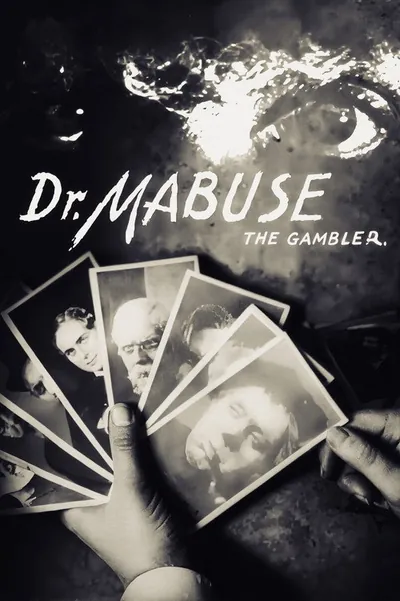
The Weimar years were a period of rapid growth for German cinema. Annual production rose from around 28 films before the war to 245 in 1919 and 474 in 1922. The lurid fantasies of vampires, artificial beings, hidden masterminds and femmes fatales that filled the screen led critics to place Lang within Expressionism, although he later regarded the period more as a product of its time. In 1920 he met the writer Thea von Harbou, who became his second wife and his regular collaborator until 1933. Together they made films such as Die drei Lichter (1921) and Dr. Mabuse, the Gambler (1922), an epic of more than four hours in its original version that launched a trilogy about a criminal who controls the world from the shadows. Lang's first wife, Elisabeth Rosenthal, had died from a gunshot in 1920; the circumstances were never fully settled, and Lang and Harbou were briefly charged with failing to render aid before the charge was dropped.
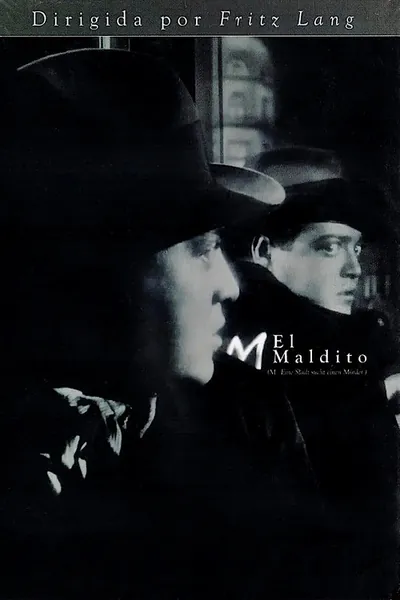
Los Nibelungen (1924) and Metropolis (1927) brought him international fame, although Metropolis was a financial failure because of its excessive budget. Woman in the Moon (1929) followed, with its early use of a countdown before a rocket launch, and then M (1931), his first sound film, with Peter Lorre in the lead. The German films of this period, with their psychological conflict, paranoia and moral ambiguity, anticipated many features later associated with film noir. A story often told about the making of M says that Lang pushed Lorre down a flight of stairs to achieve a battered look, though this account remains unverified.
The rise of the Nazis changed his life. The Testament of Dr. Mabuse (1933) was banned by the new regime, which considered it an incitement to public disorder. Lang later recalled that Joseph Goebbels offered him the leadership of UFA, but he refused, since his mother's Jewish background made his position untenable, and by his own account he left Berlin that same night with few possessions. He divorced Harbou, who stayed in Germany and moved closer to the prevailing ideas of the time. In Paris he directed Liliom (1934), starring Charles Boyer, which was a commercial disappointment, and later that year he went to Hollywood under contract to Metro-Goldwyn-Mayer.
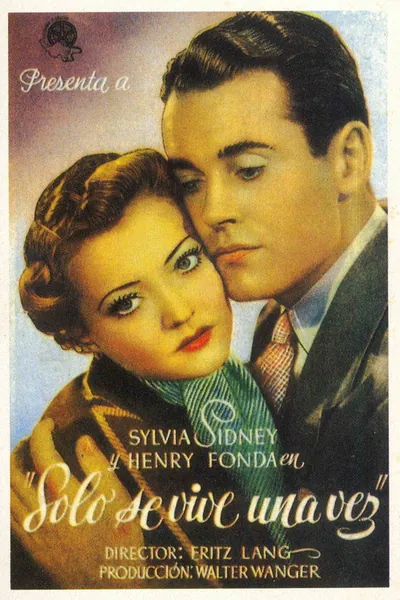
He spent around twenty years working in Hollywood across a wide range of genres, often within the limits imposed by the studios. After a two-year wait he made Fury (1936), with Spencer Tracy as a man wrongly accused who survives a lynch mob. He became an American citizen in 1939. He went on to direct crime and suspense films such as The Woman in the Window (1944), Scarlet Street (1945), now considered a central work of film noir, and The Big Heat (1953), admired for its brutality. He also made anti-Nazi films including Man Hunt (1941), Hangmen Also Die! (1943) and Ministry of Fear (1944). His American work repeatedly returns to social criticism, doubts about justice and the vulnerability of the individual. Over time his style grew colder and more geometric, and his outlook more pessimistic, as seen in While the City Sleeps (1956) and Beyond a Reasonable Doubt (1956).
In the late 1950s he returned to West Germany, partly because of the climate created by the House Un-American Activities Committee, partly because he found Hollywood less congenial, and partly because a European producer offered him work. There he made The Tiger of Eschnapur (1958), The Indian Tomb (1959) and The Thousand Eyes of Dr. Mabuse (1960), his last film as director, shot while his eyesight was failing. In 1960 he received a star on the Hollywood Walk of Fame, and in 1963 he appeared as himself in Jean-Luc Godard's Contempt. Critics associated with Cahiers du cinéma, among them François Truffaut and Jacques Rivette, championed his work, especially his American films, which had often been underrated by historians and reviewers. His influence can be traced in directors as different as Hitchcock, Kubrick, Spielberg and Nolan.
By the time he married Lily Latté in 1971, after decades together, he had gone blind. He died in Los Angeles on August 2, 1976, and was buried at Forest Lawn Hollywood Hills Cemetery. His legacy lives on in restored prints, in the Academy Film Archive, which preserves several of his films, and in the continuing influence of his work on thrillers, spy films and film noir.
Key films
- Metropolis, 1927
- M, 1931
- Dr. Mabuse, the Gambler, 1922
- Fury, 1936
- The Woman in the Window, 1944
- Scarlet Street, 1945
- The Big Heat, 1953
Trivia
A meeting with Goebbels
Lang later recalled that Joseph Goebbels offered him the leadership of UFA shortly after The Testament of Dr. Mabuse was banned. He turned the offer down and said he left Germany that same night.
A cameo for Godard
In 1963 he appeared as himself in Jean-Luc Godard's Contempt, a gesture that reflected the admiration of the Nouvelle Vague for his work.
A countdown before its time
In Woman in the Moon (1929) he used a countdown before a rocket launch, a pioneering device in science fiction cinema.
On Cinematopedia
 Metropolis1927
 M1931
 Contempt1963
 The Big Heat1953
 Fury1936
 Scarlet Street1945
 The Woman in the Window1944
 Dr. Mabuse the Gambler1922
 Destiny1921
 Woman in the Moon1929
 The Testament of Dr. Mabuse1933
 You Only Live Once1937
- Hilde Warren and Death 1917 · screenplay, cast
- Harakiri 1919 · director
- The Master of Love 1919 · director, cast
- Halbblut 1919 · director, screenplay
- The Plague in Florence 1919 · screenplay
- The Wandering Image 1920 · director, screenplay
- Destiny 1921 · director, screenplay, editing
- Four Around the Woman 1921 · director, screenplay
- Dr. Mabuse the Gambler 1922 · director, screenplay
- Metropolis 1927 · director, screenplay, editing
- Spies 1928 · director, screenplay
- Woman in the Moon 1929 · director, screenplay, producer
- M 1931 · director, screenplay
- The Testament of Dr. Mabuse 1933 · director, screenplay, producer
- Liliom 1934 · director, screenplay
- Fury 1936 · director, screenplay
- You Only Live Once 1937 · director
- You and Me 1938 · director, producer
- The Return of Frank James 1940 · director
- Western Union 1941 · director
- Man Hunt 1941 · director
- Moontide 1942 · director
- Hangmen Also Die! 1943 · director, screenplay, producer
- The Woman in the Window 1944 · director
- Ministry of Fear 1944 · director
- Scarlet Street 1945 · director, producer
- Cloak and Dagger 1946 · director
- Secret Beyond the Door 1947 · director, producer
- House by the River 1950 · director
- American Guerrilla in the Philippines 1950 · director
- Clash by Night 1952 · director
- Rancho Notorious 1952 · director
- The Big Heat 1953 · director, screenplay
- The Blue Gardenia 1953 · director
- Human Desire 1954 · director
- Moonfleet 1954 · director
- Beyond a Reasonable Doubt 1956 · director
- While the City Sleeps 1956 · director
- The Indian Tomb 1959 · director, screenplay
- The Tiger of Eschnapur 1959 · director, screenplay
- The Thousand Eyes of Dr. Mabuse 1960 · director, screenplay
- Contempt 1963 · cast
- Paparazzi 1963 · cast
- Two in the Wave 2009 · cast
Original Cinematopedia text based on Wikipedia (es) and Wikipedia (en) and Wikidata.