
Franklin Pangborn
1889–1958 · American character actor
Biography
Franklin Pangborn (Newark, New Jersey, 1889 – Laguna Beach, California, 1958) was an American character actor whose brief but unforgettable parts made him one of the most recognisable faces in screen comedy of the 1930s and 1940s. He rarely carried a picture, yet his fussy, quick-talking presence became a comic trademark.
Pangborn learned his craft on the stage. After touring with a theatre company and appearing on Broadway in the 1910s, he moved to the West Coast to recover from wounds suffered in the First World War. His screen debut came in 1926 with Exit Smiling, and in the early sound years he worked mostly in short subjects for Mack Sennett, Hal Roach and other studios, usually supporting the leads.
His typical role was the prissy, polite and nervous type: a hotel clerk, a vain musician or a demanding headwaiter. He worked with W.C. Fields in International House and appeared in several Preston Sturges comedies, and he served as a foil for comedians such as Harold Lloyd and the Ritz Brothers. In the 1940s he also moved into television, appearing on The Red Skelton Show.
Today he is remembered as a supporting player of real craft. Later LGBTQ historians have argued that several of his characters drew on gay stereotypes, a subject that could hardly be addressed openly in his era.
Key films
- Flying Down to Rio (1933): as the hotel manager Hammerstein, in the musical with Fred Astaire and Ginger Rogers.
- The Women (1939): a supporting role in George Cukor's comedy.
- Mr. Deeds Goes to Town (1936): a small part in Frank Capra's comedy.
- Bluebeard's Eighth Wife (1938): as an assistant hotel manager in the Ernst Lubitsch comedy.
- The Great McGinty (1940): one of the Preston Sturges films in which he regularly appeared.
Trivia
A controversial moment
In International House (1933) there is a brief allusion to homosexuality, rare for the period, in a scene involving his hotel manager character.
A brief stint on television
In 1957 he was announcer on Jack Paar's The Tonight Show, but was replaced by Hugh Downs after a few weeks for lacking "spontaneous enthusiasm".
On Cinematopedia
 Mr. Deeds Goes to Town1936
 Stage Door1937
 Now, Voyager1942
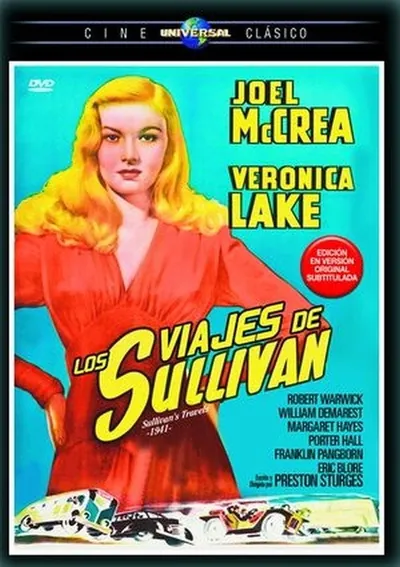 Sullivan's Travels1942
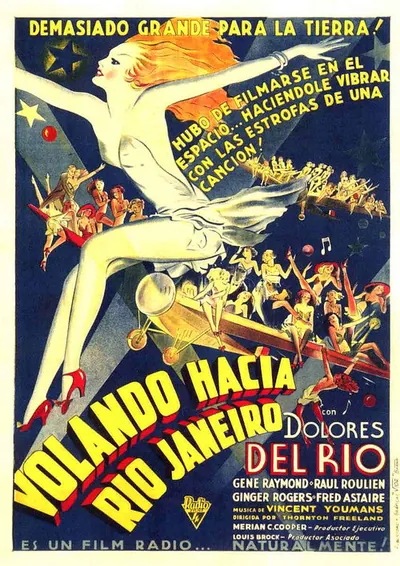 Flying Down to Rio1933
 The Palm Beach Story1942
 Design for Living1933
 Bluebeard's Eighth Wife1938
 Vivacious Lady1938
 The Bank Dick1940
 Stage Door Canteen1943
 Lady of the Pavements1929
- Lady of the Pavements 1929 · cast
- Not So Dumb 1930 · cast
- Flying Down to Rio 1933 · cast
- Design for Living 1933 · cast
- Only Yesterday 1933 · cast
- $1,000 a Minute 1935 · cast
- Mr. Deeds Goes to Town 1936 · cast
- Stage Door 1937 · cast
- Easy Living 1937 · cast
- Swing High, Swing Low 1937 · cast
- Bluebeard's Eighth Wife 1938 · cast
- Vivacious Lady 1938 · cast
- Carefree 1938 · cast
- Mad About Music 1938 · cast
- Four's a Crowd 1938 · cast
- Topper Takes a Trip 1938 · cast
- Just Around the Corner 1938 · cast
- Joy of Living 1938 · cast
- Fifth Avenue Girl 1939 · cast
- Broadway Serenade 1939 · cast
- The Bank Dick 1940 · cast
- Christmas in July 1940 · cast
- Spring Parade 1940 · cast
- The Flame of New Orleans 1941 · cast
- Never Give a Sucker an Even Break 1941 · cast
- Now, Voyager 1942 · cast
- Sullivan's Travels 1942 · cast
- The Palm Beach Story 1942 · cast
- George Washington Slept Here 1942 · cast
- Stage Door Canteen 1943 · cast
- Holy Matrimony 1943 · cast
- My Best Gal 1944 · cast
- Romance on the High Seas 1948 · cast
- My Dream Is Yours 1949 · cast
- The Story of Mankind 1957 · cast
Original Cinematopedia text based on Wikipedia (es) and Wikipedia (en) and Wikidata.