
Frances Marion
1888–1973 · American screenwriter, journalist and author
Biography
Frances Marion (born Marion Benson Owens; San Francisco, 1888 - Los Angeles, 1973) was an American screenwriter, journalist and author. She is often cited as one of the most renowned female screenwriters of her era, alongside June Mathis and Anita Loos. She was the first writer to win two Academy Awards, and her career spans both silent and sound cinema, with more than three hundred scripts credited to her.
She was born Marion Benson Owens into a family connected to advertising. Her father worked in billboards and later developed a resort in Pope Valley, California, a place she would draw on for her 1935 book Valley People. After a restless youth, she married her art instructor, Wesley de Lappe, while still young, and worked a range of odd jobs before turning to journalism. She later served as a war correspondent during the First World War and wrote about the contribution of women to the war effort.
In Los Angeles she first worked for the director Lois Weber and then for Mary Pickford, a close friend for whom she wrote many scripts, including Rebecca of Sunnybrook Farm and The Poor Little Rich Girl. She also worked for World Films and for William Randolph Hearst's studio, where she adapted Humoresque. She directed only a handful of films, among them The Love Light with Pickford, but her real strength lay in writing, especially in adapting novels and plays. With the arrival of sound she worked with Wallace Beery and Marie Dressler on Min and Bill, and her collaborations with Beery earned her Academy recognition.
She married four times. Her third husband, the actor Fred Thomson, died in 1928 after contracting tetanus, and in 1930 she married the director George W. Hill, a marriage that ended in divorce in 1933. She had two sons. For many years she was under contract to MGM, but in 1946 she left Hollywood to devote more time to writing plays and novels. Her memoir Off With Their Heads: A Serio-Comic Tale of Hollywood appeared in 1972. Her legacy lies largely in showing that the screenwriter's craft carried real weight at a time when writers' names rarely reached the screen.
Key films
- The Big House (1930), a prison drama for which she won the Academy Award for Best Writing, Adaptation.
- The Champ (1931), a boxing story with Wallace Beery that earned her the Academy Award for Best Story.
- Anna Christie (1930), an adaptation of the Eugene O'Neill play starring Greta Garbo.
- The Wind (1928), a Western melodrama starring Lillian Gish, on which Marion contributed to the screenplay.
Trivia
War correspondent
After the First World War, Marion worked as a combat correspondent and was reportedly the first woman to cross the Rhine after the armistice.
From novel to comedy
Her 1937 novel Molly, Bless Her was adapted in 1945 as the comedy Molly and Me, directed by Lewis Seiler for 20th Century Fox.
On Cinematopedia
 The Good Earth1937
 The Big House1930
 Anna Christie1930
 Camille1936
 The Champ1931
 Min and Bill1930
 The Son of the Sheik1926
 The Wind1928
 Smilin' Through1932
 Dinner at Eight1933
 The Flapper1920
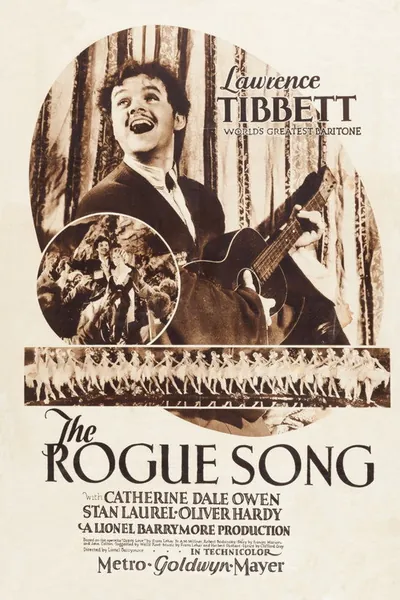 The Rogue Song1930
- A Girl of Yesterday 1915 · cast
- Camille 1915 · screenplay
- Esmeralda 1915 · screenplay
- The Heart of a Hero 1916 · screenplay
- The Yellow Passport 1916 · screenplay
- The Gilded Cage 1916 · screenplay
- A Woman's Way 1916 · screenplay
- The Hidden Scar 1916 · screenplay
- The Poor Little Rich Girl 1917 · screenplay
- A Little Princess 1917 · screenplay
- Rebecca of Sunnybrook Farm 1917 · screenplay
- A Girl's Folly 1917 · screenplay
- Stella Maris 1918 · screenplay
- How Could You, Jean? 1918 · screenplay
- Johanna Enlists 1918 · screenplay
- Amarilly of Clothes-Line Alley 1918 · screenplay
- M'Liss 1918 · screenplay
- He Comes Up Smiling 1918 · screenplay
- The Goat 1918 · screenplay
- Anne of Green Gables 1919 · screenplay
- Captain Kidd, Jr. 1919 · screenplay
- The Cinema Murder 1919 · screenplay
- The Dark Star 1919 · screenplay
- The Flapper 1920 · screenplay
- Pollyanna 1920 · screenplay
- Humoresque 1920 · screenplay
- The Restless Sex 1920 · screenplay
- Little Lord Fauntleroy 1921 · cast
- The Love Light 1921 · director, screenplay
- The Toll of the Sea 1922 · screenplay
- The Eternal Flame 1922 · screenplay
- Within the Law 1923 · screenplay
- The Voice from the Minaret 1923 · screenplay
- The Song of Love 1923 · director, screenplay
- Potash and Perlmutter 1923 · screenplay
- Secrets 1924 · screenplay
- Cytherea 1924 · screenplay
- Through the Dark 1924 · screenplay
- The Lady 1925 · screenplay
- Stella Dallas 1925 · screenplay
- Thank You 1925 · screenplay
- Lightnin' 1925 · screenplay
- The Dark Angel 1925 · screenplay
- The Son of the Sheik 1926 · screenplay
- The Scarlet Letter 1926 · screenplay
- The Winning of Barbara Worth 1926 · screenplay
- Love 1927 · screenplay
- The Red Mill 1927 · screenplay
- Madame Pompadour 1927 · screenplay
- The Wind 1928 · screenplay
- The Cossacks 1928 · screenplay
- Their Own Desire 1929 · screenplay
- The Big House 1930 · screenplay
- Anna Christie 1930 · screenplay
- Min and Bill 1930 · screenplay
- The Rogue Song 1930 · screenplay
- Anna Christie 1930 · screenplay
- Let Us Be Gay 1930 · screenplay
- The Champ 1931 · screenplay
- The Secret Six 1931 · screenplay
- Smilin' Through 1932 · screenplay
- Blondie of the Follies 1932 · screenplay
- Dinner at Eight 1933 · screenplay
- Secrets 1933 · screenplay
- The Prizefighter and the Lady 1933 · screenplay
- Going Hollywood 1933 · screenplay
- Camille 1936 · screenplay
- Riffraff 1936 · screenplay
- The Good Earth 1937 · screenplay
- Knight Without Armour 1937 · screenplay
- Love from a Stranger 1937 · screenplay
- Northwest Passage 1940 · screenplay
- Green Hell 1940 · screenplay
- Presenting Lily Mars 1943 · screenplay
- Without Love 1945 · screenplay
- The Pirate 1948 · screenplay
Original Cinematopedia text based on Wikipedia (es) and Wikipedia (en) and Wikidata.