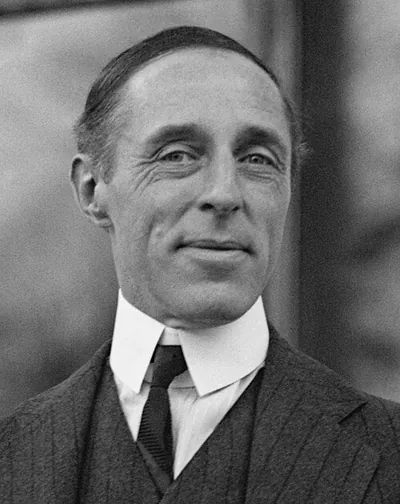
D. W. Griffith
1875–1948 · American film director, screenwriter and producer
Biography
David Wark Griffith (January 22, 1875 – July 23, 1948) was an American film director, screenwriter and producer whose work helped define the grammar of cinema. Historians usually credit him with pioneering many techniques of film editing and with expanding the possibilities of the feature-length narrative. His career stretched from the short films he began making in 1908 to his last feature, The Struggle, released in 1931. He matters both for his technical innovations and for the controversy that still surrounds the film that made him famous.
Griffith was born on a farm in Oldham County, Kentucky, the son of a Confederate army colonel who later served in the state legislature. He grew up in a southern environment in which racism was part of everyday life, a background many critics see as important to understanding some of his later views. His father died when he was ten. When Griffith was fourteen, his mother left the farm and moved the family to Louisville, where she opened a boarding house that did not prosper. The young man left high school to help support the household, worked in a dry goods store and later in a bookshop, and began acting with touring companies. He also tried to build a career as a playwright, with little success; only one of his plays was accepted for performance.
In 1907 he travelled to New York hoping to sell a script to Edwin Porter of Edison Studios. Porter turned the script down but offered him an acting part in Rescued from an Eagle's Nest. The experience encouraged him to try acting on screen, and for a time he appeared as an extra in several films. In 1908 he joined the American Mutoscope & Biograph Company, where he soon began directing short films. Over the next several years he made dozens of titles for the studio and gradually refined his methods. He used cross-cutting, in which two simultaneous actions are alternated to build suspense, and he developed a keen sense of camera placement and lighting. A well-known anecdote has it that when a cameraman objected to this technique, Griffith replied that Dickens wrote that way too. In 1913 he left Biograph to work as an independent producer, and in 1914 he directed Judith of Bethulia, one of his first feature-length films.
The Birth of a Nation, released in 1915, was his breakthrough. Adapted from Thomas Dixon Jr.'s novel The Clansman, the film retold the Civil War and Reconstruction from a viewpoint that presented slavery as benign and the Ku Klux Klan as heroic defenders of order. Its release provoked protests and riots in several northern cities, and the NAACP tried to stop its screenings. Despite local bans, it became a huge box-office success that broke the records of its time, and its role in the Klan's revival in the twentieth century is still studied and debated. Griffith answered his critics with Intolerance (1916), an ambitious film that interwove four stories from different eras to show the consequences of prejudice. It was costly, failed to recoup its outlay, and left him in serious financial trouble.
After his production partnership ended in 1917, he worked for Artcraft, linked to Paramount, and then for First National. In 1919 he co-founded United Artists with Charlie Chaplin, Mary Pickford and Douglas Fairbanks, a company meant to let artists control their own films instead of depending on the major studios. In those years he made Broken Blossoms (1919), Way Down East (1920) and Orphans of the Storm (1921), which found a receptive audience, but high production and promotion costs kept commercial success out of reach. His association with United Artists was brief. After the failure of Isn't Life Wonderful (1924) he left the company, and his career entered a difficult phase. With the coming of sound he made Lady of the Pavements, which was only partly sound, followed by Abraham Lincoln (1930) and The Struggle (1931), two sound features that did not restore his standing in the industry.
His style rests on expressive use of the close-up, the flashback and carefully composed frames. Early shorts such as The Musketeers of Pig Alley (1912) show how attention to lighting and camera position could heighten atmosphere and tension. He was also a talent scout who gave early opportunities to Lillian and Dorothy Gish, Mae Marsh, Blanche Sweet and Mary Pickford, who became one of the great stars of the silent era, and he worked with Mack Sennett. In 1936 he received an honorary Oscar from the Academy. That same year he helped director Woody Van Dyke shoot the earthquake sequence for San Francisco without receiving on-screen credit. In 1939 he worked for producer Hal Roach on two films, though historians and participants disagree about how much he actually directed.
Griffith died in 1948, having been found unconscious in the lobby of the Knickerbocker Hotel in Los Angeles, where he lived alone. He succumbed to a cerebral hemorrhage on the way to a Hollywood hospital. He was buried in Centerfield, Kentucky, and in 1950 the Directors Guild of America provided a monument for his grave. His reputation remains contested. Charlie Chaplin called him 'The Teacher of Us All', and filmmakers from Alfred Hitchcock to Jean Renoir and Stanley Kubrick have acknowledged his influence. Sergei Eisenstein admired his mastery while condemning The Birth of a Nation. For decades he was celebrated as the father of modern cinema, a label that historians now qualify: later research into the Brighton School and the work of Edwin Porter shows that other filmmakers were exploring similar techniques at the same time. His lasting achievement, in this view, lies in combining and developing those devices into a coherent narrative language. In 1953 the Guild created an award in his name, which was renamed the DGA Lifetime Achievement Award in 1999. In 1960 he was posthumously given a star on the Hollywood Walk of Fame, and in 1975 he appeared on a United States postage stamp.
Key films
- The Birth of a Nation (1915), directed and produced by Griffith, the first major Hollywood epic and one of his greatest commercial successes, controversial for its racist portrayals.
- Intolerance (1916), four interwoven stories set in different eras, an ambitious and costly work often cited as influential on later directors.
- Broken Blossoms (1919), one of the United Artists-period films that were well received.
- Way Down East (1920), a film that was well received at the box office.
- Orphans of the Storm (1921), a historical drama set during the French Revolution.
Trivia
A much-quoted reply
According to an anecdote recorded by historians, when a cameraman criticised his use of cross-cutting, Griffith answered that Dickens wrote that way too.
Chaplin's tribute
Charlie Chaplin called him 'The Teacher of Us All', one of the most frequently repeated descriptions of his legacy.
An award renamed
In 1999 the Directors Guild of America renamed its highest honour, which no longer bore Griffith's name, because it felt The Birth of a Nation had helped foster intolerable racial stereotypes.
On Cinematopedia
 The Birth of a Nation1915
 Intolerance1916
 San Francisco1936
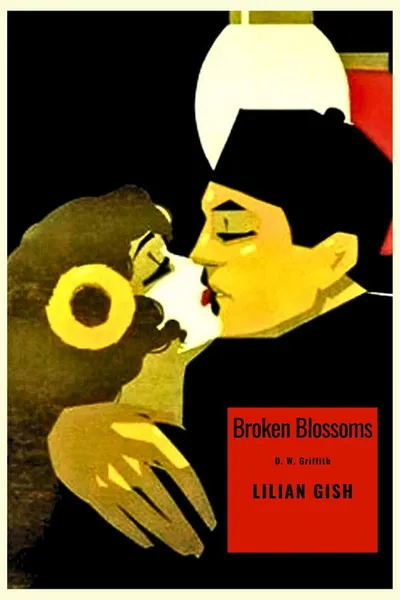 Broken Blossoms1919
 Way Down East1920
 Orphans of the Storm1921
 One Million B.C.1940
 Judith of Bethulia1914
 Abraham Lincoln1930
 The Avenging Conscience1914
 Hearts of the World1918
 The Battle of the Sexes1914
- When Knights Were Bold 1908 · cast
- Jones and His New Neighbors 1909 · director, screenplay
- Judith of Bethulia 1914 · director, screenplay, producer
- The Avenging Conscience 1914 · director, screenplay, producer
- The Battle of the Sexes 1914 · director, producer
- Home, Sweet Home 1914 · director
- The Life of General Villa 1914 · producer
- The Escape 1914 · director
- The Birth of a Nation 1915 · director, screenplay, editing, producer, cast
- Martyrs of the Alamo 1915 · producer
- The Lily and the Rose 1915 · screenplay, producer
- The Lamb 1915 · screenplay, producer
- Old Heidelberg 1915 · producer
- Intolerance 1916 · director, screenplay, editing, producer
- American Aristocracy 1916 · producer
- Daphne and the Pirate 1916 · screenplay
- Fifty-Fifty 1916 · producer
- Macbeth 1916 · producer
- Reggie Mixes In 1916 · producer
- Betty of Greystone 1916 · producer
- The Flying Torpedo 1916 · producer
- Flirting with Fate 1916 · producer
- Hearts of the World 1918 · director, screenplay, producer, cast
- The Greatest Thing in Life 1918 · director, screenplay, producer
- The Great Love 1918 · director, producer
- Broken Blossoms 1919 · director, screenplay, music, producer
- True Heart Susie 1919 · director, producer
- Scarlet Days 1919 · director, producer
- The Greatest Question 1919 · director
- The Girl Who Stayed at Home 1919 · director, producer
- A Romance of Happy Valley 1919 · director, producer
- Way Down East 1920 · director, screenplay, producer
- Orphans of the Storm 1921 · director, screenplay, producer
- Dream Street 1921 · director, screenplay, producer
- One Exciting Night 1922 · director, producer
- The White Rose 1923 · director, screenplay, producer
- America 1924 · director, producer
- Isn't Life Wonderful 1924 · director, screenplay, producer
- Sally of the Sawdust 1925 · director, producer
- That Royle Girl 1925 · director
- The Sorrows of Satan 1926 · director, producer
- The Battle of the Sexes 1928 · director, producer
- Drums of Love 1928 · director, producer
- Lady of the Pavements 1929 · director
- Abraham Lincoln 1930 · director
- The Struggle 1931 · director, music, producer
- San Francisco 1936 · director, cast
- One Million B.C. 1940 · director
Original Cinematopedia text based on Wikipedia (es) and Wikipedia (en) and Wikidata.