
Christopher Walken
b. 1943 · American actor of film and stage
Biography
Christopher Walken (born Ronald Walken on March 31, 1943, in Astoria, Queens, New York City) is an American actor whose career on stage and screen now spans more than six decades. He began as a child performer on television and became one of the most recognisable supporting actors in Hollywood, especially in villainous roles, though his range is considerably wider than that reputation suggests. He won the Academy Award for Best Supporting Actor for The Deer Hunter in 1978 and has earned a long list of further nominations. What sets him apart is the way he combines menace, odd charm and a dry, unpredictable humour into a style that is entirely his own.
He was raised in a Methodist household. His father, a German immigrant, ran a bakery in Astoria, while his Scottish-born mother had dreams of stardom that she passed on to her sons. Walken and his brothers, Kenneth and Glenn, worked as child actors on television during the 1950s. He was named Ronald after the actor Ronald Colman. As a teenager he spent a short time working for a lion tamer in a circus. He enrolled at Hofstra University on Long Island but left after a year, having been cast in an off-Broadway revival of Best Foot Forward alongside Liza Minnelli. He had trained as a dancer at the Washington Dance Studio.
His first appearances were as an extra in numerous anthology series and variety shows during the golden age of television. After a sketch with Martin and Lewis on The Colgate Comedy Hour, he decided to pursue acting seriously. In 1953 he won a regular role in the series The Wonderful John Acton, where he was credited as Ronnie Walken. Over the following two decades he moved between television work and a respected stage career. In 1966 he played King Philip of France in the Broadway premiere of The Lion in Winter, and in 1968 he performed Shakespeare at the Stratford Festival in Canada. In 1964 he changed his first name to Christopher, on the suggestion of a friend, though he now prefers to be called Chris. His first feature film was the low-budget Me and My Brother (1969).
The 1970s brought him into mainstream studio cinema. He had a small part opposite Sean Connery in Sidney Lumet's The Anderson Tapes, and he took his first leading role in The Happiness Cage, a science fiction film about mind control in which he played a sociopathic American soldier stationed in Germany. He then appeared in Paul Mazursky's Next Stop, Greenwich Village and in Woody Allen's Annie Hall, as the volatile brother of Annie. His name was among those considered for Han Solo in Star Wars, a role that went to Harrison Ford. In 1978 came Michael Cimino's The Deer Hunter, in which he played a Pennsylvania steelworker emotionally broken by the Vietnam War. The performance won him the Oscar and critical recognition. To achieve his character's gaunt look he reportedly lived for a period on little more than bananas, water and rice.
In the 1980s he showed his range further. He starred in Cimino's Heaven's Gate, and he surprised audiences with a tap-dancing striptease in Herbert Ross's musical Pennies from Heaven. For David Cronenberg he played the schoolteacher Johnny Smith in The Dead Zone, adapted from a Stephen King novel, and in 1985 he was the villain Max Zorin in A View to a Kill, one of the James Bond films. He dyed his hair blond to suggest the character's origins as a Nazi experiment. Other notable work from the decade includes At Close Range, opposite Sean Penn, and Neil Simon's Biloxi Blues, directed by Mike Nichols. In the 1990s he was a ruthless drug lord in Abel Ferrara's King of New York, the industrialist Max Shreck in Batman Returns, and the Sicilian father in Tony Scott's True Romance, whose scene is still widely cited. He also played the Vietnam veteran in Quentin Tarantino's Pulp Fiction. In 1995 he wrote and starred in the play Him, about his idol Elvis Presley. That decade he also played the Headless Horseman in Tim Burton's Sleepy Hollow.
In the twenty-first century he balanced large productions with smaller, more personal projects. He was nominated for a Tony for the original Broadway run of James Joyce's The Dead in 2000, and later for Martin McDonagh's A Behanding in Spokane, before reuniting with McDonagh for Seven Psychopaths. His appearance in Fatboy Slim's music video for «Weapon of Choice», directed by Spike Jonze, became one of the most celebrated videos of its era. In 2002 he played the father of the con man in Steven Spielberg's Catch Me If You Can, a performance that earned him an Academy Award nomination, a BAFTA and a Screen Actors Guild Award. Films such as Click, Hairspray and Wedding Crashers followed, and in 2016 he voiced King Louie in Disney's live-action The Jungle Book. In the 2020s he was nominated for an Emmy for Severance, and in 2024 he played Emperor Shaddam IV in Denis Villeneuve's Dune: Part Two.
Walken is regarded as a cult favourite and as one of the most prolific supporting actors of his generation, in the company of performers such as Steve Buscemi, John Turturro and Willem Dafoe. Critics and fellow actors admire his capacity to suggest danger, but also his unpredictable comic timing. His distinctive speech, with its unusual pauses and shifts in intonation, has been widely imitated. His appearances on Saturday Night Live, where he hosted seven times, produced memorable sketches, including the record producer Bruce Dickinson and his demand for «more cowbell». He keeps a low profile in private life: he has been married to Georgianne Walken, a casting director, since 1969, and they live in Connecticut. He remains active today and is known for accepting almost any role that interests him.
Key films
- The Deer Hunter (1978), directed by Michael Cimino: his performance as a steelworker shattered by the Vietnam War won him the Academy Award for Best Supporting Actor.
- Annie Hall (1977), directed by Woody Allen: a brief but memorable role as Annie's unstable brother.
- The Dead Zone (1983), directed by David Cronenberg: a schoolteacher who develops visions of the future, one of his most substantial dramatic performances.
- Pulp Fiction (1994), directed by Quentin Tarantino: a short but unforgettable scene as a Vietnam veteran that adds one of the film's most talked-about stories.
- Catch Me If You Can (2002), directed by Steven Spielberg: the father of the lead character, a role that earned him an Oscar nomination and a BAFTA.
- Dune: Part Two (2024), directed by Denis Villeneuve: Emperor Shaddam IV, one of his more recent appearances in a major blockbuster.
Trivia
A change of name
He was born Ronald Walken, but in 1964 he took the name Christopher on the suggestion of a friend. He now prefers to be called Chris, and his last credit as Ronnie featured a character named Chris.
The Saturday Night Live cowbell
His sketch as record producer Bruce Dickinson, obsessed with adding more cowbell to a Blue Öyster Cult recording, is one of the show's most remembered. The line became a pop culture icon and was adapted into merchandise.
Heterochromia
Walken has heterochromia, meaning his eyes are two different colours.
On Cinematopedia
 Pulp Fiction1994
 Annie Hall1977
 The Deer Hunter1978
 Catch Me If You Can2002
 The Jungle Book2016
 Sleepy Hollow1999
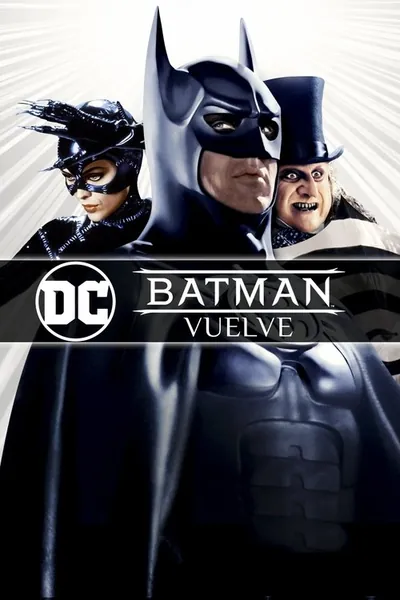 Batman Returns1992
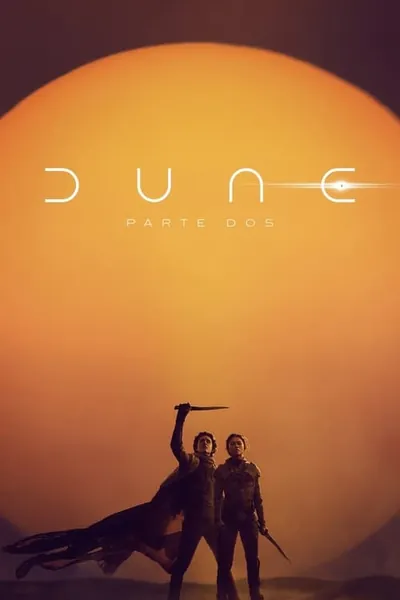 Dune: Part Two2024
 A View to a Kill1985
 The Player1992
 Man on Fire2004
 Click2006
- The Anderson Tapes 1971 · cast
- Next Stop, Greenwich Village 1976 · cast
- Annie Hall 1977 · cast
- The Sentinel 1977 · cast
- The Deer Hunter 1978 · cast
- Last Embrace 1979 · cast
- Heaven's Gate 1980 · cast
- The Dogs of War 1980 · cast
- Pennies from Heaven 1981 · cast
- The Dead Zone 1983 · cast
- Brainstorm 1983 · cast
- A View to a Kill 1985 · cast
- At Close Range 1986 · cast
- The Milagro Beanfield War 1988 · cast
- Biloxi Blues 1988 · cast
- Homeboy 1988 · cast
- Communion 1989 · cast
- King of New York 1990 · cast
- Batman Returns 1992 · cast
- The Player 1992 · cast
- True Romance 1993 · cast
- Wayne's World 2 1993 · cast
- Pulp Fiction 1994 · cast
- A Business Affair 1994 · cast
- Nick of Time 1995 · cast
- Things to Do in Denver When You're Dead 1995 · cast
- The Prophecy 1995 · cast
- The Addiction 1995 · cast
- Last Man Standing 1996 · cast
- The Funeral 1996 · cast
- Basquiat 1996 · cast
- Celluloide 1996 · cast
- Mouse Hunt 1997 · cast
- Excess Baggage 1997 · cast
- The Prophecy II 1998 · cast
- Sleepy Hollow 1999 · cast
- Blast from the Past 1999 · cast
- America's Sweethearts 2001 · cast
- The Affair of the Necklace 2001 · cast
- Joe Dirt 2001 · cast
- Catch Me If You Can 2002 · cast
- The Rundown 2003 · cast
- Gigli 2003 · cast
- Kangaroo Jack 2003 · cast
- Man on Fire 2004 · cast
- The Stepford Wives 2004 · cast
- Noel 2004 · cast
- Envy 2004 · cast
- Wedding Crashers 2005 · cast
- Domino 2005 · cast
- Romance & Cigarettes 2005 · cast
- Click 2006 · cast
- Man of the Year 2006 · cast
- Fade to Black 2006 · cast
- Hairspray 2007 · cast
- Balls of Fury 2007 · cast
- The Maiden Heist 2009 · cast
- Kill the Irishman 2011 · cast
- Seven Psychopaths 2012 · cast
- Stand Up Guys 2012 · cast
- Jersey Boys 2014 · cast
- The Family Fang 2015 · cast
- The Jungle Book 2016 · cast
- Eddie the Eagle 2016 · cast
- Nine Lives 2016 · cast
- Father Figures 2017 · cast
- The War with Grandpa 2020 · cast
- Wild Mountain Thyme 2020 · cast
- Percy vs Goliath 2020 · cast
- Dune: Part Two 2024 · cast
Original Cinematopedia text based on Wikipedia (es) and Wikipedia (en) and Wikidata.