
Charles Boyer
1899–1978 · French-born American actor
Biography
Charles Boyer (born in Figeac, 28 August 1899; died in Phoenix, Arizona, 26 August 1978) was a French actor who became one of the most popular romantic leads of classic Hollywood. Trained in drama and formed on the Parisian stage, he built a reputation in France before moving to American cinema in the 1930s, where his deep, measured voice suited the romantic dramas of the period.
Born in a small town in the Lot department, he discovered theatre and cinema as a boy. During the First World War he worked as a hospital orderly and performed comic sketches for soldiers. He settled in Paris to pursue the stage and, in 1920, replaced a leading man in a production and quickly became a theatre star. His first film, L'homme du large (1920), came early in a career that moved between silent films and the stage through the 1920s. Sound cinema gave his voice a new role, and he became a romantic star in French films.
His move to Hollywood began in the early 1930s, first with MGM and then with Paramount and other studios, though his first English-language parts were modest. After a return to France he signed a five-year contract with producer Walter Wanger in 1935, which anchored his American career. The international breakthrough came with Mayerling (1936), directed by Anatole Litvak, and he then shared the screen with Marlene Dietrich and Greta Garbo. The role that made him a star was Algiers (1938), an English-language remake of Pépé le Moko, in which he played a fugitive who falls for a woman he cannot safely reach. The character became a touchstone for parody, and was the model for Chuck Jones's Pepé Le Pew.
During the 1940s he worked with directors such as Litvak, Julien Duvivier and Ernst Lubitsch, and reunited with Irene Dunne and Ingrid Bergman. He became a US citizen in 1942 and took part in producing some of his projects. His performance in Gaslight (1944), in which he tries to persuade Bergman that she is losing her mind, is the one he is most often remembered for. After the war his films no longer drew the same box-office response, and he returned to the stage, including a Broadway production in which he played Don Juan in Shaw's Man and Superman.
He kept working in film and television for the following decades, and his last major performance was in the musical Lost Horizon (1973). He was made a chevalier of the French Légion d'honneur in 1948 and has two stars on the Hollywood Walk of Fame. His final years ended tragically: two days after his wife, the British actress Pat Paterson, died of cancer, he took his own life in 1978. Today he is remembered as one of the defining romantic faces of the classic era, and in Spain his name survives in the popular phrase "no te enrolles, Charles Boyer".
Key films
- Algiers (1938): the English-language remake of Pépé le Moko, in which he plays the fugitive who became his best-known role.
- Gaslight (1944): his manipulative husband who tries to convince Ingrid Bergman she is losing her mind, perhaps his most remembered performance.
- Mayerling (1936): the Crown Prince of Austria role that brought him international fame, directed by Anatole Litvak.
- Love Affair (1939): a romantic drama with Irene Dunne that cemented his image as a Hollywood leading man.
- Arch of Triumph (1948): a reunion with Ingrid Bergman that failed at the box office and marked the decline of his star status.
- Casino Royale (1967): a cameo in the spoof of James Bond, one of his later films with wide popular recognition.
Trivia
A line he never said
In Algiers Boyer never actually says "Come with me to the Casbah", although the line appeared in the trailer and became linked to his name.
A Spanish saying
In Spain, mothers used the phrase "no te enrolles, Charles Boyer" to scold children who avoided doing chores or homework.
On Cinematopedia
 Around the World in 80 Days1956
 Gaslight1944
 Casino Royale1967
 Algiers1938
 How to Steal a Million1966
 Barefoot in the Park1967
 Fanny1961
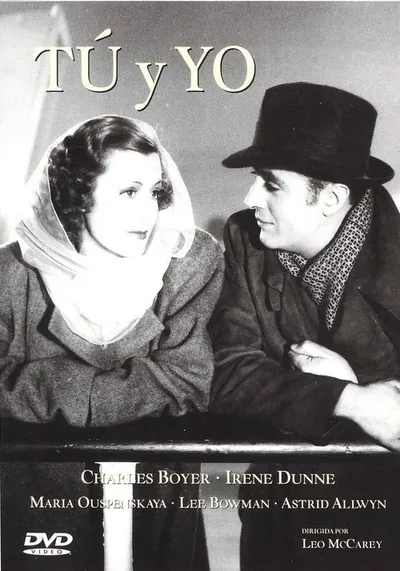 Love Affair1939
 Is Paris Burning?1966
 All This, and Heaven Too1940
 Hold Back the Dawn1941
 Conquest1937
- Man of the Sea 1920 · cast
- Red-Headed Woman 1932 · cast
- The Battle 1933 · cast
- Liliom 1934 · cast
- Happiness 1934 · cast
- Private Worlds 1935 · cast
- Break of Hearts 1935 · cast
- The Garden of Allah 1936 · cast
- Mayerling 1936 · cast
- Conquest 1937 · cast
- Tovarich 1937 · cast
- History Is Made at Night 1937 · cast
- Algiers 1938 · screenplay, cast
- Orage 1938 · cast
- Love Affair 1939 · cast
- When Tomorrow Comes 1939 · cast
- All This, and Heaven Too 1940 · cast
- Hold Back the Dawn 1941 · cast
- Appointment for Love 1941 · cast
- Back Street 1941 · cast
- Tales of Manhattan 1942 · cast
- The Constant Nymph 1943 · cast
- The Heart of a Nation 1943 · cast
- Gaslight 1944 · cast
- Together Again 1944 · cast
- Confidential Agent 1945 · cast
- The Battle of the Rails 1946 · cast
- Cluny Brown 1946 · cast
- Arch of Triumph 1948 · cast
- The 13th Letter 1951 · cast
- The Happy Time 1952 · cast
- The Earrings of Madame de... 1953 · cast
- Boum sur Paris 1954 · cast
- The Cobweb 1955 · cast
- Papa, Mama, My Woman and Me 1955 · cast
- Nana 1955 · cast
- Around the World in 80 Days 1956 · cast
- Lucky to Be a Woman 1956 · cast
- Paris, Palace Hotel 1956 · cast
- The Parisian 1957 · cast
- The Buccaneer 1958 · cast
- Maxime 1958 · cast
- Fanny 1961 · cast
- The Four Horsemen of the Apocalypse 1962 · cast
- Adorable Julia 1962 · cast
- How to Steal a Million 1966 · cast
- Is Paris Burning? 1966 · cast
- Casino Royale 1967 · cast
- Barefoot in the Park 1967 · cast
- The April Fools 1969 · cast
- The Madwoman of Chaillot 1969 · cast
- Lost Horizon 1973 · cast
- Stavisky 1974 · cast
- A Matter of Time 1976 · cast
- She's Funny That Way 2014 · cast
Original Cinematopedia text based on Wikipedia (es) and Wikipedia (en) and Wikidata.