
Anna Magnani
1908–1973 · Italian actress of stage and screen
Biography
Anna Magnani (Rome, 1908 – Rome, 1973) was an Italian stage and screen actress and one of the most striking female figures of postwar European cinema. Her raw, intense style made her a symbol of Italian neorealism and, later, one of the few Italian actresses to win recognition in Hollywood.
Her early life is uncertain in some details. Although she is usually considered a Roman, some sources place her birth in Alexandria, Egypt. She was raised by her grandmother in a poor district of Rome, and to earn a living she sang in nightclubs and cabarets, which earned her the nickname «the Italian Édith Piaf». She trained at Rome's Academy of Dramatic Art and worked intensely in the theatre between 1929 and 1950.
Her first screen role came in The Blind Woman of Sorrento (1934), after she met the director Goffredo Alessandrini, whom she married that same year. It was Rossellini's Rome, Open City (1945) that brought her international attention. She later reunited with Rossellini for L'Amore (1948), which includes an adaptation of Jean Cocteau's The Human Voice. Their relationship ended when he cast Ingrid Bergman in Stromboli, and Magnani starred in Volcano (1950) in a rivalry the press followed closely.
In Bellissima (1951), directed by Luchino Visconti, she played a domineering mother who pushes her daughter toward a beauty contest. She then made The Golden Coach (1952) with Jean Renoir, who called her the greatest actress he had ever worked with.
In 1955 she went to Hollywood for The Rose Tattoo, directed by Daniel Mann from a play by Tennessee Williams, who had written the part with her in mind. She won the Academy Award for Best Actress, though she did not attend the ceremony because she was convinced she would not win. She went on to English-language work such as Wild Is the Wind (1957), directed by George Cukor, and The Fugitive Kind (1959), opposite Marlon Brando. Her performance in Mamma Roma (1962), directed by Pier Paolo Pasolini, is considered one of the most acclaimed of her career.
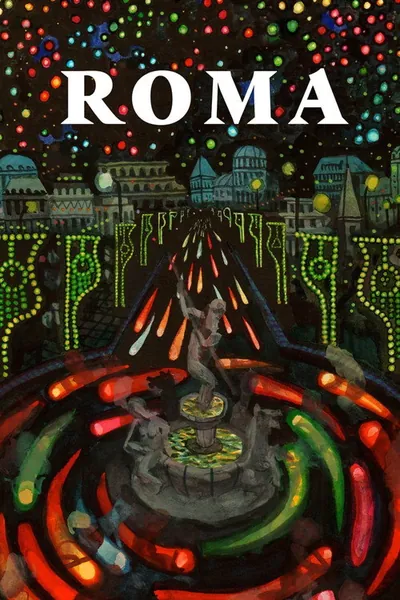
Her last film appearances were The Secret of Santa Vittoria (1969) and a brief homage in Fellini's Roma (1972), in which she appears surprised at her own front door. In 1966 she returned to the stage in Medea. Her private life was shaped by the polio that left her son Luca disabled, and she devoted decades to caring for him. She died in Rome in 1973 of pancreatic cancer. She remains a symbol of Italian cinema and of a direct, visceral style of acting, and she has a star on the Hollywood Walk of Fame.
Key films
- Rome, Open City (1945): her death scene became one of the most remembered moments of neorealism.
- Bellissima (1951): an ambitious mother who pushes her daughter toward a beauty contest.
- The Rose Tattoo (1955): the widow Serafina, the role that won her the Academy Award for Best Actress.
- Wild Is the Wind (1957): one of her English-language films, directed by George Cukor opposite Anthony Quinn.
- Mamma Roma (1962): a prostitute who wants a respectable life for her son, under Pasolini's direction.
Trivia
An Oscar without the ceremony
She won the Academy Award for The Rose Tattoo but skipped the ceremony, convinced she would lose.
A role written for her
Tennessee Williams wrote the character of Serafina with Magnani in mind, as they were close friends. On Broadway the part went to Maureen Stapleton, since Magnani's English was still limited.
The second choice
The lead role in Rome, Open City was first intended for Clara Calamai, who was busy with other projects, so Magnani became the second choice.
On Cinematopedia
 Rome, Open City1945
 The Rose Tattoo1955
 Bellissima1951
 Mamma Roma1962
 Fellini's Roma1972
 The Secret of Santa Vittoria1969
 Wild Is the Wind1957
 The Fugitive Kind1959
 The Golden Coach1952Angelina1947Angelina1947
 L'Amore1948We, the Women1953We, the Women1953
- Full Speed 1934 · cast
- The Blind Woman of Sorrento 1934 · cast
- Those Two 1935 · cast
- Cavalry 1936 · cast
- Thirty Seconds of Love 1936 · cast
- Princess Tarakanova 1938 · cast
- Teresa Venerdì 1941 · cast
- The Peddler and the Lady 1943 · cast
- Rome, Open City 1945 · cast
- Down with Misery 1945 · cast
- The Bandit 1946 · cast
- Peddlin' in Society 1946 · cast
- Before Him All Rome Trembled 1946 · cast
- Angelina 1947 · screenplay, cast
- L'Amore 1948 · cast
- Assunta Spina 1948 · cast
- Volcano 1950 · cast
- Bellissima 1951 · cast
- The Golden Coach 1952 · cast
- Red Shirts 1952 · screenplay, cast
- We, the Women 1953 · cast
- The Rose Tattoo 1955 · cast
- Carousel of Variety 1955 · cast
- The Awakening 1956 · cast
- Wild Is the Wind 1957 · cast
- The Fugitive Kind 1959 · cast
- ...And the Wild Wild Women 1959 · cast
- The Passionate Thief 1960 · cast
- Mamma Roma 1962 · cast
- Made in Italy 1965 · cast
- The Secret of Santa Vittoria 1969 · cast
- 1870 1971 · cast
- Fellini's Roma 1972 · cast
Original Cinematopedia text based on Wikipedia (es) and Wikipedia (en) and Wikidata.