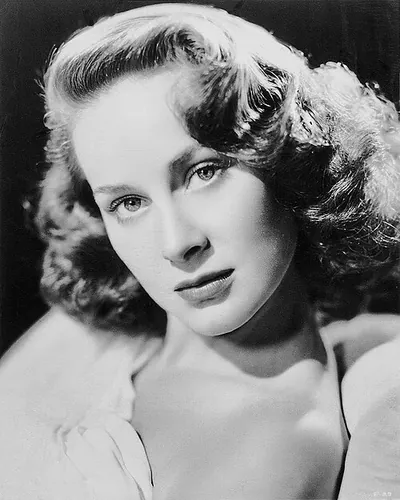
Alida Valli
1921–2006 · Italian actress
Biography
Alida Valli, also known simply as Valli, was an Italian actress whose career spanned about seventy years, from the 1930s into the early 2000s, and included more than one hundred films. Born in Pola, then part of Italy and now Pula in Croatia, she became one of the leading stars of Italian cinema during the Fascist era and gained wide international recognition after the Second World War. She is most often remembered for The Third Man, though her filmography is far broader.
Of Austrian, Slovenian and Italian descent, she began acting as a child in charity theatre and at thirteen started working in films through the Centro Sperimentale di Cinematografia in Rome. Her early roles of the 1930s were followed by her first major performance in Piccolo mondo antico (1942), which earned her a best actress prize at the Venice Film Festival. During the war she stopped making films to avoid being used for regime propaganda, and she married the musician Oscar de Mejo, with whom she had two sons.
In 1952 she became entangled in the Wilma Montesi affair, the death of a young woman found on a beach at Ostia, a scandal that reached into Rome's high society and is generally considered to have hurt her career in Italy. Her Hollywood period began when David O. Selznick signed her, hoping to present her as a European rival to Ingrid Bergman. She found his control over his actors hard to accept and secured the end of her contract at a considerable financial cost. She made The Paradine Case for Alfred Hitchcock and then The Third Man for Carol Reed, opposite Orson Welles and Joseph Cotten, which brought her wide recognition.
Back in Europe, Luchino Visconti directed her in Senso (1954), and Michelangelo Antonioni cast her in Il grido (1957). In 1956 she withdrew from film to work in the theatre, where she ran a company that staged Broadway productions in Italy. She returned to the screen in the 1960s and 1970s in films such as Oedipus Rex for Pier Paolo Pasolini, Suspiria for Dario Argento, and Novecento and La Luna for Bernardo Bertolucci. Her last film role came in Semana Santa (2002). In 1997 she received the Golden Lion at the Venice Film Festival for her career, and she was honoured with knighthoods in France and Italy.
Her legacy rests on a long career that moved from the escapist cinema of the 1940s through melodrama in the 1950s to auteur and genre films in the decades that followed. She died at her home in Rome on 22 April 2006, aged 84.
Key films
- The Third Man (1949), directed by Carol Reed: the role that made her known to international audiences.
- Senso (1954), directed by Luchino Visconti: a Venetian countess torn between patriotic duty and a forbidden love.
- Il grido (1957), directed by Michelangelo Antonioni: a part in one of the landmarks of Italian art cinema.
- Eyes Without a Face (1960), directed by Georges Franju: an appearance in a key work of French horror.
- Suspiria (1977), directed by Dario Argento: a role in one of the best-known films of Italian horror.
- Novecento (1976), directed by Bernardo Bertolucci: part of the director's epic historical saga.
Trivia
A single name
In Hollywood she was known only by her surname, Valli, which was displayed prominently in the credits to sound more exotic. In 1951 she complained that people confused her with Rudy Vallée.
Multilingual
She grew up speaking Slovene, Italian and German, and was also fluent in Serbo-Croatian, French and English. In international co-productions she often filmed her lines in her co-stars' language and dubbed herself into Italian afterwards.
On Cinematopedia
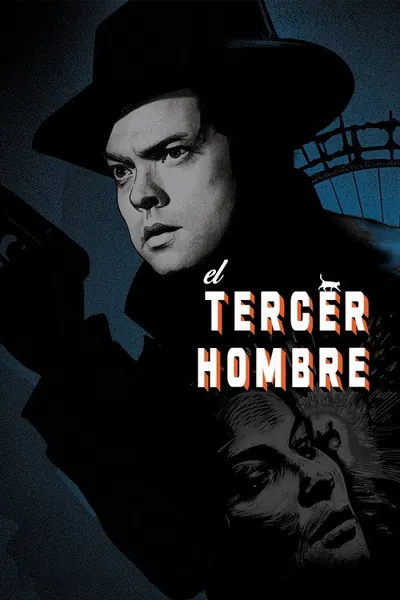 The Third Man1949
 19001976
 The Long Absence1961
 The Paradine Case1947
 The Cassandra Crossing1976
 Suspiria1977
 Eyes Without a Face1960
 Senso1954
 Oedipus Rex1967
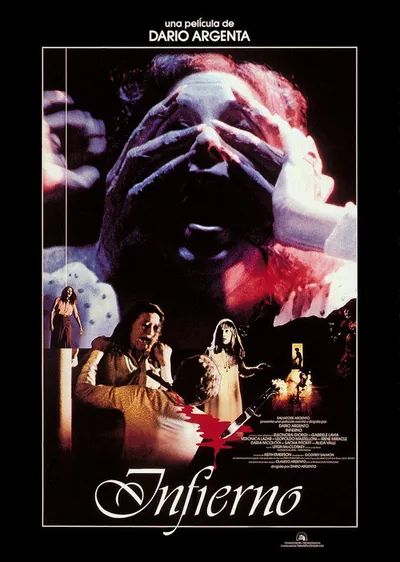 Inferno1980
 Indian Summer1972
 Il Grido1957
- The Three-Cornered Hat 1934 · cast
- It Was I! 1937 · cast
- The Ferocious Saladin 1937 · cast
- The House of Shame 1938 · cast
- A Lady Did It 1938 · cast
- A Thousand Lire a Month 1939 · cast
- Unjustified Absence 1939 · cast
- The Castle Ball 1939 · cast
- Manon Lescaut 1940 · cast
- Old-Fashioned World 1941 · cast
- Schoolgirl Diary 1941 · cast
- The Secret Lover 1941 · cast
- Light in the Darkness 1941 · cast
- We the Living 1942 · cast
- Invisible Chains 1942 · cast
- Nothing New Tonight 1942 · cast
- The Two Orphans 1942 · cast
- Apparition 1943 · cast
- Life Begins Anew 1945 · cast
- The Paradine Case 1947 · cast
- Eugenie Grandet 1947 · cast
- The Miracle of the Bells 1948 · cast
- The Third Man 1949 · cast
- Miracles Only Happen Once 1951 · cast
- Last Meeting 1951 · cast
- We, the Women 1953 · cast
- Lovers of Toledo 1953 · cast
- The Stranger's Hand 1953 · cast
- The World Condemns Them 1953 · cast
- Senso 1954 · cast
- Il Grido 1957 · cast
- The Wide Blue Road 1957 · cast
- This Angry Age 1957 · cast
- The Night Heaven Fell 1958 · cast
- The Most Beautiful Love 1958 · cast
- The Naked Maja 1958 · cast
- Signed Arsène Lupin 1959 · cast
- Eyes Without a Face 1960 · cast
- Dialogue with the Carmelites 1960 · cast
- The Long Absence 1961 · cast
- The Happy Thieves 1961 · cast
- Disorder 1962 · cast
- The Paper Man 1963 · cast
- The Castilian 1963 · cast
- Ophelia 1963 · cast
- Oedipus Rex 1967 · cast
- The Mushroom 1970 · cast
- Indian Summer 1972 · cast
- Eye in the Labyrinth 1972 · cast
- Lisa and the Devil 1974 · cast
- The Antichrist 1974 · cast
- The Flesh of the Orchid 1975 · cast
- Cher Victor 1975 · cast
- 1900 1976 · cast
- The Cassandra Crossing 1976 · cast
- Suspiria 1977 · cast
- Berlinguer, I Love You 1977 · cast
- The Perfect Crime 1978 · cast
- La Luna 1979 · cast
- Killer Nun 1979 · cast
- Inferno 1980 · cast
- Peacetime in Paris 1981 · cast
- Sogni mostruosamente proibiti 1982 · cast
- The Long Silence 1993 · cast
- Fatal Frames 1996 · cast
- Angel of Death 2002 · cast
Original Cinematopedia text based on Wikipedia (es) and Wikipedia (en) and Wikidata.