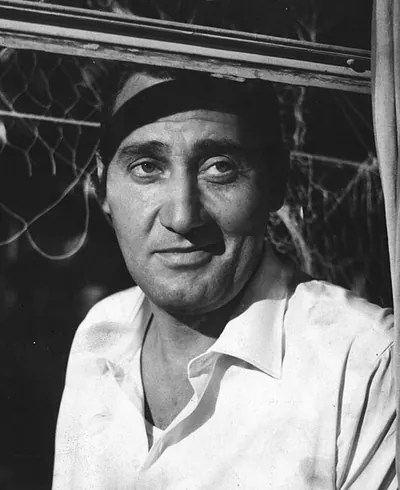
Alberto Sordi
1920–2003 · Italian actor, director and screenwriter
Biography
Alberto Sordi (15 June 1920 – 24 February 2003) was an Italian actor, director and screenwriter, and one of the central figures of commedia all'italiana alongside Marcello Mastroianni, Ugo Tognazzi, Nino Manfredi and Vittorio Gassman. He is also remembered as the great champion of Roman character in Italian cinema. His career, which spanned much of the second half of the twentieth century, made him an enduring icon of Italian comedy.
Born in Rome, Sordi grew up in a modest family: his father, Pietro Sordi, was a music teacher who played the tuba in the orchestra of the Rome Opera, and his mother, Maria Righetti, worked as a schoolteacher. As a child he staged puppet shows and sang in the Sistine Chapel choir under Lorenzo Perosi. His parents were unenthusiastic about an acting career, and it was his maternal grandfather, Primo Righetti, who encouraged him. In 1936 he recorded a disc of children's stories and used the money to leave his studies and try his luck in Milan, where his strong Roman accent got him expelled from a diction course.
His first steady income came from dubbing. In 1937 he won a Metro-Goldwyn-Mayer competition to voice Oliver Hardy in Italian, and for years he lent his voice to actors such as Anthony Quinn, Robert Mitchum and Pedro Armendáriz, as well as to Marcello Mastroianni early in his career. His voice can also be heard in Vittorio De Sica's Bicycle Thieves (1948). Meanwhile he built a following in revue theatre and on radio, where he created characters who became very popular.
His move into leading film roles came in the 1950s. After several small parts, Federico Fellini directed him in The White Sheik (1952) and I vitelloni (1953), and Steno cast him in An American in Rome (1954). His portrait of the self-serving, childish but good-hearted Italian everyman became a defining note of postwar comedy, and he often made eight to ten films a year, frequently contributing to their scripts.
In 1959 Mario Monicelli's The Great War marked a turn in his career: he played a shirking soldier who is forced to die as a hero against his will. From then on he moved between comedy and darker, more grotesque roles, such as the lieutenant in Luigi Comencini's Everybody Go Home (1960) or the title character of Monicelli's Un borghese piccolo piccolo (1977), his bleakest performance. He also directed nineteen films of his own, and in 1984 he made Tutti dentro.
His legacy lies in having portrayed the vices and virtues of the average Italian for more than fifty years, from the war to the age of consumer prosperity. He received an honorary Golden Lion for lifetime achievement, and he remains an essential reference in Italian cinema.
Key films
- The Great War (1959): a cowardly soldier who ends up dying a hero, a role that showed his dramatic range.
- Everybody Go Home (1960): a lieutenant in Luigi Comencini's comedy about the 1943 retreat.
- The Devil (1963): a comedy that earned him a Golden Globe.
- An American in Rome (1954): a portrait of an Italian proud of his roots, one of his most remembered characters.
- I vitelloni (1953): one of his two films with Federico Fellini, where he began to establish himself as a leading actor.
- Un borghese piccolo piccolo (1977): his darkest, most dramatic role, directed by Mario Monicelli.
Trivia
Voice of Oliver Hardy
He won a Metro-Goldwyn-Mayer competition to dub Oliver Hardy into Italian, a job he held for years.
Honorary citizen
During a 1955 visit to Kansas City, he was welcomed because the city was the hometown of his character in An American in Rome, and he received the symbolic key to the city.
On Cinematopedia
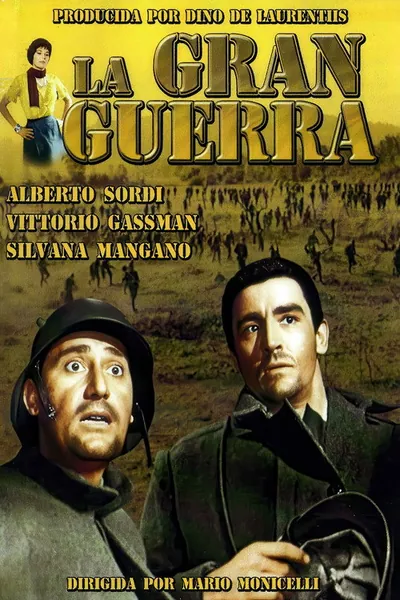 The Great War1959
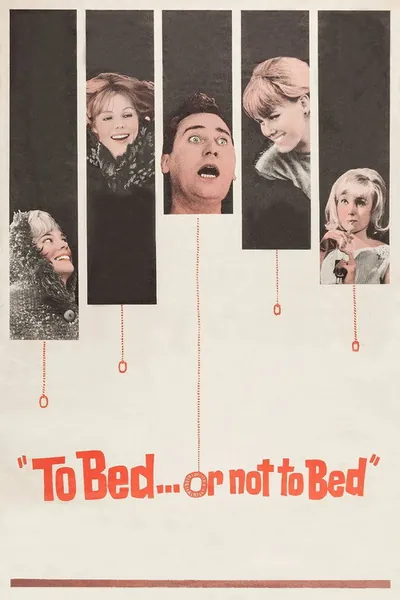 To Bed or Not to Bed1963
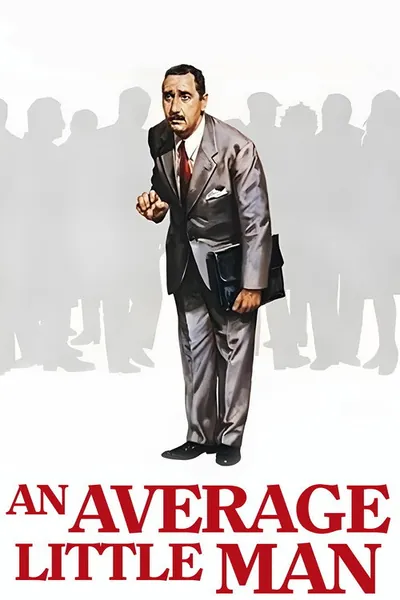 An Average Little Man1977
 I Vitelloni1953
 A Farewell to Arms1957
 Those Magnificent Men in their Flying Machines1965
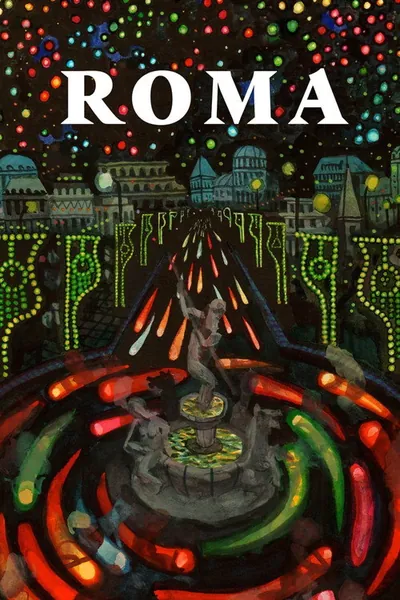 Fellini's Roma1972
 The White Sheik1952
 I nuovi mostri1977
 Everybody Go Home1960
 A Difficult Life1961
 The Witches1967
- Scipio Africanus: The Defeat of Hannibal 1937 · cast
- The Ferocious Saladin 1937 · cast
- Princess Tarakanova 1938 · cast
- Giarabub 1942 · cast
- Flesh Will Surrender 1947 · cast
- Under the Sun of Rome 1948 · cast
- Toto and the King of Rome 1951 · cast
- Mamma Mia, What an Impression! 1951 · screenplay, producer, cast
- Housemaid 1951 · cast
- The White Sheik 1952 · cast
- I Vitelloni 1953 · cast
- Two Nights with Cleopatra 1953 · cast
- A Day in Court 1953 · screenplay, cast
- The Enchanting Enemy 1953 · cast
- Cavalcade of Song 1953 · cast
- Via Padova 46 1953 · cast
- Ci troviamo in galleria 1953 · cast
- An American in Rome 1954 · screenplay, cast
- The Art of Getting Along 1954 · cast
- A Slice of Life 1954 · cast
- Mid-Century Loves 1954 · cast
- The Seducer 1954 · cast
- It Happened at the Police Station 1954 · cast
- Marriage 1954 · cast
- The Cheerful Squadron 1954 · cast
- The Sign of Venus 1955 · cast
- A Hero of Our Times 1955 · cast
- The Belle of Rome 1955 · cast
- Bravissimo 1955 · cast
- The Bachelor 1955 · cast
- Goodnight... Lawyer! 1955 · screenplay, cast
- Nero's Weekend 1956 · cast
- The Virtuous Bigamist 1956 · cast
- Guardia 1956 · cast
- Allow Me, Daddy! 1956 · cast
- A Farewell to Arms 1957 · cast
- Doctor and the Healer 1957 · cast
- Count Max 1957 · screenplay, cast
- The Husband 1957 · screenplay, cast
- It Happened in Rome 1957 · cast
- Arrivano i dollari! 1957 · cast
- Venice, the Moon and You 1958 · cast
- Girls for the Summer 1958 · screenplay, cast
- Fortunella 1958 · cast
- Ladro lui, ladra lei 1958 · screenplay, cast
- The Great War 1959 · cast
- The Magliari 1959 · cast
- ...And the Wild Wild Women 1959 · cast
- The Widower 1959 · cast
- The Moralist 1959 · cast
- Policarpo, Ministerial Scribe 1959 · cast
- Winter Holidays 1959 · cast
- Vacations in Majorca 1959 · cast
- Everybody Go Home 1960 · cast
- The Traffic Policeman 1960 · cast
- Crimen 1960 · cast
- Gastone 1960 · cast
- A Difficult Life 1961 · cast
- The Last Judgment 1961 · cast
- The Best of Enemies 1961 · cast
- Mafioso 1962 · cast
- The Police Commissioner 1962 · cast
- To Bed or Not to Bed 1963 · cast
- Il Boom 1963 · cast
- The Teacher from Vigevano 1963 · cast
- Il disco volante 1964 · cast
- My Wife 1964 · cast
- Those Magnificent Men in their Flying Machines 1965 · cast
- Made in Italy 1965 · cast
- I complessi 1965 · screenplay, cast
- The Three Faces 1965 · screenplay, cast
- Thrilling 1965 · cast
- Sex Quartet 1966 · cast
- Pardon, Are You for or Against? 1966 · director, screenplay, cast
- Our Husbands 1966 · cast
- Smoke Over London 1966 · director, screenplay, cast
- The Witches 1967 · cast
- An Italian in America 1967 · director, screenplay, cast
- Will Our Heroes Be Able to Find Their Friend Who Has Mysteriously Disappeared in Africa? 1968 · cast
- Be Sick... It's Free 1968 · screenplay, cast
- The Conspirators 1969 · cast
- Help Me 1969 · director, cast
- Il Prof. Dott. Guido Tersilli, primario della clinica Villa Celeste, convenzionata con le mutue 1969 · screenplay, cast
- Man and Wife 1970 · director, screenplay, cast
- The President of Borgorosso Football Club 1970 · screenplay, cast
- In Prison Awaiting Trial 1971 · cast
- A Girl in Australia 1971 · cast
- Fellini's Roma 1972 · cast
- The Scientific Cardplayer 1972 · cast
- The Most Wonderful Evening of My Life 1972 · cast
- My Brother Anastasia 1973 · screenplay, cast
- Stardust 1973 · director, screenplay, cast
- While There's War There's Hope 1974 · director, screenplay, cast
- What's Your Sign? 1975 · screenplay, cast
- A Common Sense of Modesty 1976 · director, screenplay, cast
- Strange Occasion 1976 · cast
- An Average Little Man 1977 · cast
- I nuovi mostri 1977 · cast
- Where Are You Going on Holiday? 1978 · director, screenplay, cast
- The Witness 1978 · cast
- Traffic Jam 1979 · cast
- Hypochondriac 1979 · screenplay, cast
- Catherine and I 1980 · director, screenplay, cast
- The Marquis of Grillo 1981 · screenplay, cast
- I Know That You Know That I Know 1982 · director, cast
- Journey with Papa 1982 · director, screenplay, cast
- Everybody in Jail 1984 · director, screenplay, cast
- Bertoldo, Bertoldino, and Cascacenno 1984 · cast
- I'm a Paranormal Phenomenon 1985 · screenplay, cast
- Troppo forte 1986 · screenplay, cast
- A Taxi Driver in New York 1987 · director, screenplay, cast
- Taste of Life 1988 · screenplay, cast
- In the Name of the Sovereign People 1990 · cast
- The Miser 1990 · screenplay, cast
- The Story of a Poor Young Man 1995 · cast
Original Cinematopedia text based on Wikipedia (es) and Wikipedia (en) and Wikidata.