
Zatoichi
Zatōichi
2003 · Japan · 111 min
- Director
- Takeshi Kitano
- Screenplay
- Takeshi Kitano
- Producer
- Masayuki Mori
- Music
- Keiichi Suzuki
- Cinematography
- Katsumi Yanagishima
- Editing
- Takeshi Kitano
- Production company
- Rai 2
- Based on
- Zatoichi
Awards: Sitges Film Festival Best Feature-Length Film award · 1 nominations
Cast
What it is about
Japan, early nineteenth century. Zatōichi is a blind wanderer who makes his living giving massages and gambling with dice at roadside inns, though he hides a sword skill few suspect. His travels bring him to a mountain village squeezed by the gang of Ōgiya, owner of the local brothel, whose enforcer Ginzō demands ever steeper protection payments from the villagers. The arrival of a highly skilled masterless samurai raises the stakes. In the village Zatōichi befriends a humble woman, O-Ume, and her gambling nephew, and takes up the cause of two geisha seeking revenge for their parents' murder, guided by a single cryptic clue. The result blends a tale of vengeance and wandering justice with a light, surprising tone.
How it was made
Takeshi Kitano wrote, directed, edited and starred in the film, his eleventh outing as a director. He was reportedly approached by others to make the project and set aside some of his usual methods, following a more conventional process to make a pure entertainment film. It marks his first collaboration with composer Keiichi Suzuki, replacing Joe Hisaishi after an eleven-year run; Kitano felt the film needed percussion-based music. Kazuko Kurosawa designed the costumes, and Kitano used digital effects to heighten the gore in the fights. He thus returned to the character created by Kan Shimozawa, long associated with Shintarō Katsu across decades of films and a television series, offering a new take that mixes action, drama and comedy, with musical numbers and nods to the western.
Reception and legacy
The film premiered at the Venice International Film Festival in 2003, where Kitano won the Silver Lion for Best Direction and the audience award, and was also nominated for the Golden Lion. It took the audience award at Toronto and further honours at home, including Japan Academy Prizes for cinematography, editing, music and lighting, and Blue Ribbon and Kinema Junpo awards, with Michiyo Okusu recognised for her supporting performance. Critics praised its blend of humour, violence and swordfight choreography, and user rating sites place it at a solid, favourable level. Its success helped confirm Kitano as one of the most distinctive authors in contemporary Japanese cinema.
Stills


Trailer
Clicking loads the video from YouTube (privacy-enhanced mode). Open on YouTube
Trivia
A change of composer
This is Kitano's first collaboration with Keiichi Suzuki, ending an eleven-year run with Joe Hisaishi. The director said the film needed percussion-based music.
Digital blood
Kitano used digital technology to increase the gore in the sword fights.
More films by Takeshi Kitano
 Hana-bi
 Kikujiro
 Outrage
 To Each His Own Cinema
 Boiling Point
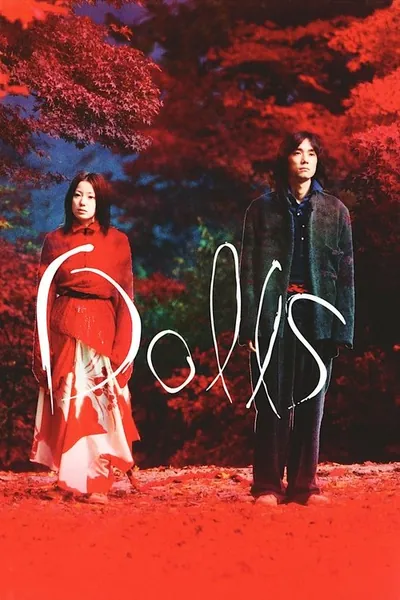 Dolls
Original Cinematopedia text based on Wikipedia (es) and Wikipedia (en) and Wikidata.