
It Came from Outer Space
Vinieron del espacio
1953 · United States · 80 min
- Director
- Jack Arnold
- Screenplay
- Ray Bradbury, Harry Essex
- Producer
- William Alland
- Music
- Herman Stein
- Cinematography
- Clifford Stine
- Editing
- Paul Weatherwax
- Production company
- Universal Pictures
What the critics say
81 % Rotten Tomatoes positive reviewsCast
What it is about
Amateur astronomer John Putnam and his fiancée, schoolteacher Ellen Fields, are stargazing in the Arizona desert when a large fiery object crashes nearby, close to the small town of Sand Rock. At the impact site Putnam discovers that the object is not a meteorite but a round spacecraft, which is soon buried by a landslide. When he reports what he saw to the local sheriff and the press, he is dismissed as a crackpot. Strange events then begin to unsettle the town, and skepticism turns into hostility. The story follows Putnam as he tries to prove the truth and find a peaceful way through the crisis.
How it was made
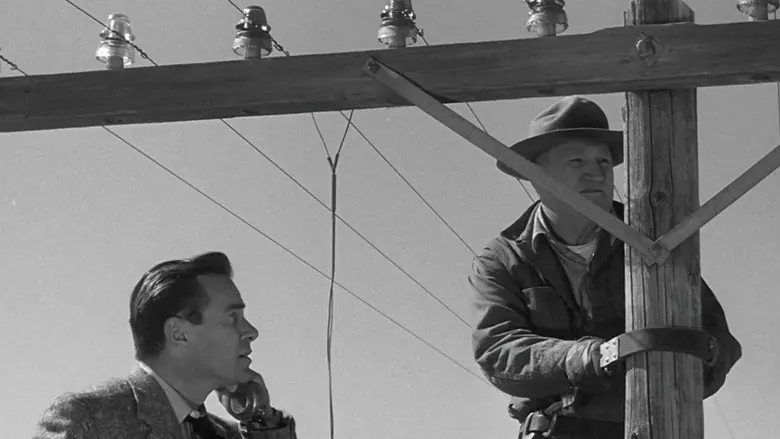
The screenplay by Harry Essex, with input from Jack Arnold, was built on a long original screen treatment by Ray Bradbury, although film lore credits Bradbury with much of the final script. Bradbury cast the invaders as stranded beings with no hostile intent, an unusual choice for science fiction cinema of the period. He offered the studio two versions, one with malicious aliens and one with benign ones, and Universal chose the benign concept. Shooting took place on location around Palmdale, Victorville and the Mojave Desert in California, as well as on Universal's sound stages. Two alien designs were presented to the studio; the one rejected was reused as the "Metaluna Mutant" in This Island Earth (1955). The fiery crash effect was a wire-suspended iron ball with hollowed-out windows that held burning magnesium. The Arizona setting and the abduction of characters draw on Bradbury's youth, when his family moved to Tucson and his father worked as a telephone lineman.
Reception and legacy
The film was released in June 1953 and had earned US$1.6 million in U.S. and Canadian distributors' rentals by year's end, placing it among the year's 75 top earners. Barbara Rush won the 1954 Golden Globe for most promising female newcomer for her role. The film was nominated for AFI's Top 10 Science Fiction Films list. It remains a reference point for the low-budget science fiction of the 1950s and is often discussed as an example of the decade's alien-invasion cinema.
Stills


Trailer
Clicking loads the video from YouTube (privacy-enhanced mode). Open on YouTube
Trivia
A recycled design
The alien design rejected for this film was later used as the "Metaluna Mutant" in This Island Earth (1955).
Two possible concepts
Bradbury offered the studio two story outlines, one with malicious aliens and one with benign aliens, and the studio picked the benign version.
More films by Jack Arnold
 Creature from the Black Lagoon
 Revenge of the Creature
 The Incredible Shrinking Man
 The Mouse That Roared
 Tarantula
 This Island Earth
Original Cinematopedia text based on Wikipedia (en) and Wikidata.