
Tous les Matins du Monde
Todas las mañanas del mundo
1991 · France · 115 min
- Director
- Alain Corneau
- Screenplay
- Alain Corneau, Pascal Quignard
- Producer
- Jean-Louis Livi
- Music
- Jordi Savall
- Cinematography
- Yves Angelo
- Editing
- Marie-Josèphe Yoyotte
- Based on
- All the World's Mornings
Awards: César Award for Best Music Written for a Film; César Award for Best Director; César Award for Best Supporting Actress; César Award for Best Cinematography; César Award for Best Film; Louis Delluc Prize… · 5 nominations
What the critics say
91 % Rotten Tomatoes positive reviewsCast
What it is about
Aging court composer Marin Marais looks back on his former master, Monsieur de Sainte-Colombe, a violist of unmatched skill who, after his wife's death, withdraws to a cabin in his garden to devote himself entirely to the viol. Raising his two daughters alone, Sainte-Colombe trains them as musicians, and his reputation eventually reaches the court, where a slight from the master provokes the king's displeasure. Years later, a seventeen-year-old Marais arrives at his house seeking lessons. The bond between the young man and his demanding teacher, complicated by a romance with the elder daughter, becomes the core of a story about ambition, loss and grief, reconstructed through the memory of its narrator.
How it was made
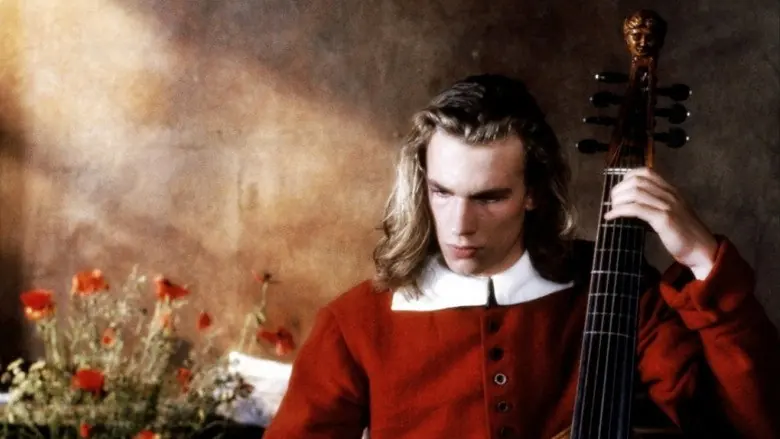
The film adapts Pascal Quignard's novel of the same name, published in 1991, and Quignard co-wrote the screenplay with Alain Corneau. Its central figure, Marin Marais, was a French composer of the late seventeenth and early eighteenth centuries and a master of the viola da gamba. Though the plot is fictional, it aims to respect what little is known of those lives. Gérard Depardieu plays the older Marais, his son Guillaume the younger one, and Jean-Pierre Marielle Sainte-Colombe. Shooting took place mainly at the Château Bodeau in Rougnat, while a salon scene set in the reign of Louis XV was filmed in the Galerie dorée of the Banque de France in Paris. The music, largely performed by Jordi Savall, with pieces by Marais, Sainte-Colombe, Couperin and Lully, forms the backbone of the story, and critic Derek Malcolm praised Marielle's performance for matching the music note for note.
Reception and legacy
The film was widely honoured in France, winning seven César Awards, including Best Film, Best Director, Best Cinematography and Best Music, as well as the Louis Delluc Prize for Best Film. It was selected in competition at the Berlin International Film Festival, where it was nominated for the Golden Bear, and received a Golden Globe nomination for Best Foreign Language Film. Rita Kempley of The Washington Post called it an elegy for a baroque cellist and a celebration of inspiration born of grief. Its commercial returns outside France were modest, though it earned a favourable rating on Rotten Tomatoes. Its lasting legacy lies in bringing the viola da gamba and French baroque repertoire to a general audience.
Stills


Trailer
Clicking loads the video from YouTube (privacy-enhanced mode). Open on YouTube
Trivia
A novel turned into a film
Pascal Quignard published the novel in 1991 and co-wrote the screenplay with Alain Corneau that same year. The title comes from words spoken by the narrator of the novel.
Music woven into the plot
The film has been described as a 'crossover movie', with music integrated into the storyline. The viol heard throughout was played by Jordi Savall.
More films by Alain Corneau
 Lumière and Company
 Fort Saganne
 Police Python 357
 Fear and Trembling
 The Second Wind
Original Cinematopedia text based on Wikipedia (es) and Wikipedia (en) and Wikidata.