Stukas
1941 · Germany · 91 min
- Director
- Karl Ritter
- Screenplay
- Felix Lützkendorf
- Music
- Herbert Windt
- Cinematography
- Heinz Ritter, Hugo von Kaweczynski
- Editing
- Conrad von Molo
- Production company
- UFA
Cast
What it is about
Stukas is a 1941 German film directed by Karl Ritter that follows three squadrons of Luftwaffe dive-bomber pilots. The narrative alternates between combat and quieter moments. In one storyline, three airmen shot down behind enemy lines try to make their way back to German lines; in another, a pilot suffering from shell shock regains his resolve after hearing Wagner at the Bayreuth Festival. The film closes with the aircraft heading toward England.
How it was made
The film was an officially commissioned production by the Luftwaffe and is considered an example of the Nazi contemporary film, or Zeitfilm, a genre Ritter largely helped define as a response to Soviet revolutionary cinema. As with all of Ritter's films, he planned the shoot in detail using storyboards, some of which contain a sequence never included in the final cut. Filming took place at UFA's Babelsberg Studios and on location around Berlin between November 1940 and mid-February 1941. Documentary footage of the Ju 87 and of the Bayreuth Festival was incorporated, and song plays a prominent dramatic role.
Reception and legacy
The Ministry of Propaganda awarded the film four distinctions, though it did not receive the higher ones. Modern critics tend to see it as a weak work, with a celebratory view of war and crude editing; historian David Stewart Hull counted it among the director's worst films. It nonetheless drew audiences and is often cited as the last major Nazi aviation film. Today it is classified in Germany as a controlled film, which may be screened only under specific conditions for educational purposes.
Trivia
Surviving storyboards
Ritter planned the shoot with storyboards, which survive and include a sequence titled "dream dance" that does not appear in the film.
Four official distinctions
The Ministry of Propaganda granted it four Prädikate, including ones for political value and value to youth.
More films by Karl Ritter
 Pour le Mérite
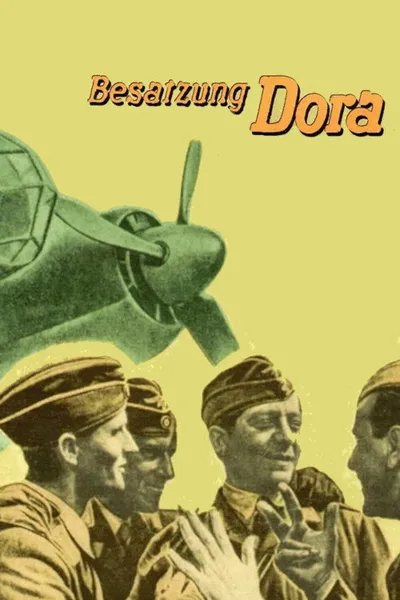 The Crew of the Dora
Original Cinematopedia text based on Wikipedia (en) and Wikidata.