
Solaris
1972 · Soviet Union · 160 min
- Director
- Andrei Tarkovsky
- Screenplay
- Andrei Tarkovsky, Friedrich Gorenstein
- Music
- Johann Sebastian Bach, Eduard Artemyev
- Cinematography
- Vadim Yusov
- Production company
- Mosfilm
- Based on
- Solaris
Awards: Cannes Film Festival Grand Prix
Cast
What it is about
Psychologist Kris Kelvin travels to a space station orbiting the ocean planet Solaris to assess whether the scientific mission should continue and what has happened to its crew. Before leaving, he spends his final day on Earth with his father and a retired pilot linked to the first strange reports from the planet. On arrival he finds the station in disarray and its crew in crisis, with a colleague dead and two guarded survivors. He soon senses inexplicable presences aboard. The story focuses on how Kelvin responds to Hari, a replica of his late wife, and on the questions this raises about memory, grief and what the scientists are actually observing.
How it was made
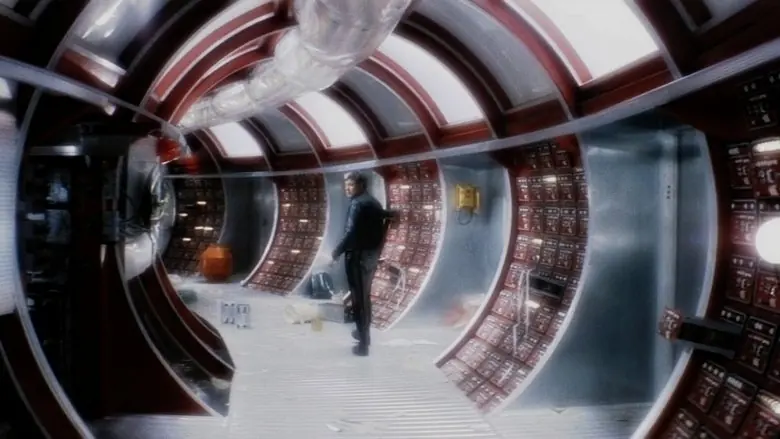
Tarkovsky took on Stanisław Lem's novel at a difficult moment: he needed work, and his previous film, Andrei Rublev (1966), had not been released in the Soviet Union for religious reasons. The novel was widely admired in the country, and the director saw both an artistic and a commercial opportunity in it. With Friedrich Gorenstein he wrote a first screenplay, which the Mosfilm committee rejected, and then a shooting script with less action on Earth and without Kelvin's second marriage. Lem was deeply critical of the changes, as he was of the later adaptations in 1968 and 2002. Tarkovsky aimed to give science fiction greater emotional and intellectual depth, which he felt the genre lacked by focusing on technology. Vadim Yusov's cinematography, the slow pace, long takes and the combination of Bach with Eduard Artemyev's electronic music create a contemplative style. Donatas Banionis plays Kelvin and Natalya Bondarchuk plays Hari.
Reception and legacy
The film premiered at the 1972 Cannes Film Festival, where it won the Grand Prix Spécial du Jury and the FIPRESCI prize, and it was nominated for the Palme d'Or. It received strong critical acclaim and is often cited among the greatest science fiction films ever made. Its slowness and meditative tone set it apart from much of the genre, and Tarkovsky later developed some of its ideas in Stalker (1979). Lem never accepted it as a faithful version of his novel, which left the relationship between the book and the film marked by controversy. Today it is regarded as a landmark of auteur science fiction.
Stills


Trailer
Clicking loads the video from YouTube (privacy-enhanced mode). Open on YouTube
More films by Andrei Tarkovsky
 Ivan's Childhood
 Stalker
 Andrei Rublev
 Mirror
 The Sacrifice
 Nostalghia
Original Cinematopedia text based on Wikipedia (es) and Wikipedia (en) and Wikidata.