
Salomé
1922 · United States · 74 min
- Director
- Charles Bryant
- Screenplay
- Natacha Rambova
- Producer
- Alla Nazimova
- Cinematography
- Charles Van Enger
Cast
What it is about
Set in the palace of the tetrarch Herod, the film adapts Oscar Wilde's play and, through it, the biblical story of John the Baptist's execution. Herod lusts after his stepdaughter Salomé, while her mother Herodias despises the prophet Jokanaan, imprisoned below the palace. Salomé becomes fixated on the prophet, who rejects her, and her obsession grows amid a banquet where tension keeps rising. The film focuses on desire, power and cruelty within the royal household.
How it was made
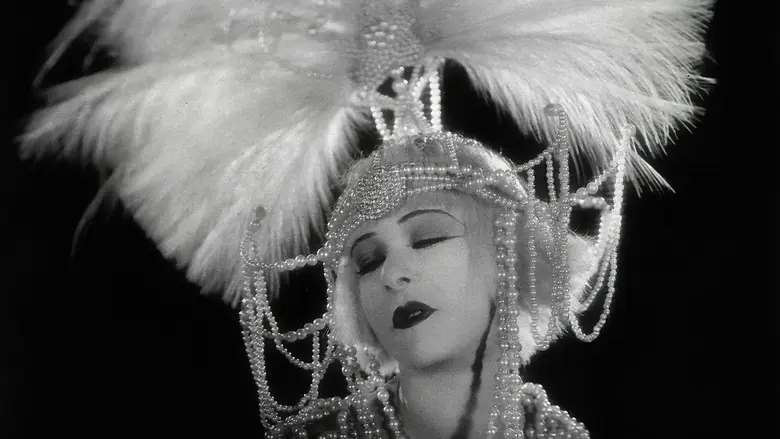
Alla Nazimova financed the project herself at a cost of between $350,000 and $400,000, and initially struggled to find a distributor. The screenplay is credited to Peter M. Winters, a pseudonym for Nazimova herself. Filming took place in January and February 1922. Nazimova, then forty-two, played a fourteen-year-old, and cinematographer Charles Van Enger used subtle lighting to mask her age. Natacha Rambova designed costumes inspired by Aubrey Beardsley, with fabrics imported from Paris, and the dance of the seven veils was staged in a clinging satin tunic. Assistant cameraman Paul Ivano recalled long, cold nights on set.
Reception and legacy
The film was first screened privately in New York in July 1922, before its distributor set a release date. Critics praised its originality, while censors judged it sacrilegious and ordered several scenes cut. Over time it has come to be regarded as one of the first art films made in the United States and a cult classic of queer cinema. Its historical interest lies in being an early large-scale production of Wilde's play directed by a woman.
Stills


Full film
Trivia
A night shoot
According to assistant cameraman Paul Ivano, the crew sometimes stayed in the studio until four in the morning on large scenes. Fifteen electric stoves were improvised to heat the stage.
Imported costumes
Natacha Rambova insisted that all costume fabrics be imported from Maison Lewis in Paris.
More films by Charles Bryant
 A Doll's House
Original Cinematopedia text based on Wikipedia (en) and Wikidata.