
Quo Vadis
Quo vadis?
1913 · Kingdom of Italy · 120 min
- Director
- Enrico Guazzoni
- Screenplay
- Enrico Guazzoni
- Cinematography
- Eugenio Bava, Alessandro Bona
- Editing
- Enrico Guazzoni
- Production company
- Cines
- Based on
- Quo Vadis
Cast
What it is about
The story unfolds in the final years of the reign of Emperor Nero. Marcus Vinicius, one of Nero's officers, falls for Lygia, a young Christian held as a hostage. Their relationship runs up against the emperor's will: after a fire devastates Rome, Nero blames the Christians and launches a brutal persecution, sentencing the sect's members to die in the Circus. Lygia is among them, and the narrative turns on the efforts to save her and on the clash between imperial power and the new faith.
How it was made
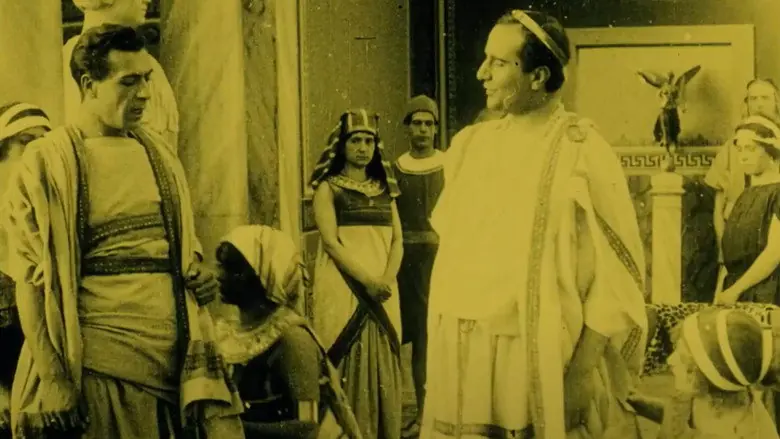
Enrico Guazzoni directed and wrote the film for the company Cines in 1913, adapting Henryk Sienkiewicz's 1896 novel of the same name. Guazzoni also edited it, while Eugenio Bava and Alessandro Bona handled the cinematography. The cast included Amleto Novelli, Gustavo Serena as the refined Petronius and Bruto Castellani as the athletic Ursus. The main draw was scale: around 5,000 extras, lavish sets and a running time of roughly two hours, an unusual format for the period. Crowd scenes were reinforced by costumed live performers placed in the auditorium, a departure from normal cinema practice of the time.
Reception and legacy
The film was an international success and one of the first great box-office hits in cinema history. It premiered in Germany on the opening night of a Berlin cinema built for the purpose, and in New York, where its crowd shots impressed audiences and tickets cost a dollar, far above the usual price. It ran for nine months at Broadway's Astor Theatre and had a special London screening for King George V. Sources report that it earned ten to twenty times its cost. Critics such as Georges Sadoul and Bardèche and Brasillach praised it, and sculptor Auguste Rodin called it a masterpiece. It set the template for the historical superspectacles that dominated the following decades and inspired later versions, including the 1924 film and Mervyn LeRoy's 1951 adaptation.
Stills


Full film
Trivia
Costumed performers in the auditorium
Crowd scenes were supplemented by costumed actors performing live among the cinema audience.
Royal screening in London
The first London screening was arranged especially for King George V at the Royal Albert Hall, who congratulated the performers.
More films by Enrico Guazzoni
 Messalina
 Fabiola
Original Cinematopedia text based on Wikipedia (es) and Wikipedia (en) and Wikidata.